University of Exeter
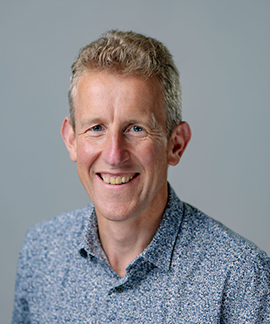
Professor Tim Lenton OBE, Principal Investigator.
Professor Tim Lenton is founding Director of the Global Systems Institute at the University of Exeter and Chair in Climate Change and Earth System Science. With over 25 years’ research experience on the biosphere, climate, biogeochemical cycles, and tipping points, he is renowned for identifying climate tipping points that informed the 1.5°C target and net zero policies. He works with policymakers and businesses to assess climate and nature risks while promoting ‘positive tipping points’ that accelerate progress to net zero. In 2023, he led over 200 experts from 90+ organisations in 26 countries to produce the ‘Global Tipping Points Report’ with the Bezos Earth Fund, launched at COP28.

Andy Richards, Project Manager
Andy leads on supporting the Director and Academic Management Team in the development of the Global Systems Institute (GSI) at the University of Exeter. The institute plays a leading role in solving global challenges and shaping the future world through transformative research, education and impact. Andy coordinated the creation of the Institute’s strategy and leads on developing and delivering the operational plan to achieve the vision and strategic priorities. This includes supporting the formation of trans-disciplinary research teams, engagement with partner research organisations and non-academic stakeholders. Andy also has a lead role in supporting a major GSI research progamme on tipping points

Peter Cox, Co-Lead
Professor Peter Cox is Professor of Climate System Dynamics in Mathematics and the Director of the Global Systems Institute at the University of Exeter. He has previously worked at the Met Office-Hadley Centre (1990-2004) and the UK Centre for Ecology and Hydrology (2004-2006).
He is an international leader in the understanding of interactions between the land biosphere and climate change. He led the team that carried-out the first climate simulations to include the carbon cycle and vegetation as interactive components (Cox et al., 2000), which highlighted the possibility of Amazon Forest dieback under climate change (Cox et al., 2004). Professor Cox is a lead author on the 4th, 5th and 6th Assessment Reports of the Intergovernmental Panel on Climate Change and a member of the UK Government’s Defra Scientific Advisory Council. He has been named as a highly-cited author by Thomson-Reuters for every year from 2014 onwards and won an ERC Advanced Grant in 2017.

Peter Ashwin, Co-Lead
Peter Ashwin is a Professor of Mathematics specialising in dynamical systems theory and computational modelling. He has been at the University of Exeter since 2000, having previously held teaching and research positions at Surrey, Warwick, Nice (France) and Marburg (Germany). Since 2022 I am Director of Research and Impact within the Department of Mathematics and Statistics at Exeter.

Chris Boulton, Co-Lead
Chris Boulton is a Senior Research Fellow and Lecturer in the Global Systems Institute at the University of Exeter with a strong research interest in climate tipping points and the early warning signals associated with them.
Victoria Volodina, Co-Investigator
Dr. Victoria Volodina obtained her Ph.D. in Mathematics from the University of Exeter in 2019 under the supervision of Dr. Daniel Williamson, focusing on developing novel approaches to quantify uncertainties in complex computer models of physical systems. She subsequently worked as a Research Associate on the Managing Uncertainty in Government Modelling (MUGM) project at the Alan Turing Institute, applying mathematical techniques such as majorisation, infinite server queues, and graph theory to improve uncertainty analysis in public policy models. Before that, she was a Research Fellow in Computational Statistics on the CHIMERA project at University College London (UCL), where she developed graphical models to impute clinical variables monitored in critically ill patients using high-frequency data.
Mark Williamson, Co-Investigator
Mark Williamson is a Lecturer in the Department of Mathematics and the Global Systems Institute at the University of Exeter. His research focuses broadly on climate and climate change. Trained as a theoretical physicist, Dr. Williamson applies analytical techniques and models from theoretical physics to better understand climate models, the Earth’s climate system, and occasionally the climates of other planets.
He has worked with a wide range of climate models—from simple, idealised frameworks to full-complexity Earth system models—and has also contributed to research in quantum information theory and the foundations of quantum mechanics. His current research interests include tipping points in the climate system and the use of emergent constraints to reduce uncertainty in future climate projections.

Paul Ritchie, Co-Investigator
Dr. Paul Ritchie is a Research Fellow on the ClimTip project at the University of Exeter, working with Prof. Peter Ashwin to improve understanding of tipping in rapidly forced systems. His research focuses on developing metrics to identify when systems approach critical thresholds and studying interactions between fast and slow tipping elements. He has previously worked on the OptimESM, ECCLES, and Valuing Nature projects with Profs. Tim Lenton, Peter Cox, and Anna Harper, investigating early warning signals and tipping dynamics in climate and ecosystem models. Dr. Ritchie completed his Ph.D. at the University of Exeter under Profs. Jan Sieber and Peter Cox, where he studied rate-induced tipping and demonstrated that early-warning indicators can remain effective for such events.
Prathyush Menon, Co-Investigator
Prathyush Menon holds a Personal Chair in Control and Autonomy in the Department of Engineering, Faculty of Environment, Science and Economy, at the University of Exeter. He serves as Deputy Head of Engineering, Deputy Director of the Centre for Future Clean Mobility, and leads the Cooperative Robotics and Autonomous Networks (CRANE) Lab, which focuses on autonomy across land, air, and sea; decision-making under uncertainty; information-driven planning; cooperation and resilience among agents; and validation of autonomous systems. He received his Ph.D. in Control Engineering from the University of Leicester in 2007 and subsequently held positions there as an ESA-funded Postdoctoral Research Associate and Lecturer before joining Exeter in 2010. Prof. Menon has authored over 100 peer-reviewed papers, including 60 journal publications, and his research is supported by major funding bodies such as UKRI, NERC, Dstl, Innovate UK, STFC, ESA-ESTEC, UKIERI, and KTP. He maintains extensive international collaborations with leading universities, including Pavia, Sevilla, Groningen, Texas A&M, UT Arlington, University of Alabama at Huntsville, IISc, IIT Madras, IIT Bombay, IIIT-Delhi, IISER Bhopal, and Seoul National University.
Beatriz Arellano-Nava, Researcher

Sneha Kachhara, Researcher
Dr. Sneha is a postdoctoral researcher at the University of Exeter, working on the AdvanTip project under the broader “Forecasting Tipping Points” initiative funded by ARIA. As part of Task 1.3 led by Prof. Peter Ashwin, her research focuses on the theoretical understanding of strongly forced systems and the development of early warning signals for their tipping points, with a particular focus on the subpolar gyre. She holds a Ph.D. in theoretical physics from the Indian Institute of Science Education and Research, Tirupati (2022), and previously worked as a postdoctoral fellow at Northwestern University, USA. Her academic background is in nonlinear dynamics and complex systems, with interests spanning climate, biology, and astronomy.
Muhammed Fadera, Researcher
Muhammed Fadera is a Researcher at the Department of Mathematics and Statistics. His interest lies at the interest intersection of Machine learning, nonlinear dynamics and nonautonomous dynamical systems. His research has used tools from these disciplines to understand and interpret how RNNs make decisions. From dynamical system perspective, this involve understanding the nature of invariant objects like equillibria and periodic orbits that emerged during training and their subsequent interaction once input is added. Muhammed has also looked at ways to design machine learning models to solve finite state computation problems with minimal number of neurons. He is currently working on the fractal dimension of the subset of state space explored by RNNs once they have been successfully trained to perform a given task.

Shivendra Singh Verma, PhD Student
Shivendra Singh Verma holds a Bachelor of Technology in Naval Architecture and Ocean Engineering from IIT Madras (2020–2024) and is currently pursuing a Ph.D. under the supervision of Prof. Prathyush Menon and Prof. Tim Lenton. Their research focuses on optimising observations to improve the early warning skill of predicting tipping points, combining methods from systems theory, data assimilation, and complex systems analysis to enhance understanding and prediction of critical transitions.

Ella Tanner, PhD Student

Franco Du Plessis, PhD Student
Franco du Plessis is an incoming MPhil/PhD student at the University of Exeter, originally from South Africa. His research interests lie in non-autonomous dynamical systems, machine learning, and complexity science. Beyond his academic pursuits, Franco enjoys cooking, gardening, and has a background as a national sports karate athlete.
Nicole Dalton, Project Administrator
Nicole Dalton is a Project Coordinator helping to lead two major climate research initiatives that advance scientific understanding and prediction of climate tipping points. She coordinates AdvanTip (Advancing Tipping Point Early Warning), a £5 million project funded by the Advanced Research and Invention Agency (ARIA), which develops early warning systems for climate tipping points, particularly within the Subpolar Gyre, a critical ocean current system vulnerable to rapid change. Nicole also coordinates the Integrated Carbon Observation System (ICOS) within the Ocean Monitoring Team, working closely with the Ocean Thematic Centre in Bergen, Norway, to support international collaboration and the continuous monitoring of ocean carbon dynamics. In both roles, she facilitates communication and coordination across interdisciplinary research teams, ensuring effective project delivery and scientific collaboration across institutions.
University of Leicester

Valerio Lucarini, Co-Lead
Valerio Lucarini is Professor of Applied Mathematics at the School of Computing and Mathematical Sciences of the University of Leicester. Valerio does research in Statistical Mechanics, Dynamical Systems Theory, Climate Dynamics, Meteorology and Paleoclimatology.

Larissa Serdukova, Co-Investigator
Larissa Serdukova holds a Ph.D. in Probability Theory and Mathematical Statistics (2017) and is a Data Scientist with over eight years of academic research experience in stochastic and non-smooth dynamical systems applied to energy harvesting and climate science, alongside ten years of industry experience in market research and the national statistical system. Her research interests focus on stochastic modeling, and she brings strong expertise in analytical thinking, problem solving, logical reasoning, and data-driven analysis to interdisciplinary scientific and applied research projects.

Francesco Ragone, Co-Investigator

Amjad Ali, Researcher
Amjad Ali is a Postdoctoral Researcher specializing in Artificial Intelligence (AI), Machine Learning (ML), Deep Learning (DL), and Data Science (DS). He holds a Ph.D. in Parallel Scientific Computing and Computational Mathematics and is a Fellow of Advance HE, UK (FHEA). Dr. Ali is passionate about advancing research, development, and education in AI and data-driven technologies, with the goal of leveraging intelligent systems to improve the quality of human life and address complex real-world challenges.
Amethyst Eicher, PhD Student
Amethyst Eicher is a data-driven researcher with an MSc in Bioinformatics (Distinction) and experience as a Research Assistant at the University of Birmingham. Her work integrates machine learning, statistical analysis, and data visualization to extract meaningful insights from complex biological and environmental datasets. Proficient in Python, R, and SQL, she focuses on predictive modelling and visual storytelling through intuitive dashboards and interpretable models. Amethyst’s research spans health, environment, and behavioural data, and she is preparing to begin a Ph.D., aiming to advance the intersection of biology and data science through innovative and collaborative research.
Utrecht University

Henk Dijkstra, Co-Lead
Prof. Dr. Ir. H.A. (Henk) Dijkstra is a Professor of Dynamical Oceanography in the Department of Physics, Marine and Atmospheric Research at Utrecht University. His research focuses on the foundations of complex systems and pathways to sustainability, with a particular emphasis on the dynamics of the ocean and climate systems. A leading figure in physical oceanography, Prof. Dijkstra has been recognized with numerous honors, including the NWO PIONEER Award (1996), election to the Royal Dutch Academy of Arts and Sciences (2002), the Lewis Fry Richardson Medal from the European Geosciences Union (2005), fellowship of the Society for Industrial and Applied Mathematics (SIAM, 2009), and an ERC Advanced Grant (2021). His work continues to advance understanding of ocean-climate interactions and the mathematical modeling of complex geophysical systems.
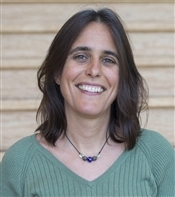
Anna von der Heydt, Co-Investigator
Prof. Dr. A.S. (Anna) von der Heydt is a Professor of Physical Oceanography in the Department of Physics, Marine and Atmospheric Research at Utrecht University. Her research focuses on the dynamics of the climate system, with particular emphasis on past and future climate change, climate tipping points, and the interaction between ocean circulation and climate variability. Combining approaches from theoretical physics, climate modeling, and data analysis, Prof. von der Heydt seeks to improve understanding of the mechanisms driving large-scale climate transitions. She plays a key role in advancing interdisciplinary research on Earth system dynamics and contributes to Utrecht University’s broader efforts in sustainability and climate science.
Potsdam Institute for Climate Impact Research
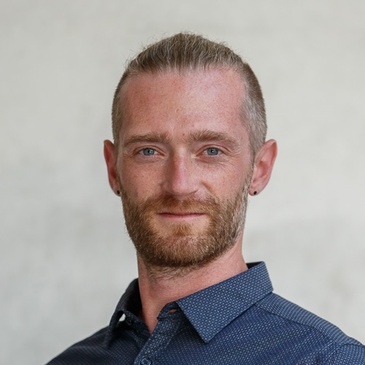
Niklas Boers, Co-Investigator
Niklas Boers is Professor of Earth System Modelling, Technical University of Munich and Leader of the Future Lab ‘Artificial Intelligence in the Anthropocene’ at PIK. He also coordinates the Horizon Europe project ‘Quantifying Climate Tipping Points and their impacts’ (ClimTip).
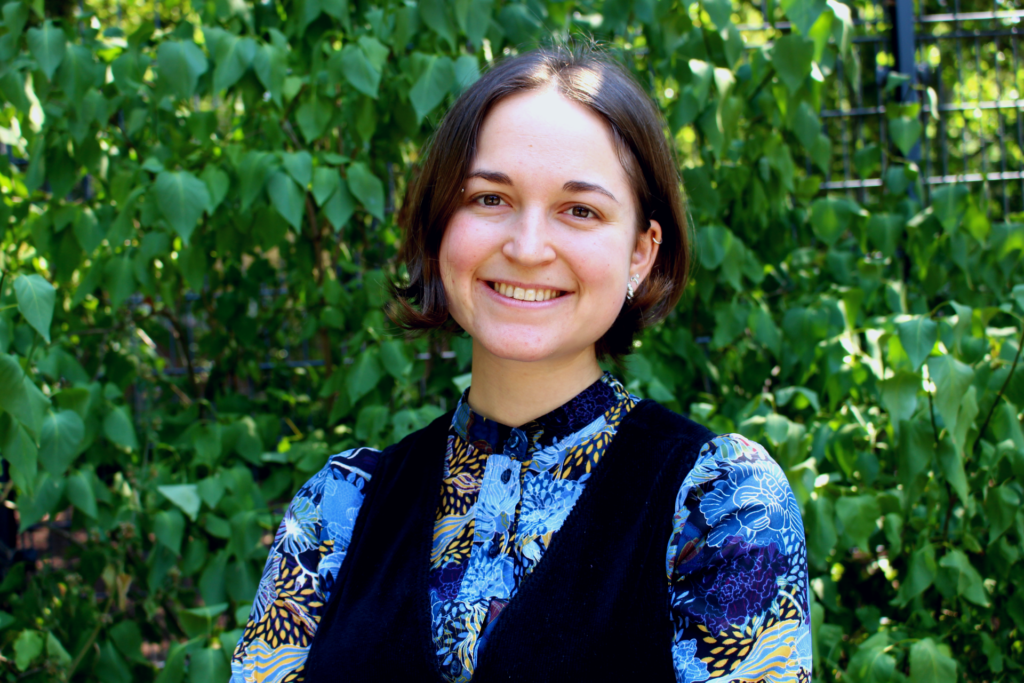
Maya Ben-Yami, Researcher
Maya Ben-Yami is a researcher working at the Potsdam Institute of Climate Impact Research and the Technical University of Munich. Her work focuses on the Atlantic Meridional Overturning Circulation (AMOC), using a combination of real-world and model data to understand this complex system. In particular, she investigates the impacts of a potential AMOC collapse on the global climate, and works to find robust early warning signals for a future AMOC tipping.
Centre for Ecology and Hydrology

Chris Huntingford, Co-Lead
Chris Huntingford is a mathematician based at the UK Centre for Ecology and Hydrology in Wallingford, Oxfordshire. Chris has worked on climate research for over thirty years. His particular interest lies in mapping processes onto differential equations, which are used in Earth System Models (ESMs) as part of efforts to predict future changes as atmospheric greenhouse gas levels change. He also has a keen interest in developing low-dimensional models of processes, where this can be achieved while preserving the main system attributes. Non-numerical analysis of simplified systems often reveals their full spectrum of behaviours, including strong nonlinear effects and, in some instances, potential tipping points. Chris contributed to Chapter 3 of the 6th UN IPCC report, “Human Influence on Climate”.
University of Bordeaux
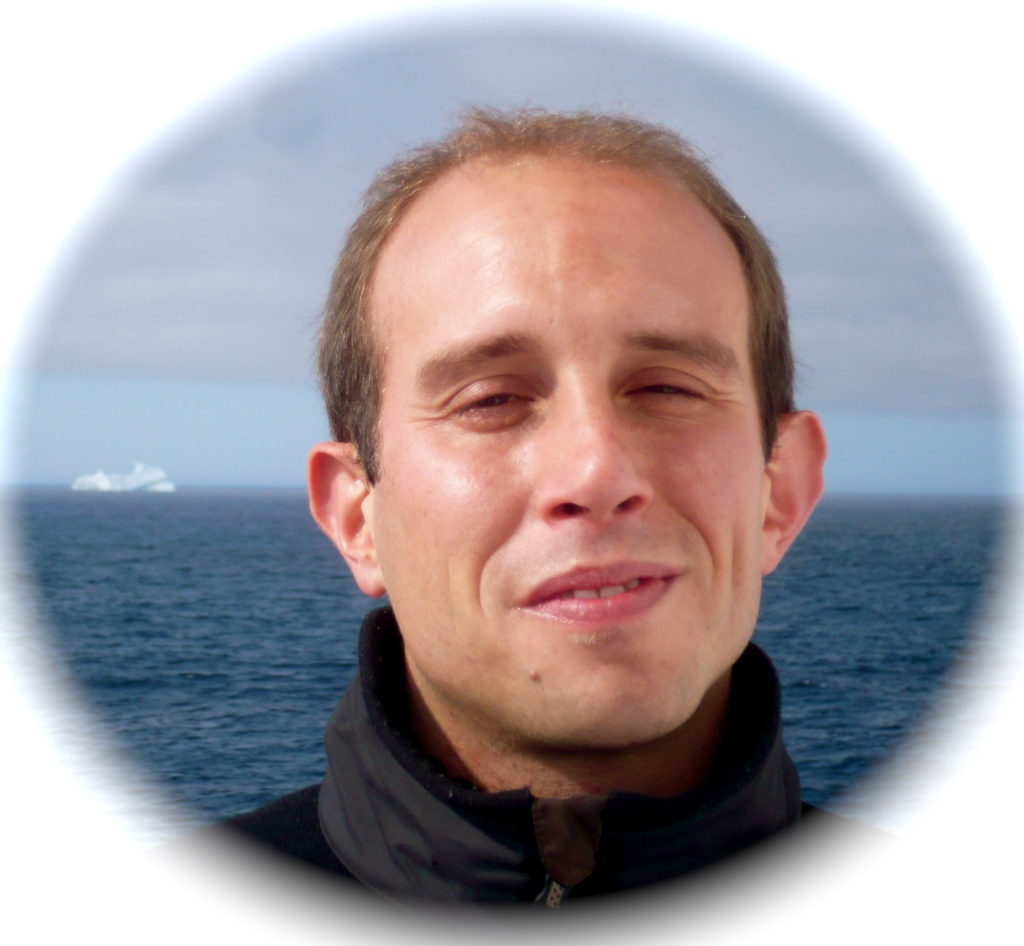
Didier Swingedouw, Co-Investigator
Didier Swingedouw is a researcher at Environnements et Paléoenvironnements Océaniques et Continentaux (EPOC), UMR CNRS 5805, OASU, Université de Bordeaux, France. His research focuses on ocean and climate dynamics, particularly the Atlantic Meridional Overturning Circulation (AMOC) in the past, present, and future, using state-of-the-art coupled ocean–atmosphere–sea-ice–land models. He studies the drivers of North Atlantic circulation changes, including surface forcing, internal thermohaline feedbacks, and the influence of the Southern Ocean. His work also examines interactions between components of the climate system—especially the ocean and ice sheets—in future climate projections, as well as mechanisms underlying past climate variability through proxy-based reconstructions. In addition, he investigates the impact of ocean circulation and thermodynamic changes on the global carbon cycle, with an emphasis on the North Atlantic.

Nina Mengual, PhD Student
Nina Mengual is a first-year Ph.D. student at the University of Bordeaux, working under the supervision of Dr. Didier Swingedouw. Her research focuses on understanding the future evolution of North Atlantic circulation with the goal of developing and assessing an early warning system for its potential collapse.