
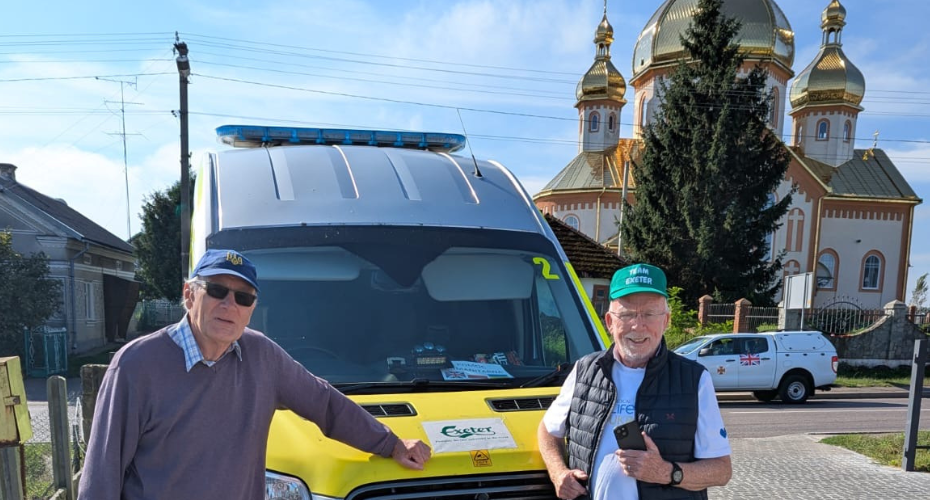
Earlier this autumn alumni duo Bob Budge (Politics and Economics, 1971) and Jonathan Callaway (German, 1971) took their Exeter friendship on the road to drive an aid-filled ambulance in a convoy to Ukraine to assist with humanitarian efforts. We caught up with them both to find out more about what the trip involved.
Alumni Bob and Jonathan met for the first time in October 1968 and lived together in their first year at the University of Exeter before moving to Duryard halls for the remainder of their Exeter days, and during this trip they shared a room, just like at university. They enjoyed careers in banking and finance respectively and are both retired now. During their retirement, Jonathan and Bob reconnected, after 50 years, through a friend (who has since sadly passed away) and after the reunion the duo have been close friends once again.
Since the Russian invasion of Ukraine in 2022 the demand for humanitarian aid, civil defence support and medical supplies has been unrelenting, and a desire to make some small impact drove Bob and Jonathan to take part in this ambulance expedition in 2025 (for the second time for Jonathan). The convoy that Bob and Jonathan were involved in featured ambulances for hospitals and equipment to reach civilians trapped under collapsed buildings. As well as aid delivery with vehicles arrive in Ukraine filled with medical and other aid including dressings and medical tools, defibrillators, generators, clothes, blankets. Even toys for displaced children and food for rescue dogs.
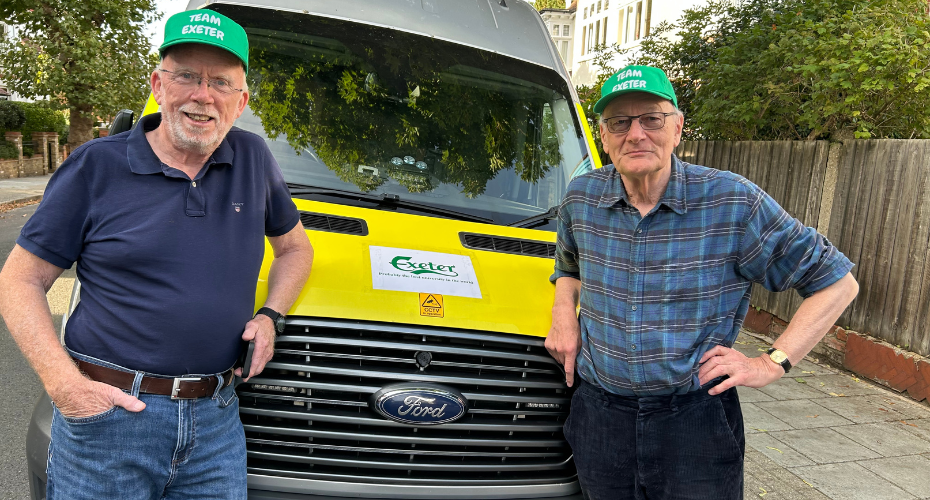
Their journey began with an early start at 4.30am on Sunday 7 September and by the end of the day the convoy were through France, Belgium, Holland and just into Germany where they stayed the night. The next day the group travelled through Germany to the Polish borders and by the end of Tuesday they were at the Poland/Ukraine border.
The convoy was originally five vehicles, the fifth being a mobile operating theatre. Unfortunately, in Belgium an engine mount collapsed and with the new clutch also slipping as a result they had to abandon it at the roadside. The vehicle is now being repaired and will follow later. The four remaining vehicles comprised a rapid response vehicle and then there were three ambulances all differently configured for different needs. All ambulances were full of donated medical supplies, and the ambulance that Bob and Jonathan drove was number two in the convoy.
By Wednesday morning the group had driven 1,200 miles and were ready to cross the border into Lviv. The previous night had seen a drone incursion into Poland so there was some concern. Bob explained, “Lviv is only 60 miles over the border and had seen little damage and all convoys to date had been fine, so all agreed to continue.” They reached their destination on the outskirts of Lviv by early afternoon having had to wait at the border and go through security.
Before the vehicle handover in the evening, the group had a few hours downtime and managed a trip into the beautiful and historic centre of Lviv which reflected the duality of the lived current experience of its citizens. Jonathan and Bob visited the ‘Church of Tears’ (the Church of the Most Holy Apostles Peter and Paul), where hundreds of fallen soldiers and civilians were commemorated.
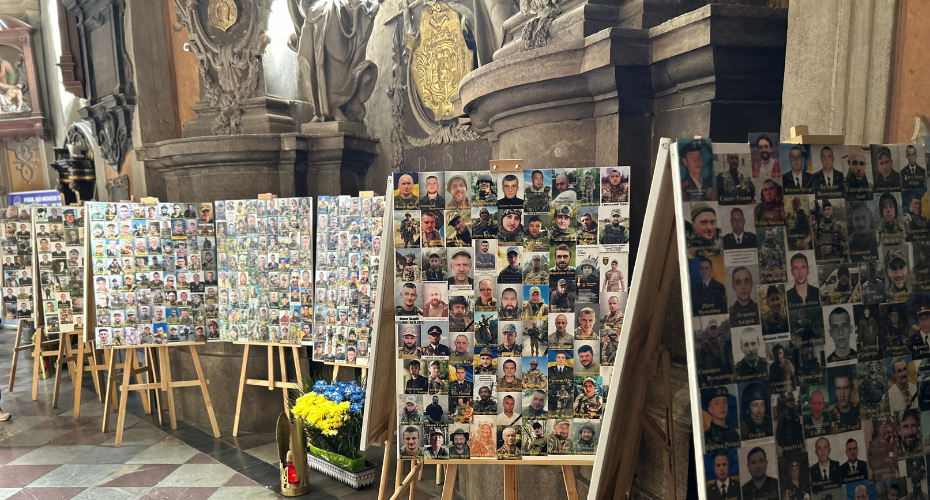
This was really the first big emotional roller coaster moment of the trip and to them both it was “a vivid reminder of the seemingly never-ending toll this war is taking on the country and its people.” There is a ‘Church of Tears’ in every town and village, which Bob added “brings home the futility of war.”
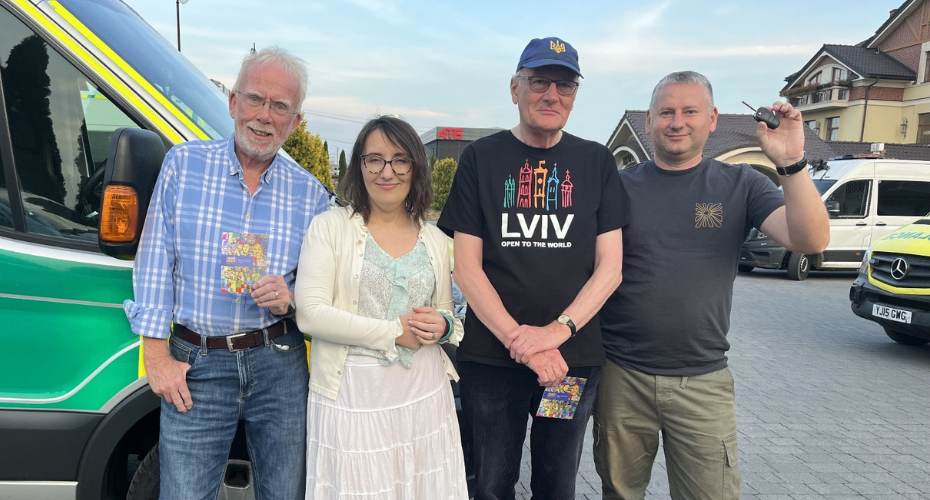
The travel to Ukraine was long and tiring for both alums, but Jonathan shares, “that was as nothing to the emotions we felt when handing our four ambulances over to the hospitals and search and rescue teams who will be using them. Each recipient sent a small deputation to show appreciation and to give them a day of R&R. There was a formal dinner with the Lviv MP and medics etc, and speeches.”
One team had come straight from Dnipro region, near the front line. They picked up their 4WD search and rescue vehicle (which came with hydraulic cutting tools used to extract people from damaged buildings) and drove it straight back after one of the first responders had told the drivers of what they dealt with every day. The ambulance Bob and Jonathan drove will be used by a rehabilitation centre for wounded veterans. Another of the vehicles went to a hospital that specialises in treating limb loss injuries. That hospital alone has treated more than 18,000 victims to date.
Reflecting on the journey, Jonathan highlighted that it was a “physically tiring but emotionally powerful experience for all of us drivers.” Bob added, “For me I am so glad I did this trip. Driving was intense as we needed to stay tight as a convoy on busy roads and there were strong emotional highs and lows to manage. But if we have all made a tiny difference to what is going on, then it has all been worth it.” Both alumni felt that having a dear friend to undertake this journey with made the experience so much better.
Have you got an Exeter friendship story to share? Drop us a message on our socials or reach out via email at alumni@exeter.ac.uk to let us know.