
Exeter Collaboration for Academic Primary Care (APEx) Blog
Exeter Collaboration for Academic Primary Care (APEx) Blog
Posted by ma403
9 October 2026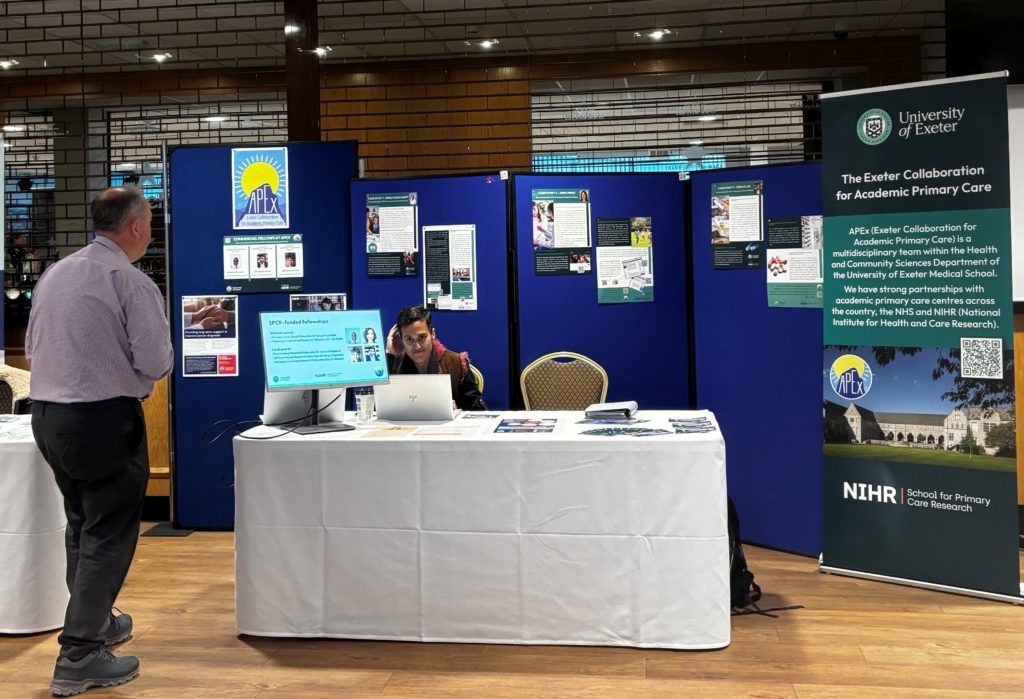
If you hadn’t noticed already, the National Institute for Health and Care Research (NIHR) is celebrating its 20th birthday this year. Established in 2006, it was part of the then Blair government’s plans to improve health through research. It’s actually hard to remember what we did prior to NIHR funding being available. It’s now the largest clinical research funder in Europe, and has an annual budget of £1.6 billion. Research funded by NIHR has made real differences to practice both in the UK and internationally. To celebrate some of those achievements in the South West, and reflect on where we might be going in the next 20 years, members of APEx and numerous collaborators representing the other regional NIHR infrastructure gathered at Sandy Park stadium in Exeter on 7th October 2026. The team did a fantastic job of pulling together a great display to highlight APEx and primary care at the event, so huge thanks to Jacqui and Kate.
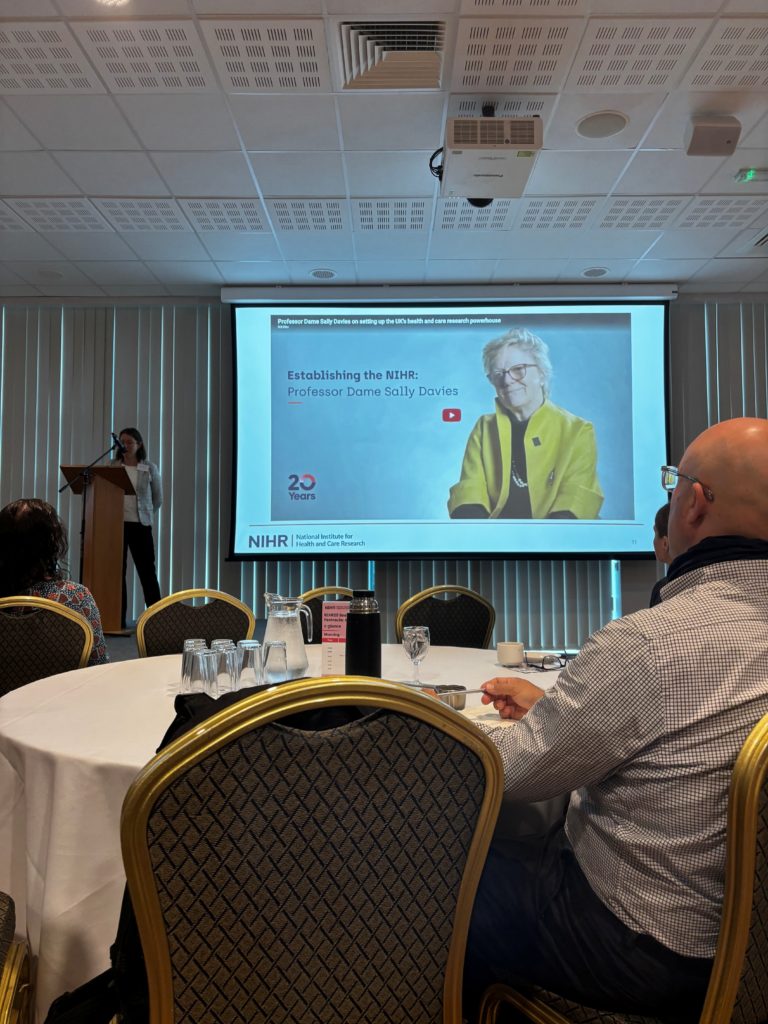
The day kicked off with the usual networking (a chance for Nick Kennedy to get me up to speed with the IT goings-on in the hospital) and the introductory talks (including a brief video from Dame Sally Davies – I was left wondering if she envisaged quite how big NIHR would have grown since she first came up with the idea). Of course, the day was about all aspects of NIHR, but I couldn’t help noticing how much was pertinent to primary care. The opening plenary presentations included Michael Gibbons’ reflections on the impact research can have, illustrated in particular by the rapid and substantial response to the Covid pandemic; Mike Visick discussing the importance of research culture, with research embedded throughout all aspects of the service, and the need to view research as a strategic asset which drives innovation, income, workforce attraction and improved patient outcomes; and Martin James talking about innovations in stroke management including factors which delay implementation (some of which are issues very relevant to primary care, such as rurality which is very pertinent to our region) and the need to grow investment in research. Research agility and viewing research from that strategic perspective definitely strike me as things we need to do better in primary care. It’s certainly about a culture shift, and not just overcoming bureaucracy, and Martin’s call for investment will clearly help. Michael suggested that the government is driving some of these changes already, although I am not convinced that I’ve seen the evidence yet.
The morning session ended with breakout sessions, one of which on primary care was led by APEx’s own Phil Evans, Helen Lyndon (our local RRDN community setting lead), and yours truly talking very briefly about the academic perspective, followed by some round table discussions. The opportunity to really drill down into the challenges was sadly curtailed by lunch, but our own table nevertheless managed to scribble down some useful thoughts on how we should shift more opportunities for research into primary care and the community (including learning from work done on diabetes and cardiovascular prevention, often led by our secondary care colleagues but implemented in primary care). It will be interesting to spend a little more time digesting the notes ourselves and the other groups made, and to see whether APEx might be able to implement any of the emerging ideas.
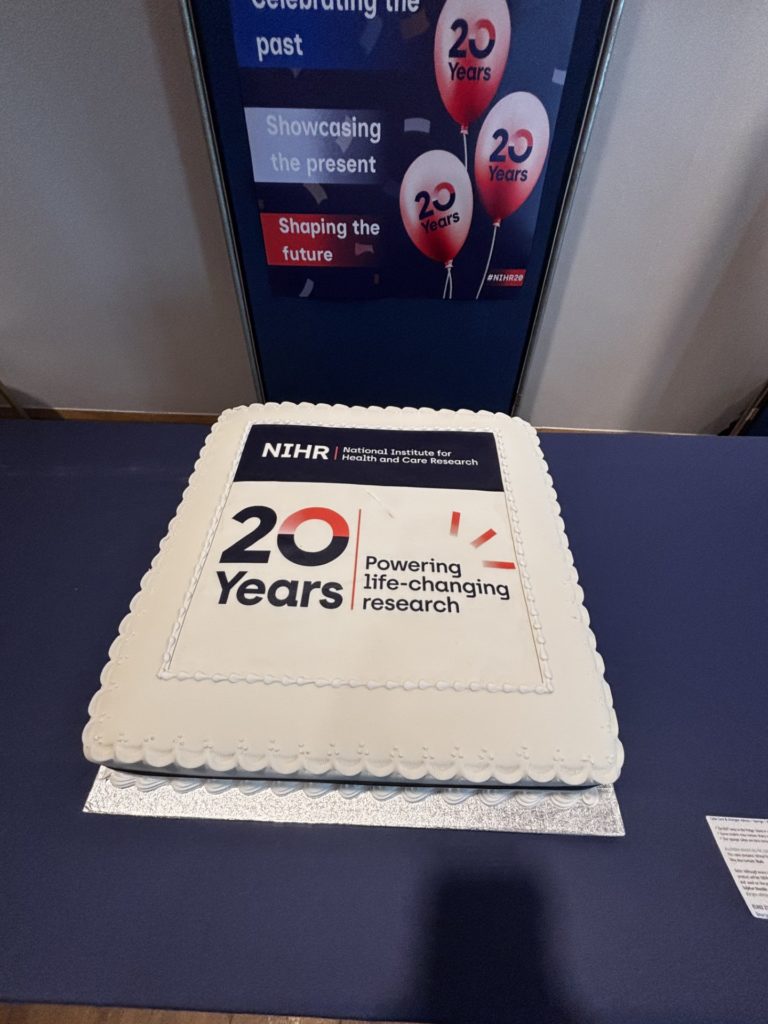
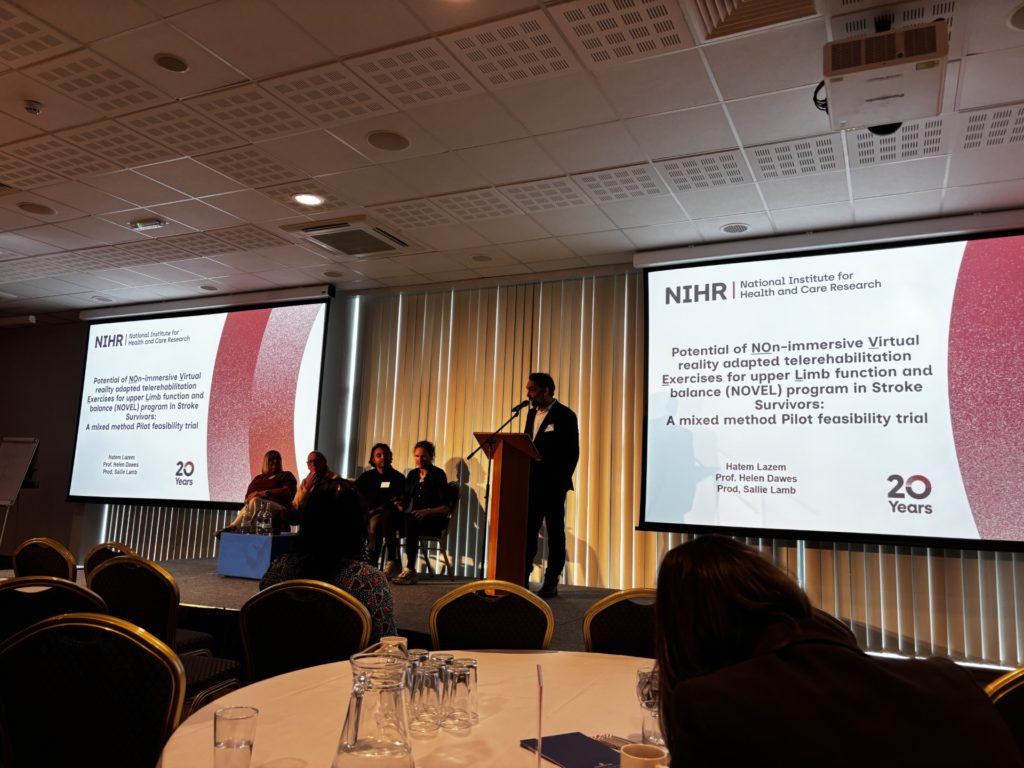
After a surprisingly reasonable lunch (including a very-nice-but-atheroma-inducing treacle pie; I didn’t try the massive birthday cake), the afternoon covered a broad range of issues, including the importance of commercial research and research inclusion. I was particularly interested by some of the rapidly developing innovations that are changing the face of healthcare: technology, genetics and data. We heard about some really interesting BRC-funded virtual reality rehabilitation for stroke patients. The videos showing functional improvement were striking, and it’s also amazing that the only technology required to deliver this is a standard smartphone or laptop. But perhaps even more amazing was to hear from one of the patients who had participated in the programme and how it made such a difference to him, everything from simply being able to do up his dressing gown to having the confidence to visit a restaurant or take a holiday. Want to know how to do PPI, folks? Take note! We also heard about how the amazing genetics work led by Andrew Hattersley and others has revolutionised diagnosis and treatment for monogenic diabetes. At present, this remains the remit of specialist clinics, but given that the vast majority of diabetes is managed in general practice, it is surely only a matter of time before genetic testing (and not just for diabetes) starts to be routinely implemented in primary care. Watch this space! And finally, you can’t discuss innovations in health without considering the digital transformation occurring courtesy of AI and data. General practice had a 30-year head start on hospitals when it comes to using computers, but our hospital colleagues are rapidly catching up. I do feel that primary care needs to do more to innovate and to not be left behind – the opportunities for research are vast.
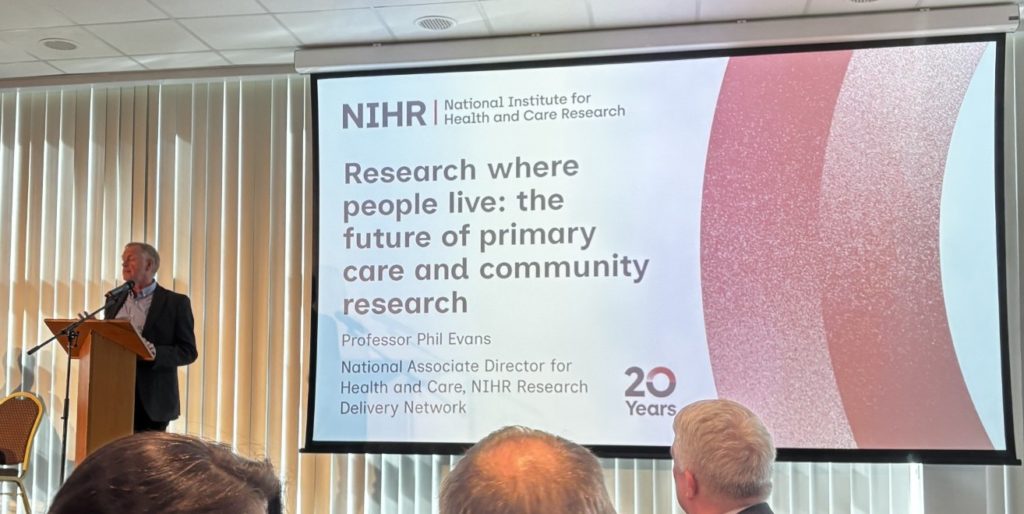
Overall, the day was a great opportunity to hear about some of the amazing, inspiring and life-changing NIHR-funded research that is being conducted in the region. But I’ll perhaps end my reflections on the event by considering Prof. Phil Evan’s thoughts on the future of primary care and community research. Stealing an idea unashamedly from the government’s NHS 10-Year Plan, he presented “Phil’s Shifts”. Government policy has three shifts. Phil has nine. I think they’d make a good blog, so I won’t repeat them all, in case I can persuade him to write them down. Suffice it to say they are pretty comprehensive, including scaling up research, making it easier for patients to engage, highlighting genetics and digital, taking research “to the patient”, and driving commercial research. And perhaps the one I liked the most: “research as care”, with research moving from something that is “nice to have”, to something that is integrated in both care and careers. I think we have work to do to shift attitudes in general practice in that direction, but it’s a fantastic challenge and something I think all of us in APEx should aspire to deliver.