Why all the roped off areas
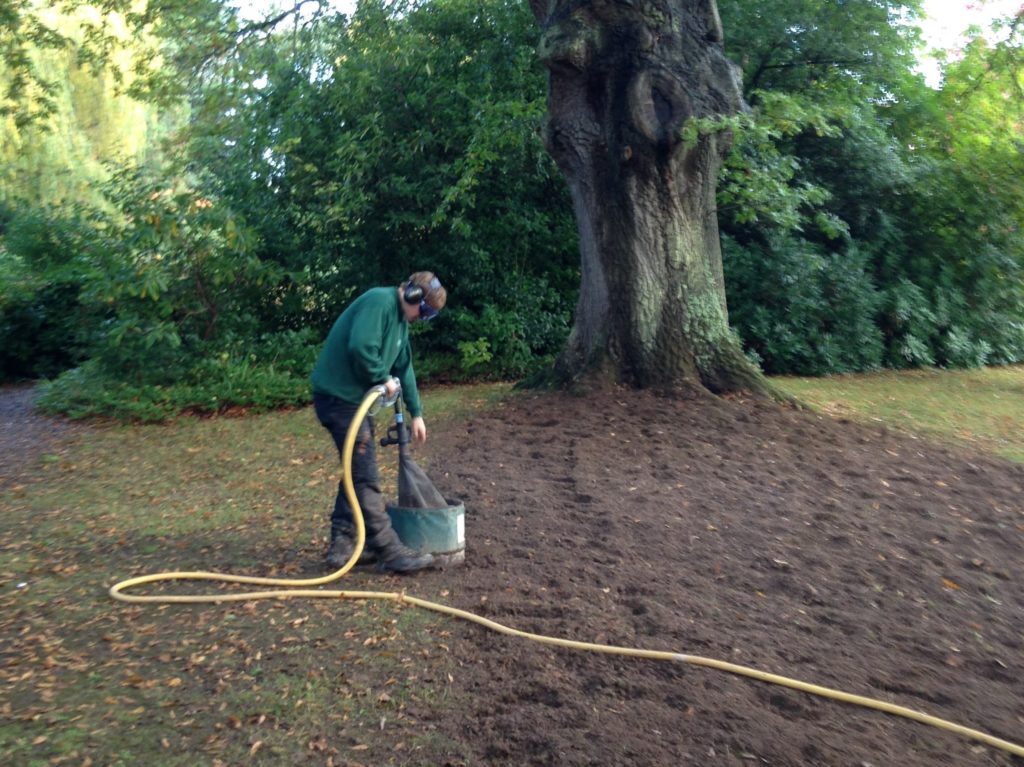
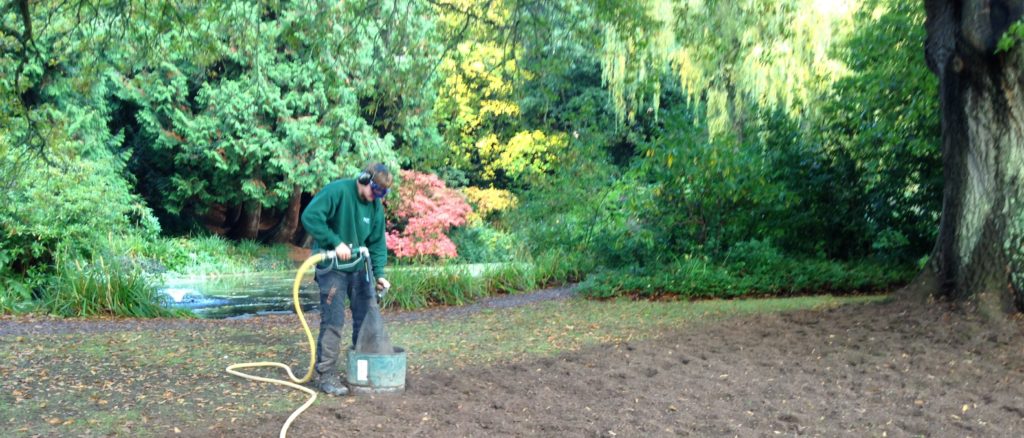
Year upon year the foot traffic and machinery use over the root plates of mature specimen trees along the top of Reed Hall, has caused the soil to become heavily compacted altering the vitality of several mature specimens.
We have been using an air spade to reverse the effects of soil compaction and repeat mulching to try and revive a line of struggling mature specimen trees
Using an air spade around trees is one of the safest and most effective ways to relieve soil compaction without damaging roots. An air spade uses compressed air to break up compacted soil while leaving most roots, utilities and buried structures intact.
Here are the main benefits:
Reduced Root Damage
Traditional excavation with shovels or machinery can sever fine feeder roots and larger structural roots. An air spade loosens soil by air pressure, exposing roots with far less physical injury. This is especially important for mature or valuable trees.
Improved Soil Aeration
Compacted soil limits oxygen availability around roots. Tree roots need oxygen for respiration and nutrient uptake. Air spading creates pore spaces in the soil, improving airflow and restoring healthier root-zone conditions.
Better Water Infiltration and Drainage
Compaction often causes water runoff or waterlogging because water cannot move properly through dense soil. After air spading, water penetrates more evenly into the root zone, helping trees access moisture more effectively.
Enhanced Nutrient Uptake
Loosened soil allows roots to expand and function more efficiently. It also makes it easier to incorporate organic matter, compost, biochar, or mycorrhizal inoculants into the root zone.
Encourages Root Growth
Roots tend to struggle or circle in compacted conditions. Decompaction encourages new feeder root development, which improves overall tree vigor, canopy density, and resilience.
Safer Around Sensitive Trees
Air spading is commonly used around:
- veteran or heritage trees
- trees under construction stress
- declining urban trees
- recently transplanted specimens
It is widely used in arboriculture because it minimizes disturbance compared with mechanical digging.
Because roots become exposed without major damage, arborists can inspect for:
- girdling roots
- root rot
- buried root flare
- construction damage
- poor planting depth
This makes air spading both a treatment and diagnostic tool.
Common Situations Where It Helps
Air spading is especially effective when compaction has been caused by:
- pedestrian traffic
- parked vehicles
- construction equipment
- hard landscaping
- repeated mowing over root zones
After decompaction, our arborists will continue to apply mulch to help maintain improved soil structure and reduce future compaction. Air spading is most effective when combined with longer-term soil management. If the source of compaction continues — for example constant foot traffic or vehicle loading — the soil may compact again relatively quickly this is why these areas are roped off to pedestrian traffic.