
Histories of Fertility and Infertility:
Premodern Experiences and Modern Resonances
Histories of Fertility and Infertility:
Premodern Experiences and Modern Resonances
Although blame for infertility was more often placed on women, it was acknowledged that men, too, might suffer from the inability to make their wives pregnant, and might seek advice to remedy this. One of our best accounts from the 17th century on this matter, is from none other than Samuel Pepys, who records and discussions the issues with infertility and conception in his diary.
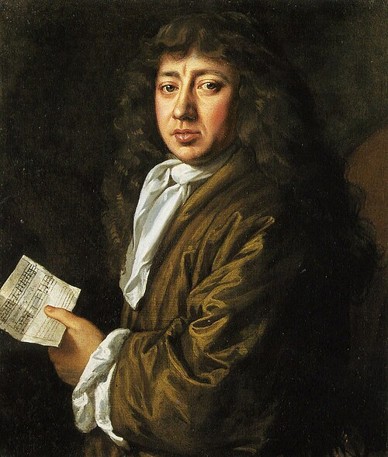
Personal accounts are very hard to come by, but the prolific diarist Samuel Pepys records several times his hopes of fatherhood and disappointment when his wife Elizabeth proved not to be with child, usually by the onset of her menstruation:
‘This morning waking, my wife was mighty-earnest with me to persuade me that she should prove with child since last night, which, if it be, let it come, and welcome.’ (Friday 6 November 1663)
[this is probably a reference to the idea that mutual orgasm would lead to conception]
‘So home, where my wife having (after all her merry discourse of being with child) her months upon her is gone to bed.’
(Tuesday 27 September 1664) Pepys Diary
Pepys clearly did not hide his desire to become a father as he further records a discussion with a group of ‘gossips’ – female birth attendants – after a dinner for them, when he alone of the men present left the table with them for further conversation.
The women give him a list of things that he and Elizabeth should do, including not only taking warming drinks that were perceived as healthy (mum – strong German ale that could include infusions with herbs – and sugar), but also a herbal drink containing sage, probably intended for Elizabeth to take.
… at noon to Antony Joyce’s, to our gossip’s dinner. I had sent a dozen and a half of bottles of wine thither, and paid my double share besides, which is 18s. Very merry we were, and when the women were merry and rose from table, I above with them, ne’er a man but I, I began discourse of my not getting of children, and prayed them to give me their opinions and advice, and they freely and merrily did give me these ten, among them (1) Do not hug my wife too hard nor too much; (2) eat no late suppers; (3) drink juyce of sage; (4) tent and toast; (5) wear cool holland drawers; (6) keep stomach warm and back cool; (7) upon query whether it was best to do at night or morn, they answered me neither one nor other, but when we had most mind to it; (8) wife not to go too straight laced; (9) myself to drink mum and sugar; (10) Mrs. Ward did give me, to change my place. The 3rd, 4th, 6th, 7th, and 10th they all did seriously declare, and lay much stress upon them as rules fit to be observed indeed, and especially the last, to lie with our heads where our heels do, or at least to make the bed high at feet and low at head.
26 July 1664, Pepys Diary
Women were not solely responsible when it came to infertility. There were also steps men could take in order to ensure conception. Read below for advice from The Directory of Midwives (1668) – which offered advice to both men and women on how to challenge infertility.
Look in what part of the Body the Faculty which you would strengthen lies, and take the same part of the Body of another Creature, in whom the Faculty is strong, as Medicines. For Example, The Vertue Procreative lies in the Testicles, therefore Cock-stones. &s. are Medicinal for this Disease.
Other remedies recommended were listed:
These remedies were anticipated as provoking lust and so enabling conception by encouraging successful sexual intercourse.
Nicholas Culpeper, A Directory for Mid-wives: Or, A Guide for Women, In their Conception, Bearing, and Suckling their Children (Edinburgh, Printed by George Swintoun and James Glen, and are to be sold at their Shops, 1668), p. 65.
Anna Whitelock recorded the support of her husband in their want of children:
for in that sad tryall in the want of children I always had this comfort that my dearly beloved husband did never abrad me with the want of children nay he was so fearfull and so tender over me: least that I should greive for want of children that I never hard him so much as wish for any before me for fear of ading to my affliction he had as much reason for to desire children as ever any man had; for he was his fathers only son: and he was heir to a very great estate to speake truely we had all things in very great plenty children only exsepted; and if ever my deare husband se me sad: or melancholy for want of children: he would use all arguements that either love as a husband or counsell as a Christan could invent: …
Mary Whitelocke, Memoir, c. 1660s, Robert H. Taylor Collection of English and American Literature, RTC01, Manuscripts Division, Department of Special Collections, Princeton University Library (unpaginated). Online, 100-1.