Histories of Fertility and Infertility:
Premodern Experiences and Modern Resonances
Histories of Fertility and Infertility:
Premodern Experiences and Modern Resonances
Medieval and early modern authors also talked about experiences of pregnancy loss. In an age before modern pregnancy testing, it must often have been difficult to distinguish early miscarriage from infertility and some of the people found on the other parts of this website likey experienced both – for example, Catherine of Braganza, the wife of Charles II. Nonetheless, premodern people knew that pregnancies could end at any stage, and they talked about the emotional impact of pregnancy loss, as well as how they tried to prevent it.
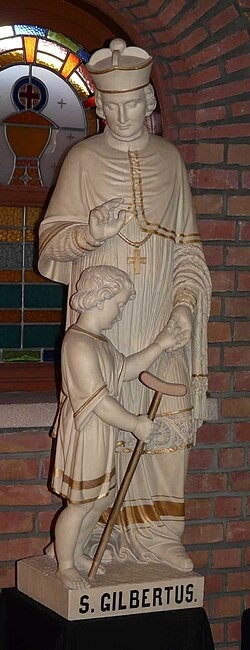
Again, holy helpers like the saints could help. The Book of St Gilbert, a compilation of miracles said to have been performed by the twelfth-century English monk Gilbert of Sempringham (d. 1189) described how a woman who had suffered from repeated miscarriages was helped by wearing Gilbert’s belt. This was a precious relic, believed to be imbued with holy power because it had been in close contact with the saint’s body.
We know of a noblewoman who miscarried every time she conceived. Another great lady gave her the girdle which had been tied about the saint under his clothing, next to his skin. Wearing this constantly in exactly the same way, she conceived and bore a son and another after him, who are still living and flourish in riches and honours.’ The author of the miracle story emphasized that preventing a pregnancy loss was ‘a power… which is not inferior to that of raising the dead.
(Translated in The Book of St Gilbert, ed and trans. Raymonde Foreville and Gillian Keir (Oxford, 1987), p. 113).
Here we can see a noblewoman taking precautions against miscarriage, and women sharing advice among themselves.
In later centuries women continued to lean on their faith to help with infertility and miscarriage. They also made use of what they saw as remedies provided by God, such as ‘physick’ (medicine) and taking the waters. Mary Whitelocke, an English gentry woman, wrote a memoir in the 1660s, which described her experiences of infertility and, later, miscarriage:
… we had been much in prayer to the Lord for a child as Hannah did (1 Sam. 1-2) and at last the Lord h[e]ard my prayer after I had taken very much phisake and been at the waters and at the bath I told my dear husband that I thought it was the will of god to have us be without children and therfore would rest sactisfied in his will and would try noe more meanes but we did continue praying for a h[e]art to submit unto gods good pleasure: whether he would give me any or not: I had not long been in this quiate [quiet] frame of spirit: but at the end of 14 yeares waiting upon god: then at last the Lord did looke down upon my condition and gave me strength to conceive with child: to the great ioy of me and my husband: but we ware noe sooner in hop[e]s of a child but god did blast all our ioys; for when I was some 14 weekes gone with child I did miscarry which was a very great grife to me …
(Mary Whitelocke, Memoir; Robert H. Taylor Collection of English and American Literature, RTC01, Manuscripts Division, Department of Special Collections, Princeton University Library(unpaginated): online at: WHITELOCKE, MARY, Memoir, circa 1660s – Finding Aids, pp. 106-7)
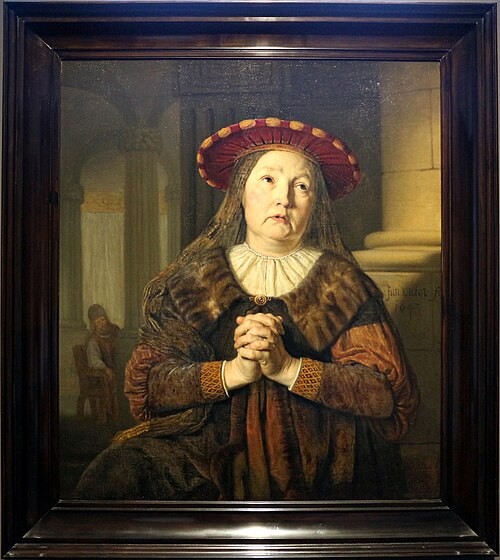
Mary had modelled her prayers on those of Hannah in the Bible, who in 1 Sam. 1-2 prayed to God for a child and later gave birth to the prophet Samuel.
Mary’s husband comforted her in her pregnancy loss but not long afterwards she suffered a further bereavement as her husband died after a short illness of four months. Before he died, he urged her to remarry, which she did, to a man who already had ten children from previous marriages, Sir Bulstrode Whitelocke (1605-1675; lawyer, politician and diplomat), with whom she finally conceived and bore a child – the son, Samuel, born 30 May 1651, to whom she dedicated her memoir. It is no coincidence that Mary’s eldest son was named Samuel, after Hannah’s miraculous child. She bore four more sons and two daughters.