
Histories of Fertility and Infertility:
Premodern Experiences and Modern Resonances
Histories of Fertility and Infertility:
Premodern Experiences and Modern Resonances
Before the Reformation women in the sixteenth century women across Britain and Europe visited Holy Wells such as the one at Walsingham to seek a remedy for their childlessness.
Following the Reformation, though, such a pilgrimage was seen as a relic of the Catholic past (or a dangerous statement of continuing adherence to the Catholic Church), and healing waters became rebranded as medicinal with those who promoted them extolling the virtues and benefits of their mineral properties.
Hot springs and baths – spas – also became sites of fashionable sociability and the towns around them expanded to provide accommodation and services to those who now flocked to them.
Both Catherine of Braganza (1638-1705, married to Charles II) and Mary of Modena (1658-1715, married to James II) suffered several miscarriages during their marriages, fueling concerns about the succession to the English throne and the continuation of the Stuart dynasty.
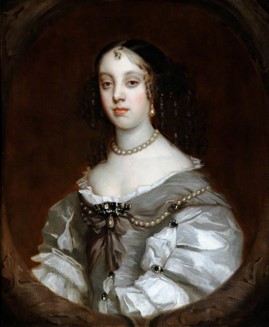
Both visited spas seeking treatment for their infertility. After a year of marriage to Charles, Catherine had not conceived and was advised to drink the waters at Tunbridge. She later bathed in the waters at Bath and returned to both several times to help her to conceive an heir, albeit without success.
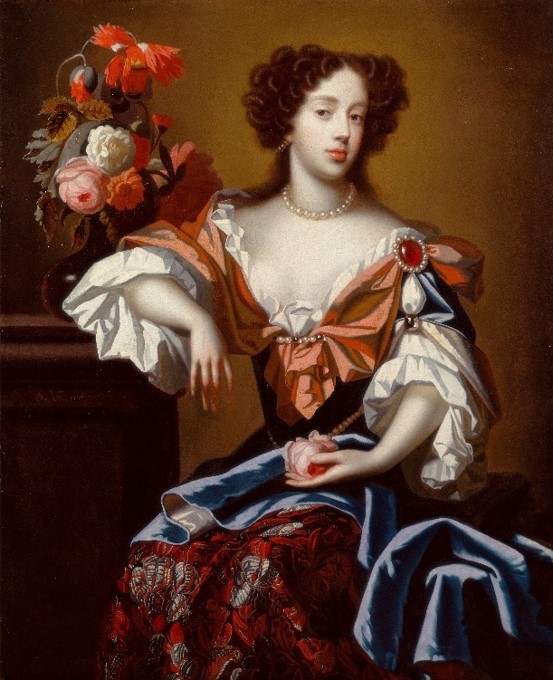
Mary, however, gave birth nine months after visiting the waters at Bath.
How do you test fertility? And who do you test? Many doctors from the ancient world to the eighteenth century offered an answer. Trying to conceive was an uncertain process, hard to diagnose, and perhaps a test like this offered a way to manage that uncertainty, giving reassurance and confidence.
‘Take two pots and in each one place some wheat bran. Put some of the man’s urine in one of the pots with the bran, and in the other put some urine of the woman with the rest of the bran, and let the pots sit for nine or ten days. If the infertility lies with the woman, you will find many worms in her pot and the bran will stink. You will find the same thing in the other pot if it lies with the man. And if you find this in neither, then in neither is there any problem and they can be aided by the benefit of medicine so that they might conceive.’
(modified from the translation by Monica Green in The Trotula: a Medieval Compendium of Women’s Medicine, pp. 76-7)
This test was repeated with slight variations into the very late eighteenth century (and beyond) in texts such as Aristotle’s Masterpiece (1684), a hugely popular book about reproduction and childbirth that was still being sold in the early twentieth century.
In a 1799 version, the test required the man and woman to ‘water’ their pot with their urine every morning; the one whose barley (or other quick-growing corn) that grew was ‘fruitful’, the one that did not was ‘barren’.
Historical men and women might try this, or other tests to find out why they were struggling to conceive. This test, which was cheap and relatively simple, offered a way to find out where the infertility lay and shows that male infertility was regarded as a real possibility.
The test opened the way to possible treatments – by pinpointing where the infertility lay, a doctor could make sure the treatment was appropriate.
But the test also offers a different outcome: it could reassure the couple that nothing was seriously wrong, and medicines would work.
The history of fertility includes many supernatural helpers like St Margaret. Women and men who were trying to conceive called on them for comfort and for practical help – in a world where almost everyone believed in God, it made sense to try and enlist some divine support, and you could do this alongside medicine, or as an alternative. In the long drawn-out process of trying to conceive, there was time to try different approaches, and a need to keep faith.
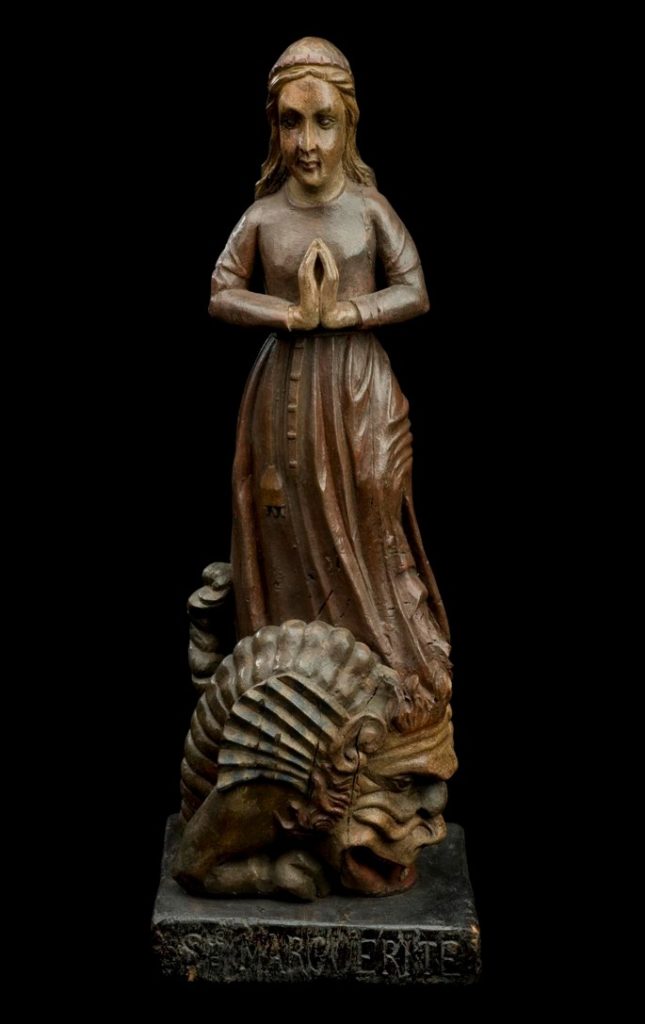
St Margaret has long been associated with conception and childbirth. Women who wanted to conceive, or were afraid of a difficult birth, prayed to her, asking her to intercede with God to help them. The story goes that she was swallowed by a dragon, but she made the sign of the Cross and was released unharmed. This miraculous escape resonated with the experience of childbirth.
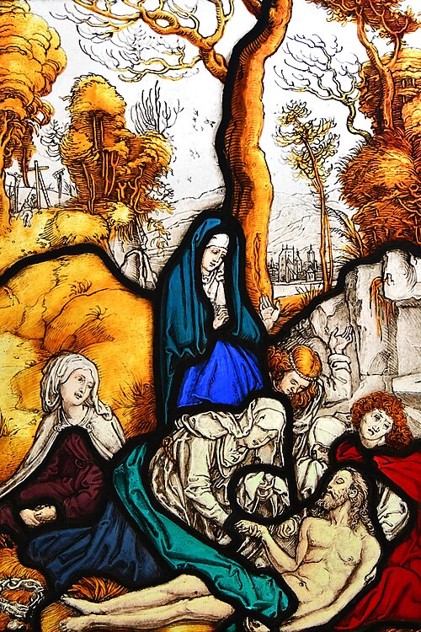
One woman who appealed to a supernatural helper was Margaret of Anjou, the wife of King Henry VI of England. Margaret and Henry were married for eight years before their son was born, and their childlessness was a matter of public comment because it left the kingdom without an obvious heir. Margaret and Henry likely spoke to physicians, but Margaret also made pilgrimages to the Virgin Mary’s shrine at Walsingham in Norfolk – one of many saints’ shrines dotted across Europe.
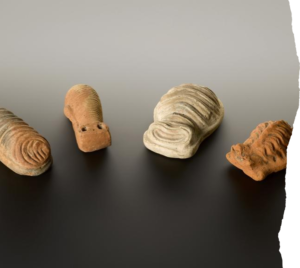
These terracotta votive wombs were left at shrines and sacred places as offerings, to ask for healing or give thanks for a cure received. Very many of them survive – and often wombs and other body parts were mass produced for pilgrims. The women or men who left them behind may have been asking for a cure for a gynaecological problem, or for fertility. Appealing to a saint or god, or travelling to a shrine, was – and remains – a powerful response to fertility problems and other health issues. For these Roman pilgrims, seeing a mass of wombs and other body parts at a shrine would have reminded the men and women who came that they were not alone: other people had had the same problems. It might also have provided reassurance: all these people had had a successful outcome.
Just as there are recommendations today about diet to promote fertility for couples seeking to conceive, so too, in the past, physicians advised what should be consumed depending on what was seen to be the likely cause of an inability to conceive.
Food has been associated with treating infertility and conception back to ancient times as can be seen in this passage from Aristotle.
Then since the Diet may, and will alter the evil state of the Body to a better, it is necessary that such as are subject to Barrenness should eat such meat only as tend to render them fruitful; and among such things as are inducing and stirring up thereto, are all meats of good juice, that nourish well, and makes the body lively and full of sap: of which Faculty are all hot moist meats
(Aristotle’s Masterpiece, Or the Secrets of Generation displayed in all the parts thereof (London, 1684).
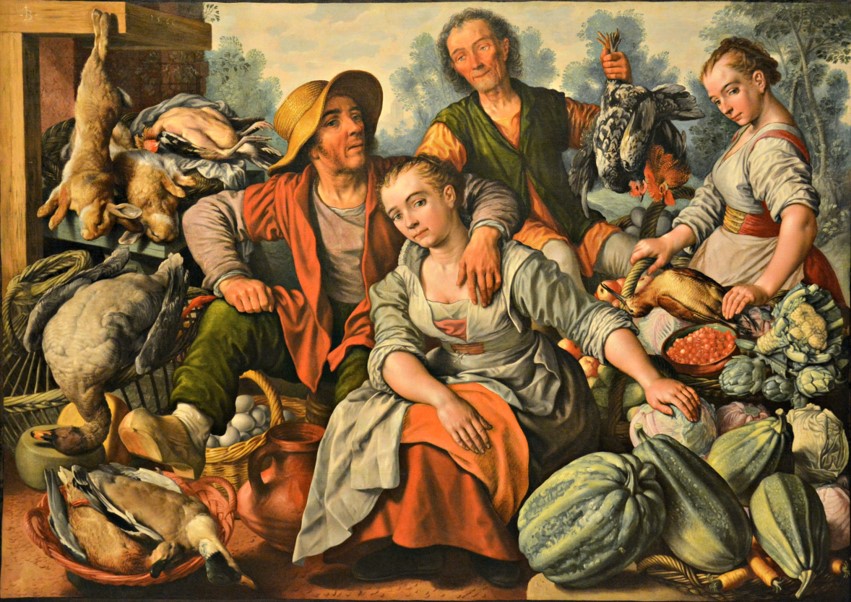
In the 17th century, warming drinks that were perceived as healthy (mum – strong German ale that could include infusions with herbs – and sugar), but also a herbal drink containing sage, probably intended for Elizabeth to take. Sage was used as a remedy for menstrual problems but also was reputed to promote female fertility. John Parkinson in his 1640 compendium of herbs and their properties notes that it can help women conceive.

Heat and gravity were thought to play a role in infertility. The advice to raise the heels higher than the head referenced the idea that couples should seek to retain the ‘seed’ within the womb and not let it run out.
We can also see ideas connected to the humoral model of the body in advice to be neither too hot nor too cold, both of which could be inimical to conception. Important advice here is not to overheat the genital parts and so to ‘wear cool holland drawers’.
Ultimately fertility was understood as in the gift of God who could bestow or withhold it.
Lady Grace Mildmay ( 1552-1620) wrote in the sixteenth century:
When I was married and became a woman in the world, I was childless almost ten years and then in my greatest troubles and wants of comfort, the Lord sent me children.’
Linda Pollock, With Faith and Physic: The Life of a Tudor Gentlewoman Lady Grace Mildmay 1552-1620 (London: Collins & Brown Ltd, 1993), p. 86
Mary Whitelocke wrote in her memoir, c. 1660s:
… we had been much in prayer to the Lord for a child as hannah did and at last the Lord h[e]ard my prayer after I had taken very much phisake [phsysick] and been at the waters and at the bath I told my dear husband that I thought it was the will of god to have us be without children and ther[e]fore would rest sactisfied [sic] in his will and would try noe more meanes but we did continue praying for a h[e]art to submit unto gods good pleasure: whether he would give me any or not: I had not long been in this quiate [quiet] frame of spirit: but at the end of 14 yeares waiting upon god: then at last the Lord did looke down upon my condition and gave me strength to conceive with child: to the great ioy of me and my husband: but we ware [were] noe sooner in hop[e]s of a child but god did blast all our ioys; for when I was some 14 weekes gone with child I did miscarry which was a very great gri[e]fe to me …
Princeton University Library, Special Collections and Taylor, Robert Hill (1908-1985), Item 226 (unpaginated)