
Histories of Fertility and Infertility:
Premodern Experiences and Modern Resonances
Histories of Fertility and Infertility:
Premodern Experiences and Modern Resonances
For many couples in many periods of history, there was an expectation that having children would follow quickly on marriage. Gifts like a wedding belt emphasized the importance of fertility.
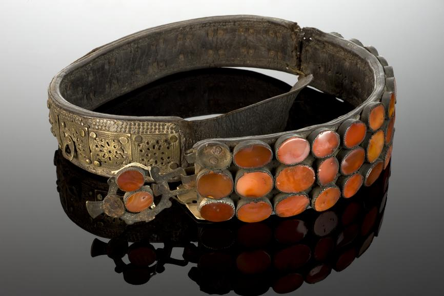
This wedding belt comes from southern Russia, perhaps from a Jewish community, and dates to the eighteenth or nineteenth century. It’s a valuable and attractive gift, with its careful workmanship and inlaid red carnelian stones. But the belt also had a practical purpose: in Jewish communities, belts were often given to the bride and groom on the eve of the wedding to promote fertility.
The marriage service also stressed that marriage was expected to lead to children. The Sarum Missal, which set out the wedding service used in medieval England, included the following prayer for a woman getting married:
‘May she be fruitful in child-bearing, innocent and of good report, attaining to a desired old age, seeing her children’s children unto the third and fourth generation; and may she attain to the rest of the blessed, and to the kingdom of heaven.’
This was a way of asking for God’s help towards a desired goal but it also increased the pressure women and men must have felt to have children.
On the other hand, fertility wasn’t the only thing that mattered for a successful marriage. The prayers in the Sarum Missal also asked for God to give the bride other blessings not connected to fertility, based on the examples of women in the Bible:
‘May love and peace be upon her… May she be amiable to her husband as Rachel, wise as Rebecca, long-lived and faithful as Sara…. May she be bashful and grave, reverential and modest, well-instructed in heavenly doctrine.’
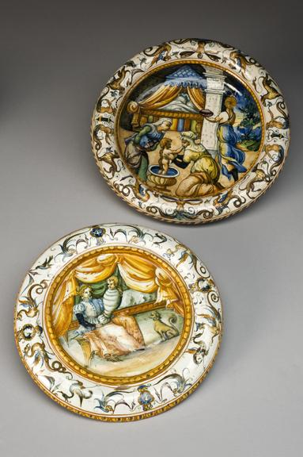
This platter from sixteenth-century Italy also shows how childbearing was an expected part of marriage. It shows a baby being washed after birth, and a woman nursing a swaddled baby. Dishes like this were often given as gifts to new mothers – but for women and men without children, they reinforced the importance of having a child.
Having children was important, but there were also other expectations, and other ways to find a happy, peaceful marriage – and, ultimately, to get to heaven.