

Posted by ccld201
13 February 2026In Minneapolis, a nationwide migrant crackdown led to masses of U.S. Immigration and Customs Enforcement (ICE) officers being sent to the city, with protests met by tear gas and stun grenades as the mayor described the city as being invaded by federal agents. This scene is mirrored halfway across the world in Kashmir, where the logic of enforcement is done through protest crackdowns to produce mass blinding through pellet gun deployment[1]. In both places, the state claims legality and enforcement as a direct reaction to security threats. Dignity is universal and inherent in all human beings under Article 1 of the Universal Declaration of Human Rights. Yet states govern in ways that make people unequal in dignity, with formal membership (citizenship) determining who is protected, who is heard as credible, and who can obtain remedy when harmed.
These two sets of events demonstrate the biopolitics of harm[2], under which militarised policing produces populations that are ‘less-than-grievable’, not just through violence, but also through immunity structure, legal categories and narrative control.
From Citizen to Suspect to Enemy
Militarisation demotes personhood, it recodes people from equal members of the political community into suspects and enemies, which makes it easier to withdraw their dignity and easier to justify injury. The account of dignity begins with who is considered as belonging to the community. Within a democracy, the social contract ensures that coercive power is constrained by rights, due process and equal concern for all. Militarisation disrupts that by recording targeted populations as threats rather than members of the community equally deserving dignity. This is done beyond military equipment, by what Regan categorises as “cultural” militarisation in which police adopt an adversarial stance towards minority communities, treating them as presumptive objects of suspicion[3]. In its extreme form, “police work becomes akin to deployment in warfare”[4], whereby people become enemies rather than members of the community. Enemies are imagined outside the social contract and not entitled to the kind of concern that ‘fellow citizens’ deserve. The message becomes: some are deserving of the benefits of citizenship, where others are not, threatening the foundations of a liberal democracy[5].
The demotion of personhood can be exemplified through ICE becoming a symbol of fear as they conducted raids in schools, hospitals, churches and workplaces, spaces normally associated with social membership and dignity. “Sensitive Locations” guidance signalled that even non-citizens’ dignity meant that they should access education, healthcare and worship without fear of deportation or policing[6]. The Trump administration dismantling these protections on January 1st, 2025, transformed ordinary life into a risk calculus, where essential institutions of personhood become sites of surveillance and capture[7].
The regime is sustained by narrative. Officials frame law enforcement as targeting ‘criminals’, yet the same instances document the targets as ordinary families and long–term residents without criminal records, wrongfully interrogated and detained based on racial bias. Security becomes the driving rhetoric that allows militarised policing to coexist with democracy and diminish human rights[8].
Governance of Injury
Puar helps make sense of what is happening when states claim restraint while producing mass harm[9]. Her account of debility insists that governance strategy often involves the production of injury and reduced capacity. The genealogy of the accidents helps determine that the accident is no accident. What appears as collateral harm (detention, blinding, maiming or killing) is not a mere consequence of policing but part of the biopolitical scripting of populations available for injury[10].
This ‘governance of injury’ shows why states prefer maiming to killing. In Kashmir, the use of pellet guns is repeatedly defended as non-lethal, with the state insisting that they have exercised restraint. However, this technology is designed to do the opposite; the dispersal of pellet firing does not aim to have precision policing of threat but the mass production of injury[11].
Kashmir and Militarised Legality
Kashmir shows us the concentrated form of how law can normalise an occupied social order. Zia describes Kashmir as a late modern colonial occupation that is maintained by massive counterinsurgency deployment and emergency laws such as AFSPA and the PSA which facilitate extrajudicial violence and preventive detention[12]. Creation of disturbed areas framework under these special orders legally designates civilian space as a security zone activating AFSPA powers. In Kashmir, the Indian State entrenches control through previous sanction immunity, shielding Indian forces from legal action unless Central Government grants permission to prosecute[13] .
That logic travels. In the U.S., ICE is framed as civilian, but the law still creates exceptions and fear. After “sensitive locations” protections were dismantled, these have become spaces of enforcement anxiety, and people’s dignity has become conditional on their invisibility within these spaces[14]. In Kashmir, pellet violence creates a permanently injured body[15] while ICE governance creates a slow death through detention, but also by a form of psychological warfare that is driven by fear[16].
Permission to Narrate; Permission to Mourn
Said points out that evidence is often buried, and facts only travel when they fit an “authorised” story. He states, “facts do not at all speak for themselves”, they require a “socially acceptable narrative”[17]. This is illustrated in Kashmir through what Misri calls an “optical regime”[18]that sustains occupation by erasing the humanity of pro-azadi kashmiris (Pro-Free Kashmir). After the killing of Burhan Wani in July 2016, hundreds were blinded in protest crackdowns with the deployment of pellet guns. However, their injuries and deaths went largely ungrieved within Indian political and media spaces. The question became clear here: why must Kashmiri bodies prove they are human by putting wounded flesh on display, taking on the burden of ‘performing humanity’[19] to become ‘mournable’ at all?
In the recent ICE shooting of Renee Nicole Good in Minneapolis, we see the permission to narrate and mourn contested in real-time. Frame-by-frame footage from the shooting shows how quickly what happened is fought over; the story comes down to 399 milliseconds (the gap between the first two shots fired by an ICE agent). DHS publicly cast Renee Nicole Good as a violent rioter who “weaponized her vehicle” in an “act of domestic terrorism,” insisting the agent acted in self-defence. Even when Trump called the footage “a horrible thing to watch”, he framed the screaming woman as a “professional agitator”.[20] The struggle is not only over facts, but over whether the dead can be mourned as a life wrongfully taken or reclassified as a security object whose death is narratively justified.
Administered Dignity
What ties ICE militarisation and Kashmir militarisation together is not identity of context, but a shared structure of hierarchy of whose body counts. Militarisation records people as enemies; law supplies discretion, immunity, and exception; and narrative control restricts who can speak and be mourned.
There is a need to challenge a deeper architecture of social membership and restrictions that turn individuals into suspects and enemies. The slow violence and narratives push injured bodies to perform humanity to qualify for empathy.
In both contexts of Kashmir and Minneapolis, the question is whose life is mourned? The biopolitics of harm is not just about violence; it is also about the administration of dignity and the democratic crisis that governs who has dignity and who has not.
Conclusion
This post has argued that dignity becomes unevenly distributed when states decide whose bodies are protected and whose injuries are credible, who may be mourned and who may not. Part II, prompted by recent developments in Minneapolis including the killing of Alex Pretti , examines how intensified immigration enforcement and contested public narratives make these dynamics visible in real time.
Zainab Zafar is a freelance journalist from Pakistan, and a University of Exeter Law School graduate.
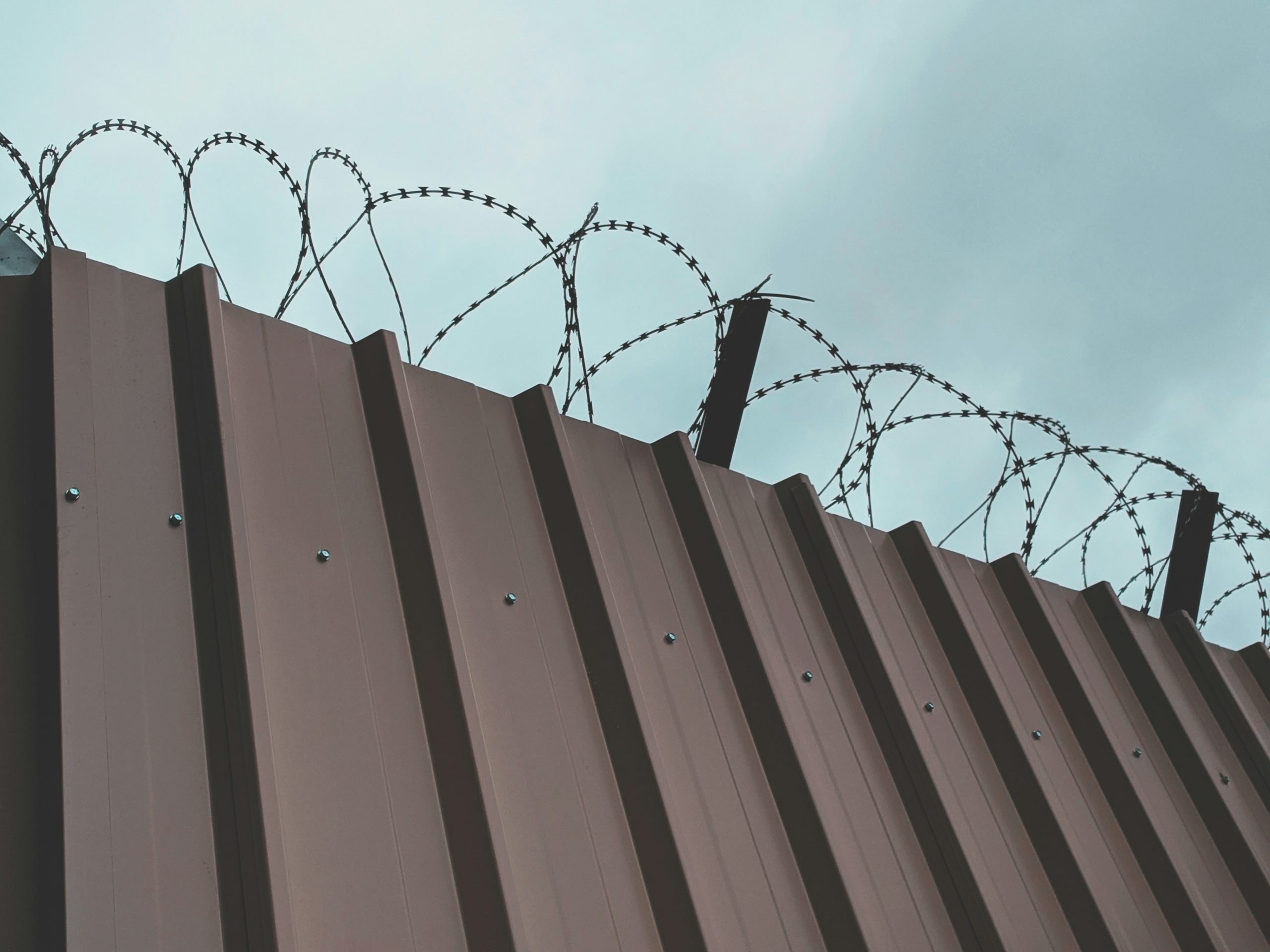
Photograph by Sigmund on Unsplash
[1] Ather Zia, ‘Blinding Kashmiris’ (2019) 21 Interventions 1.
[2] I use ‘biopolitics of harm’ to describe governance that manages life at the level of populations by sorting some lives as protectable and others as injurable, so that injury and death are administered as security rather than recognised as violations of dignity. See Daniel Zimmer, ‘The Power to Kill Life Itself: Michel Foucault, Biopolitics, and the Political Challenge of Human Extinction’ (published online 20 March 2025) Perspectives on Politics 6 (quoting Foucault’s definition of biopolitics as what brought ‘life and its mechanisms into the domain of explicit calculations’).
[3] Mitt Regan, ‘Citizens, Suspects, and Enemies: Examining Police Militarization (Winter 2021)’ [2021] repositories.lib.utexas.edu <https://repositories.lib.utexas.edu/handle/2152/84735>.
[4] Ibid.
[5] Ibid.
[6] Syona Vashisth, ‘The Human Cost of ICE: Stories of Abuse and Neglect’ (Journalists for Human Rights 6 October 2025) <https://jhrmcgill.ssmu.ca/2025/10/06/the-human-cost-of-ice-stories-of-abuse-and-neglect/> accessed 22 January 2026.
[7] Emelynn Arroyave and Oprah Cunningham, ‘The Human Costs of Trump’s Immigration Crackdown’ (The Leadership Conference on Civil and Human Rights14 February 2025) <https://civilrights.org/blog/the-human-costs-of-trumps-immigration-crackdown/>.
[8] Vashisth (n6).
[9] Jasbir K Puar, The Right to Maim: Debility, Capacity, Disability (Duke University Press, 2017) 63.
[10] Ibid 64.
[11] Deepti Misri, ‘Showing Humanity: Violence and Visuality in Kashmir’ (2019) 33 Cultural Studies 527.
[12] ‘“Everyone Lives in Fear” Patterns of Impunity in Jammu and Kashmir’ (Human Rights Watch 2006) <https://www.hrw.org/report/2006/09/11/everyone-lives-fear/patterns-impunity-jammu-and-kashmir> accessed 22 January 2026.
[13] Ibid 3.
[14] Vashisth (n 6).
[15] Zia (n 1).
[16] Regina D Langhout and S Sylvane Vaccarino‐Ruiz, ‘“Did I See What I Really Saw?” Violence, Percepticide, and Dangerous Seeing after an Immigration and Customs Enforcement Raid’ (2020) 49 Journal of Community Psychology 931.
[17] Edward Said, ‘Permission to Narrate’ (1984) 13 Journal of Palestine Studies 27.
[18] Misri (n 13).
[19] Misri (n 13) 533
[20] Kerem Inal and others, ‘Minneapolis ICE Shooting: A Minute-By-Minute Timeline of How Renee Nicole Good Died’ (ABC News9 January 2026) <https://abcnews.go.com/US/minneapolis-ice-shooting-minute-minute-timeline-renee-nicole/story?id=129021809>.