
Posted by e.m.vine@exeter.ac.uk
31 March 2026This month’s post explores the will of David de Crasto, who was born into a prominent Jewish family in London, and died in the city in 1784.[1] De Crasto’s will is an example of how illuminating probate documents can be, but also how they can omit or obscure key details of a person’s life.
De Crasto is described in the will simply as a ‘Gentleman’, yet he would have been well known in his lifetime as the ‘reader’, ‘cantor’ or ‘hazzan’ of the Spanish and Portuguese (Sephardic) synagogue. As a hazzan or precentor, De Crasto held a prominent position in the congregation, leading worship and directing the singing of prayers.[2] The record of his burial described him as ‘Hazan David de Isaac De Crasto’, but his title and position are not obvious from reading the will alone.
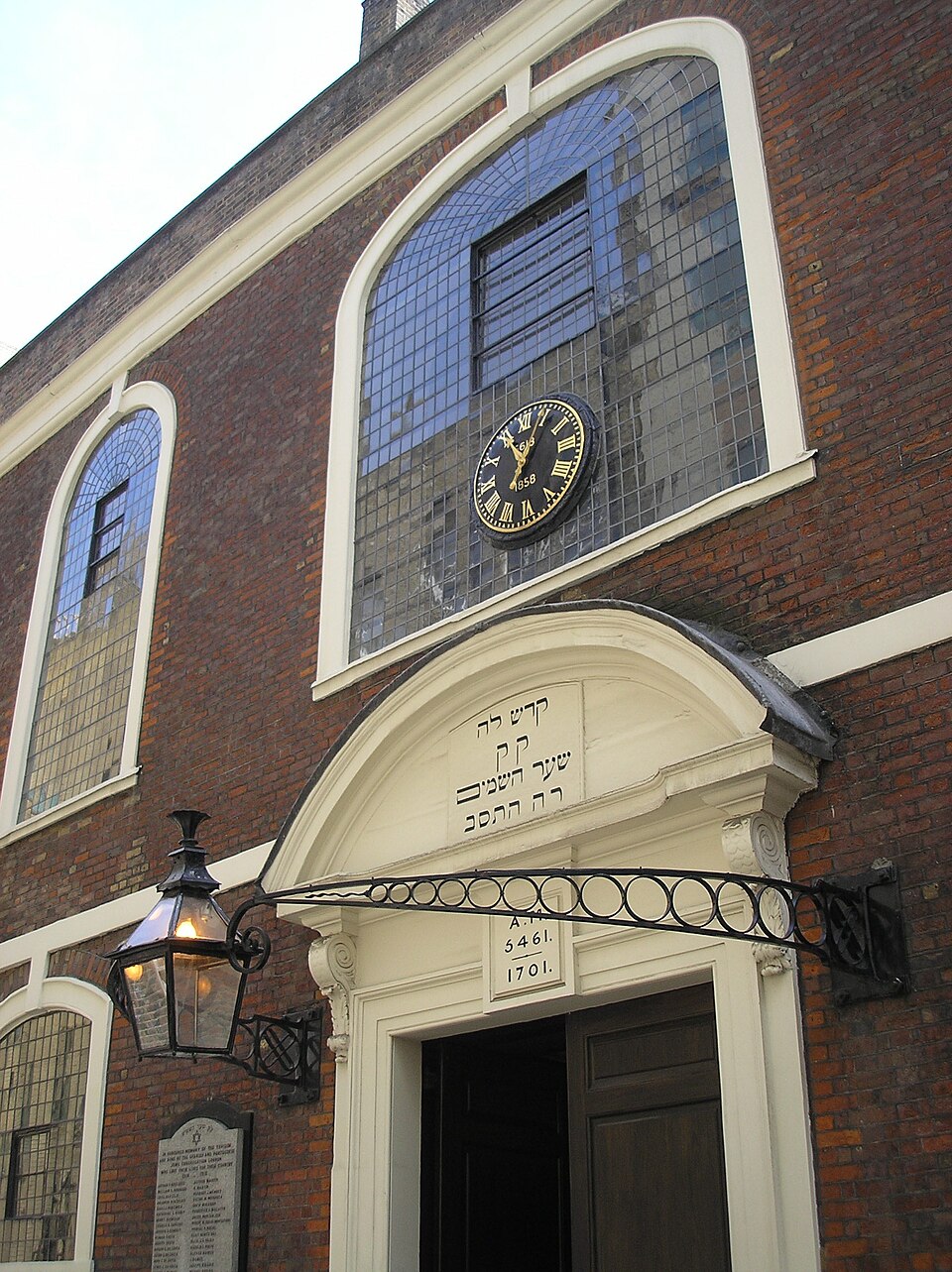
‘for the use and Benefit of the said Synagogue’
De Crasto’s address was identified as ‘Beers [Bevis] Marks London’. This is the same street as the Bevis Marks synagogue, which was established in 1701 and continues to operate from the same building today. It is the oldest synagogue in the United Kingdom that has been in continuous use. Like many Sephardic families, De Crasto ostensibly lived in the immediate vicinity of the synagogue, but equally he may also have identified himself as being ‘of’ the synagogue that he led. He also sought to provide for its continued maintenance and administration after his death, leaving ‘to the Rulers of the portiguese Jews Synagogue in London… Ten pounds Sterling for the use and Benefit of the said Synagogue’.
De Crasto left sums of money to many of his relatives, including his daughters and granddaughters. Notably, he took pains to ensure that any of his beneficiaries that were ‘ffemme Coverts’ (married women) should have these legacies ‘paid to them for their own use and benefit notwithstanding their Coverture’. In other words, he explicitly stated that he wanted his daughters and granddaughters to have access to their money, despite a law which prevented married women from having control over their own assets.
De Crasto’s unmarried daughter Esther received multiple bequests. He had entrusted his executors to invest the rest and residue of his estate, instructing them to ‘pay the Interest and Dividends thereof unto my said Daughter Esther for and during her Life’. Esther was also left ‘all the ffurniture China Glasses and pictures that shall be in my House at the time of my death’. While this is an umbrella term designed to encompass a variety of household objects, it nonetheless still gives a sense of the range of decorative goods, including chinaware and artworks, which De Crasto may have owned.
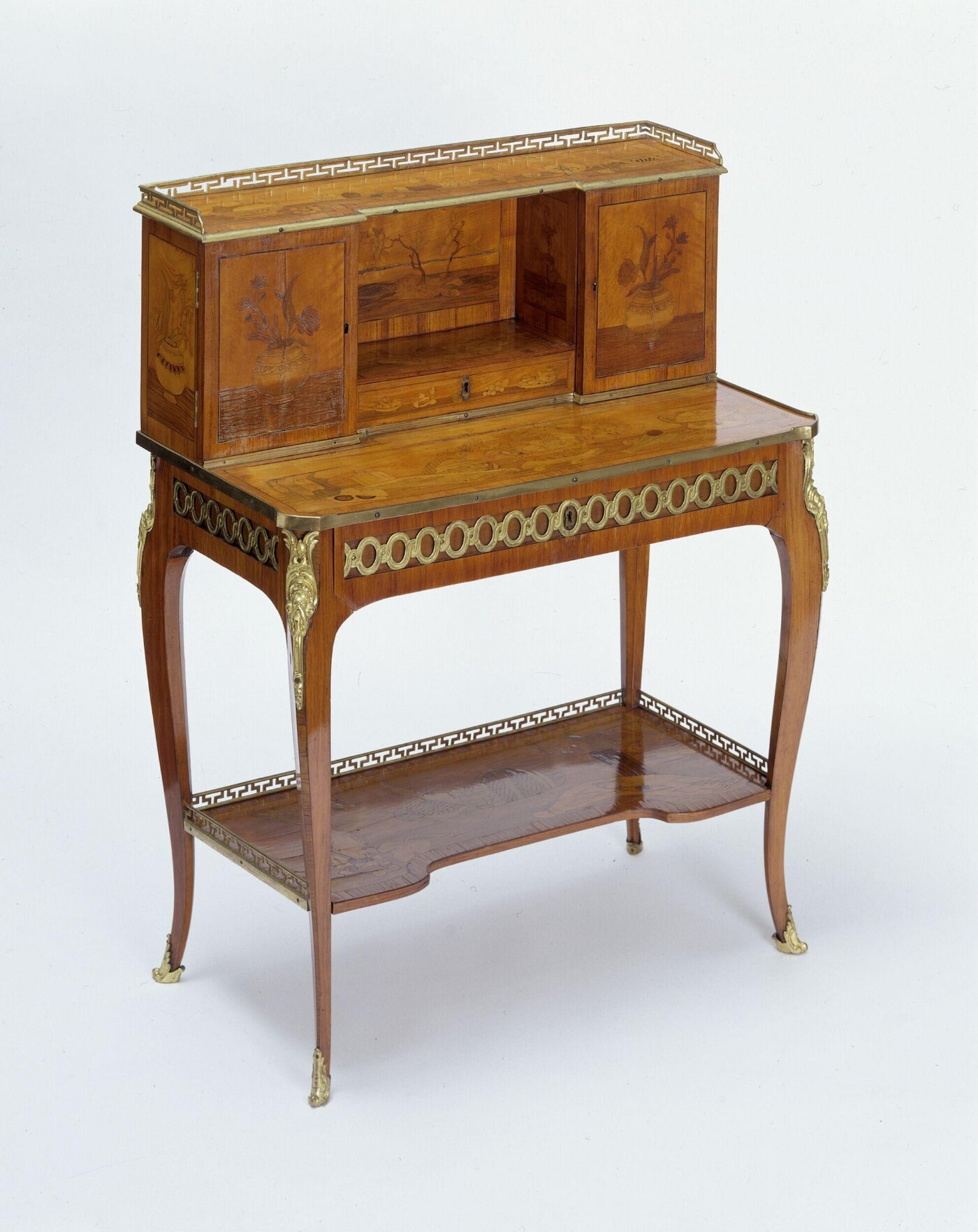
‘all that shall be found in my desk’
In a later codicil, De Crasto added ‘it is my pleasure and Will to bequeath to my Daughter Esther de Crasto my Desk at present at Mrs D’aguilar at Clapton with all the valuables Moneys Rings it may contain to serve her for Mourning at my decease’. The gift of her father’s desk would have been a substantial and personally significant bequest, while its ‘valuable’ contents were designed to either be used or sold to pay for Esther’s mourning wear. It is unclear why De Crasto had a desk at Mrs D’aguilar’s house at Clapton, some four miles from Bevis Marks. It is possible that he lodged there towards the end of his life. This bequest might also signal De Crasto’s connection to the establishment of Hackney’s first synagogue, near Clapton House, in 1779/80, which was linked to the movement of several prominent Jewish families to the area from the City of London.[3]
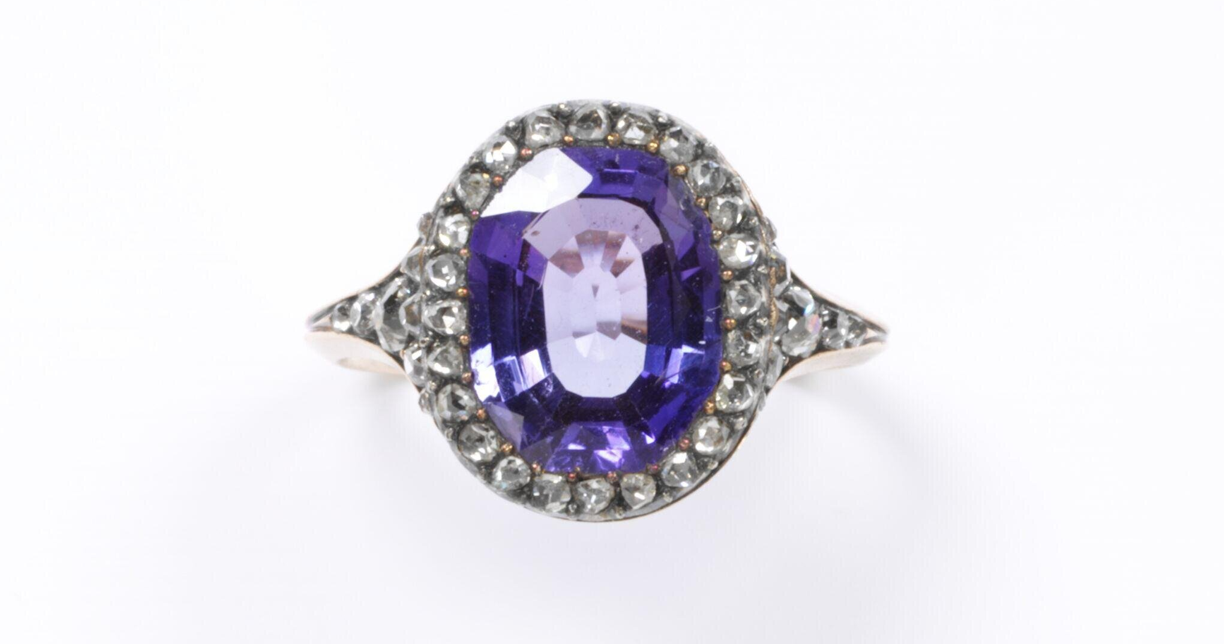
While Esther received all his furniture and everything contained in his desk, De Crasto’s son Moses received one of a few more specific bequests: ‘my Silver Watch and the Saphire Ring sent me for a present’. This ring had originally been a gift, but no further details were given about who the ring had originally been gifted by, or what it might have meant to the owner.
The clearest reference to De Crasto’s position at the synagogue were the bequests made to his ‘esteemed ffriend Mordecai Salom’ – probably the Mordecai Salom who subsequently became the hazzan. He left Salom ‘all my Wearing Apparel and also all my Hebrew Books and Silk Viels that shall be found in my Desk at the Synagogue’. The Hebrew books and the silk veils – ostensibly a form of prayer shawl – were bequests which directly resourced the work of the hazzan.[4] The discussion of De Crasto’s personal desk at the synagogue, and the objects associated with leading prayer, signals a transference of responsibility to the younger beneficiary and successor. When Salom himself made his will prior to his death in 1818, he, like De Crasto, also mentioned another hazzan, Isaac Almosnino, who he appointed the executor of his will, and referred to as his ‘dear child’.[5] These testamentary practices provide evidence of the close professional and personal bonds between the men who served the Sephardic synagogue in the role of hazzan.
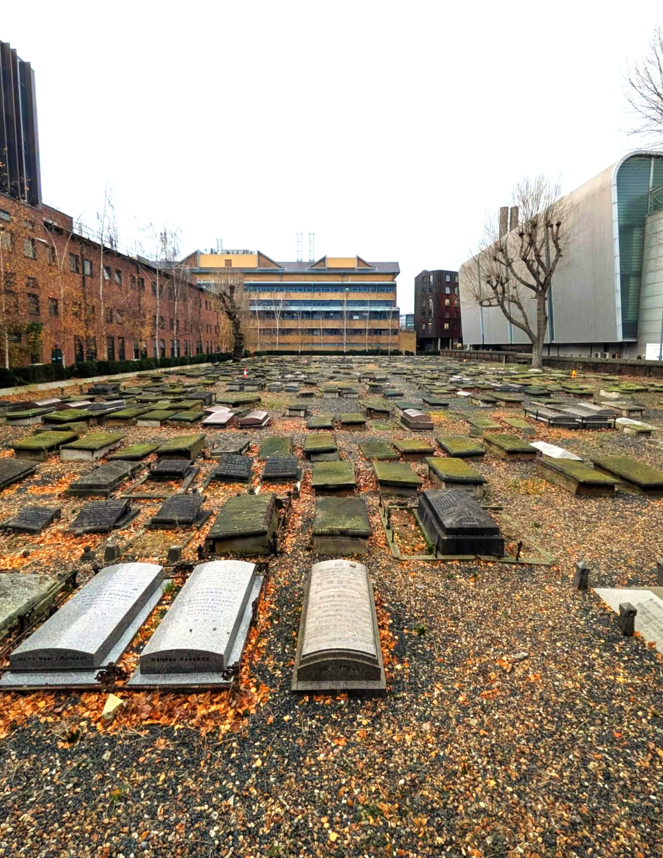
‘be decently interred… in the Portugueze Jews Burial Ground at Mile End’.
De Crasto asked to ‘be decently interred without ostentation according to the rites and ceremonies of the Jews in the Portugueze Jews Burial Ground at Mile End’. As requested, his body was laid to rest in the ‘Novo’ (New) Sephardic cemetery at Mile End, the congregation’s second cemetery, which had been established in 1733 to serve an expanding community in East London.[6] His beloved daughter Esther appears to have remained unmarried, and to have been buried near her father in 1819. Subsequently the community kept expanding, and the cemetery reached capacity in 1918. De Crasto’s body, along with Esther’s, and all others that were buried in the Novo cemetery prior to 1875, was exhumed and reinterred in a mass, unmarked, grave in Essex in 1974.[7]
De Crasto’s will is an example of how probate documents can sometimes provide only a partial impression of a testator’s life, and how reading these documents alongside other evidence can help build a more complete picture. Cross-checking between De Crasto’s will and the Novo burial records allows us to confirm that he was ‘decently interred’ according to his wishes, although he and his daughter did not remain in their preferred resting place permanently. We are not always able to corroborate that the burial wishes of the other testators featured in our study were acted upon. Equally, unlike the majority of the testators featured in our study, we know not only where De Crasto was laid to rest, but what he looked like: the Jewish Museum London holds this engraving of him.
A man prominent enough to merit a portrait would, it might be assumed, have mentioned their status or position within their will. It is striking that there is no explicit reference to his role of hazzan or precentor: the title and position of leadership that best characterised his life instead subsumed by the vague term ‘gentleman’. This absence could relate to the fact that the scribe may not have placed importance on, or indeed have understood, what a hazzan or precentor was. It’s a reminder to those of us that work with probate documents that they were created for a specific purpose: to ensure that final burial wishes were expressed, and that the correct belongings and sums of money reached the correct beneficiaries, but not as a summary of the decades of an individual’s life, the totality of their relationships, or the substance of how they spent their days.
Full Transcription of the will of David De Crasto, Gentleman of Beers Marks London, 07 February 1785, PROB 11/1126/151
David de Crasto
In the Name of God Amen
I David de Crasto of Bevis Marks London Gentleman
being of sound Mind Memory and understanding do make
this my last Will and Testament as follows that is to
say I commend my Soul to my Creator and my Body
I desire may be decently interred without ostentation
according to the rites and ceremonies of the Jews in the
Portugueze Jews Burial Ground at Mile End I give to
my beloved Son Moses de Crasto alias de Castro my
Silver Watch and the Saphire Ring sent me for a
present I give to my beloved Son Isaac de Crasto
alias de Castro ffifty pounds Sterling I give to my
beloved Son Jacob de Crasto alias de Castro ffifty
pounds Sterling I give to my beloved Daughter Rachel
Rodrigues Brandon ffifty Pounds Sterling I give to my
Grandson Moses Rodrigues Brandon Son of my said
Daughter Rachel Ten Pounds I give to my Grandaughter
Abigail Daughter of my said Son Isaac ffifty Pounds
Sterling I give to my Grand daughter Abigail Daughter
of my said Daughter Rachel now the Wife of Isaac
Cohen Labatt ffifty Pounds Sterling I give to my Grand
Son Daniel Son of the late Mr Isaac Garcia ffifty
pounds Sterling I give to my Grandaughter Abigail
Daughter of the said Isaac Garcia ffifty Pounds Sterling
I give to my Daughter in Law Betla the Wife of my
said Son Isaac Twenty Pounds Sterling and my Will is
that such of the Legacies as are given to ffemme
Coverts shall be paid to them for their own use
and benefit notwithstanding their Coverture and their
Receipts shall be a sufficient discharge for the same and
my Will is that in case any of the Legatees in my
Will named at the time of my death shall not have
attained their age of twenty one years shall not be
intitled thereto until they attain that age or be Married
which shall first happen I give to Miss Rachel de
aguilar Ten pounds for Mourning which I request her
to accept as a token of the High regard she merits
from me I give to Miss Rebecca de Aguilar Ten Pounds
Sterling for Mourning as a token of the great esteem
she merits from me I give to the Rulers of the portiguese
Jews Synagogue in London for the time being Ten pounds
Sterling for the use and Benefit of the said Synagogue
I give to each of my Executors hereinafter named Ten
pounds Sterling for Mourning I give to my esteemed ffriend
Mordecai Salom ffifty Pounds Sterling and all my Wearing
Apparel
[new page]
apparel and also all my Hebrew Books and Silk Viels
that shall be found in my Desk at the Synagogue I
give to my Daughter Esther all the ffurniture China Glasses
and pictures that shall be in my House at the time of
my death all the Rest and Residue of my Estate of what
nature or kindsoever and wheresoever I give and bequeath
the same unto my said Executors In Trust to lay out
and Invest the same in Long Annuitys or such other
Government Securities they shall think fit and to pay the
Interest and Dividends thereof unto my said Daughter
Esther for and during her Life and from and after her
decease In Trust to pay and Assign all the same Residue
or the Trusts and Securitys in which the same shall
have been Invested unto my said Son Moses his heirs Executors
or Administrators upon Condition nevertheless that my said
Son Moses his Executors or Administrators do and shall in
case the Interest and Dividends of the said Residue of my
Estate shall not produce or yeild the clear yearly Sum of
One hundred pounds give unto my said Daughter Esther to
pay her for and during her Life so much Money as
the said Interest and Dividends shall be insufficient for that
purpose and in case he shall refuse so to do that then
my said Daughter Esther shall have and receive the
Interest and Dividends of my said Residue for and during
her Life and after her death the same shall be Transferred
and paid to the Executors or Administrators of my said
Daughter to be by them divided as she shall in and by her
Will direct and I do hereby nominate and appoint my
said beloved Son Moses and my worthy ffriends Jacob
Osono and David de aguilar Joint Executors of this my
Will and my Will and intention is that the Securitys wherein
the Residue of my Estate shall have been Invested shall
remain in the Names of my three Executors during the Life
of my said Daughter Esther and for that purpose in case
of the death of either of my said Executors (that the
same may continue in the Name of three persons
another person shall be added in the Room of him
that shall so happen to dye to be nominated by the
Surviving Executors with the Approbation of my said
Daughter Esther and so from time to time as any of
the said Executors shall happen to dye such new
Trustee shall be appointed as aforesaid and as
hereinbefore directed in case of the death of either of
the present Executors or Trustees and I do revoke and
make void all former and other Wills by me at any
time heretofore made declaring this to be my last Will
and Testament contained in two sheets of paper to the
first having set my hand and to this last Sheet my
hand and Seal this twentieth day of May one thousand
seven hundred and eighty four David de Crasto (L.S.) Signed
Sealed published and declared by the said David d Crasto
[new page]
Crasto the Testator as and for his last Will and Testament
in the presence of us the Legacy given to the
Testators Grandaughter Abigail being first interlined
Richard Snewin George Fowler
London the 28th July 1784
I hereby declare to my Executors in my last Will and
Testament that it is my pleasure and Will to bequeath
to my Daughter Esther de Crasto my Desk at present at
Mrs P aguilar at Clapton with all the valuables
Moneys Rings it may contain to serve her for
Mourning at my decease David de Crasto
This Will was proved at London with a
Codicil the seventh day of ffebruary in the year of our
Lord one thousand seven hundred and eighty five before
the Worshipful Andrew Coltee Ducarel Doctor of Laws
Surrogate of the Right Worshipful Peter Calvert Doctor of
Laws Master Keeper or Commissary of the Prerogative
Court of Canterbury lawfully constituted by the oaths of
Moses de Casto otherwise de Castro the Son of the
deceased Jacob Osei and David de Aquilar the Executors named in the
said Will to whom administration was granted of all and
singular the Goods Chattels and Credits of the said
deceased they having been first sworn duly to administer
[1] PROB 11/1126/151, Will of David De Crasto, Gentleman of Beers Marks London, 07 February 1785.
[2] Oxford English Dictionary, “chazzan (n.),” September 2025, https://doi.org/10.1093/OED/1058939130.
[3] https://layersoflondon.humap.site/map/records/hackney-s-first-synagogue-at-clapton-house-thistlewaite-road
[4] This silk veil may have been similar to this: https://www.sothebys.com/en/buy/auction/2023/the-halpern-judaica-collection-tradition-and-treasure-part-iii/a-fine-silk-tallit-italy-late-18th-early-19th
[5] PROB 11/1605/429, Will of Mordecai Salom of Heneage Lane Bevis Marks , City of London,
30 June 1818
[6] For further detail, see Emily Vine, Birth, Death, and Domestic Religion in early modern London, (Cambridge University Press, 2025), chapter 6.
[7] https://cemeteryscribes.com/blog/list-of-nuevomile-end-burials-1733-1875/