
Posted by Edward Mills
16 March 2026At the Centre, we’re very fortunate to benefit from the support of Nicholas Orme, who since his retirement has contributed extensively to the life of the Centre. In particular, Nicholas supports the Orme Lecture, which takes place annually and invites an internationally-prominent specialist on an aspect of the medieval period (broadly defined) to Exeter. This year’s lecture will be given by Julia Crick, Professor of Palaeography and Manuscript Studies at King’s College London, on the topic of ‘Staffing the Norman Conquest’; Julia kindly sat down to give us a preview of what’s to come.
Yes, indeed. The University of Exeter gave me my first permanent post in the old Department of History and Archaeology, and I retained a link with the area through the project Exon Domesday (which I directed at King’s College London, in collaboration with colleagues at Oxford, the Cathedral Library and Archives in Exeter, and the University of Exeter itself). I very much look forward to returning, not least as I was Nicholas’s colleague for more than a decade.
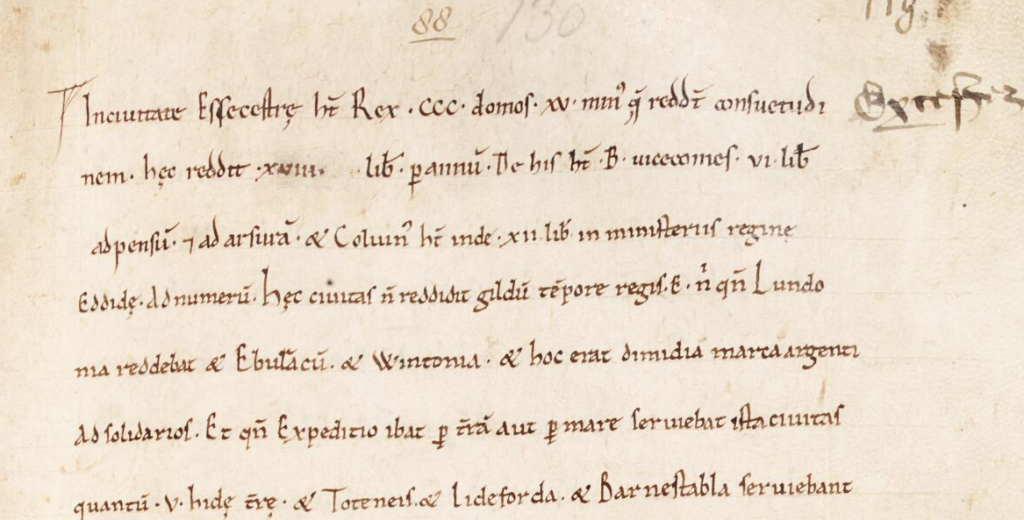
Excellent question. My focus is on the people who do the writing. What they write and how they write it can tell us about who they were and how they collaborated with people like themselves and those trained in different settings and different places, some hundreds of miles away. Scribal hands are unusually clear markers of origin and difference in this particular period. Usually we don’t know the names of individuals, or whether they composed texts, but the trace left by their hands provides a lot of information.
The generation after the Norman conquest has everything: evidence of regime change, extreme social and physical mobility, multilingualism, the updating of records and rationalizing of government, conquest, atrocity, cultural diversity, a discourse of modernity, a discourse of protest, and a quiet backdrop of compromise and conformity which allowed a good number of people simply to get on with their lives.
Historical processes are endlessly instructive. I happen to study the manuscript record from 1,000 years ago. Where documents and other kinds of writing survive in their original form, as does Exon Domesday, there is a wealth of detailed information about usually nameless individuals collaborating, changing place and jobs, being absent from or finding employment in the new regime. A lot of the processes of conquest are replicated in, and some contrast with, other situations of cultural contact in human history.
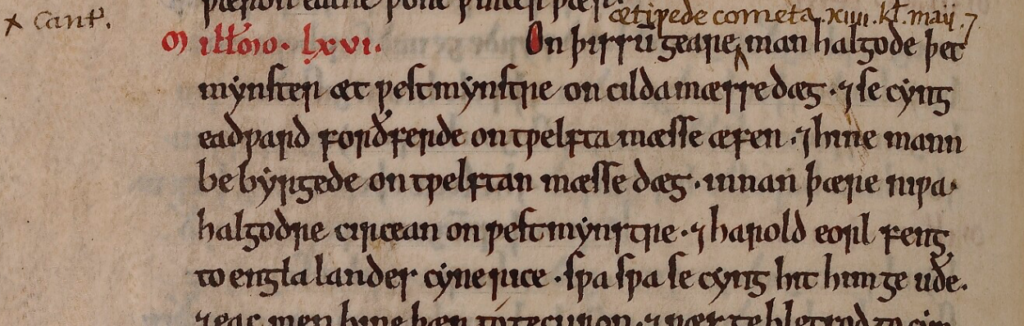
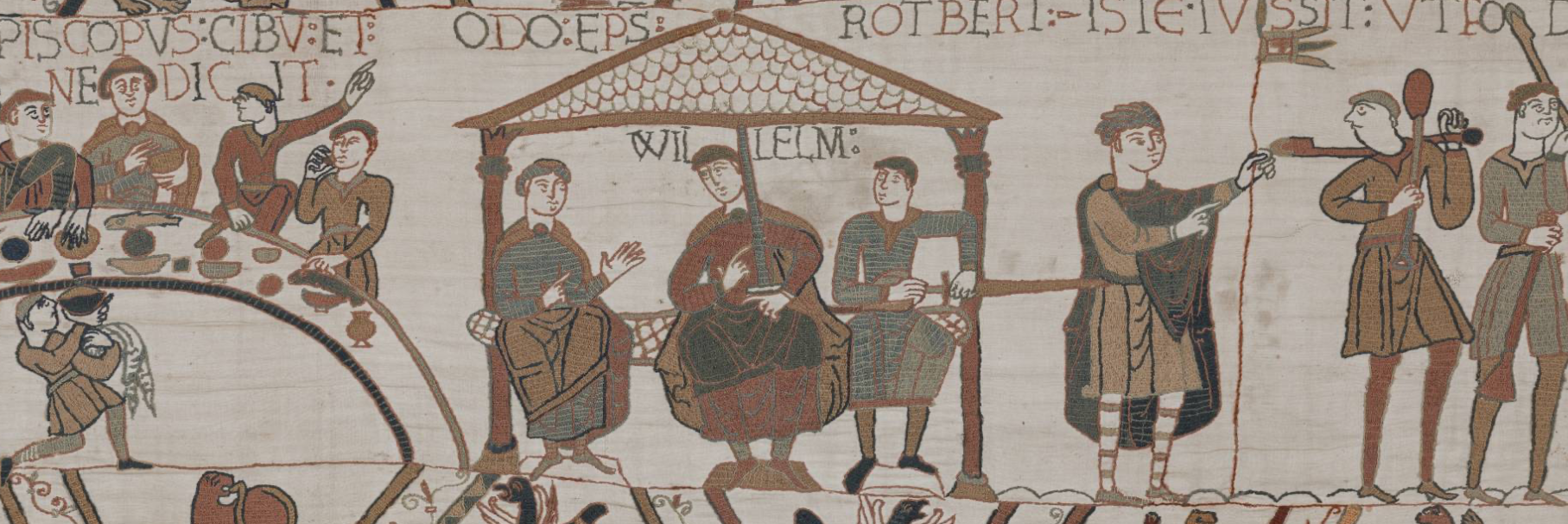
Prof. Crick’s Orme Lecture takes place at 6pm on Wednesday 25th March, in the Institute for Arab and Islamic Studies, Lecture Theatre 1. Entry is free, and all are welcome. Featured image: counselling William in the Bayeux Tapestry. Other images courtesy of the Exon Domesday project and Digital Bodleian.