
Posted by James Gordon Clark
9 March 2026This coming Saturday, the University’s Chapel Choir will be performing at Buckfast Abbey, as they revive recently-rediscovered plainchant from the early 16th century. James Clark offers a preview of the concert, and reflects on how he and colleagues were able to recover the music of centuries past.
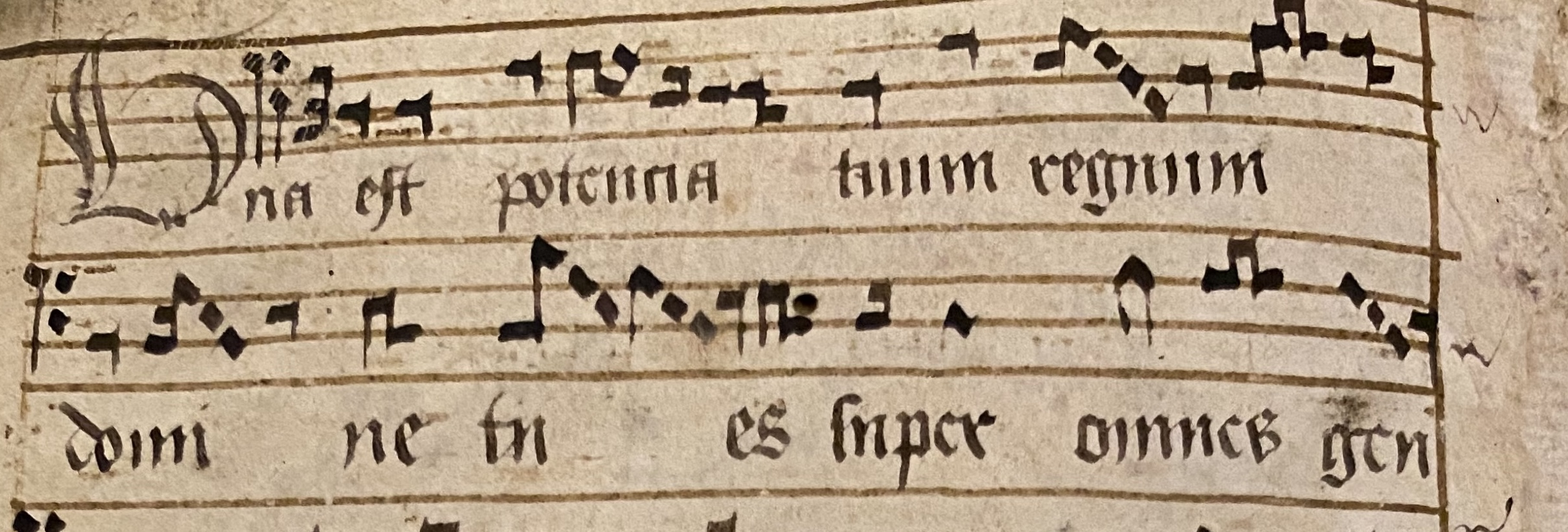
Header image copyright: British Library. For more information, see below.
Researching medieval manuscript books, you get used to nothing being where it should be. When you hope – perhaps need, for the sake of an argument – the text in front of you to carry with it some hint of its provenance – who owned it, where, and when – more often than not you turn to the front of the volume to find the remains of an ownership inscription trimmed away by the book binder; or worse still, the original parchment flyleaves cut away and replaced by modern cartridge paper, held in a clinch by one of those rigid, shiny, red leather bindings so beloved of the British Library.
Of course, so often the book you hope to see has itself gone walkabout. A great many of the books of England’s medieval monasteries, which are the focus of my research, have since the Tudor Reformation travelled far away from where they were made and first read. The break-up and sale of the libraries of aristocratic families and antiquarians in the nineteenth century saw many of them leave the country altogether. Even now, they are still on the move as cathedrals, colleges, schools and city councils are compelled to realise the cash value of their legacy collections. I recently caught a fleeting glimpse of a fourteenth-century liturgical calendar from the Benedictine Priory of Norwich Cathedral on the auction site, eBay. Perhaps needless to say, it had already been disbound and the leaves sold separately. Never again will it be possible to make sense of it as a book.
Because of this, it is very welcome when there is a rare chance to bring a manuscript home. When the team at the West Devon National Trust property, Buckland Abbey, asked me to help them trace the history of the site as a thirteenth-century Cistercian foundation for a new exhibition, I turned right away to the one surviving book connected with the house (now British Library, Harley MS 2931). The main content – written in a mid-fifteenth-century hand – is a customary which differs little from other Cistercian examples. The front of the volume, however, holds a calendar that which records the feast of the dedication of the church at Buckland, offering at least a nod in the direction of the community’s distinctive religious traditions.
But bound in between the calendar and customary, I found several leaves of plainchant notation and lyrics, written in a later hand than the rest of the text: certainly post-1500, and perhaps as late as the 1520s or 1530s. As it happens, a contract survives for a choir master and organist, one Robert Derkeham, appointed at Buckland in 1522, confirming a stipend of £2 13s 4d to teach, monks boy choristers to sing and to learn keyboard skills for themselves. It is tempting to think the plainchant was written out for performance when Derkeham was directing the monastic choir.
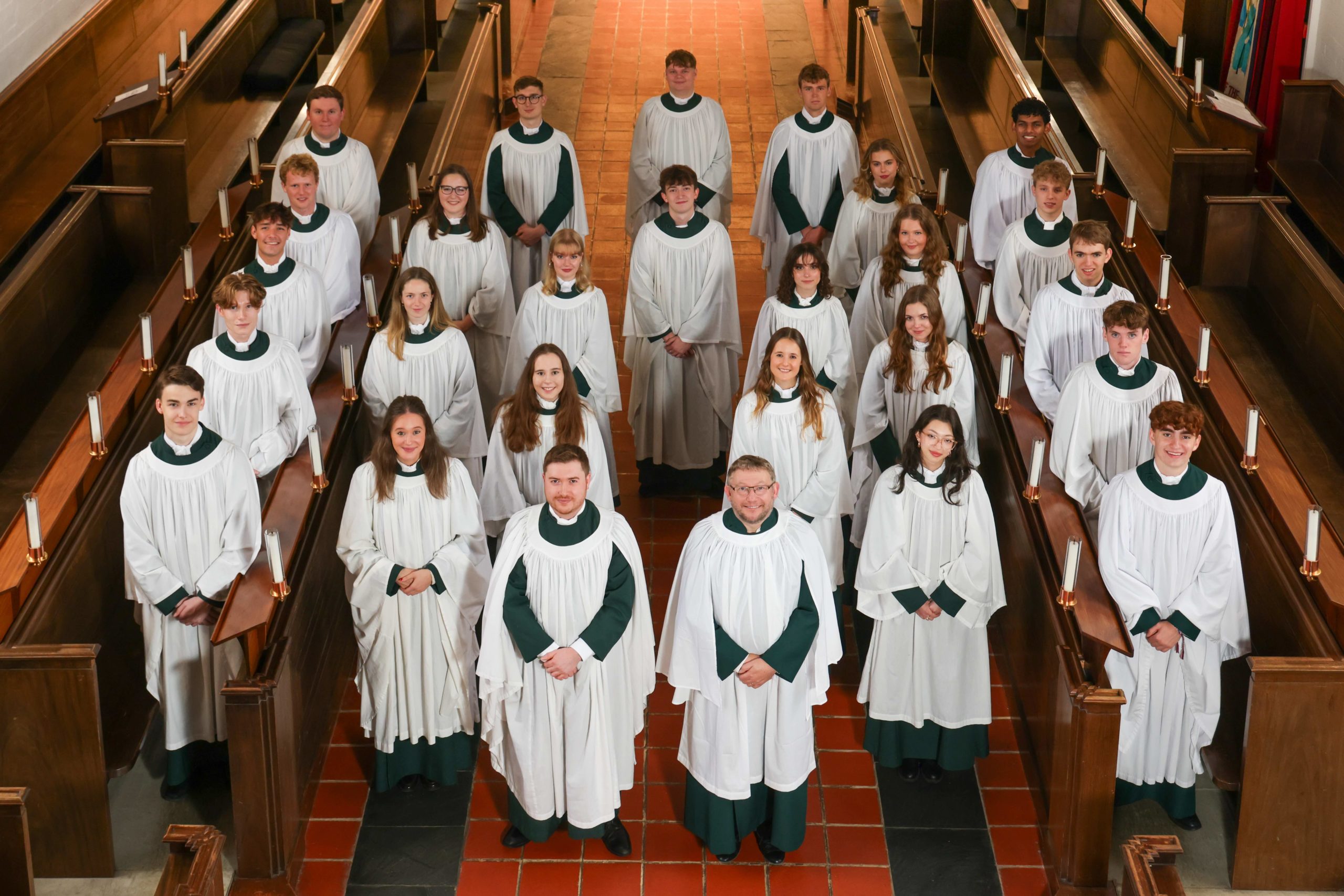
Aided by an AHRC grant, and in collaboration with Daisy Gibbs, the Trust’s Central and South-West Region Research Officer and Michael Graham, the Director of the University of Exeter Chapel Choir, we transcribed the plainchant and recorded it sung by our students. In the summer of 2025, with the support of the British Library, we returned the manuscript to Buckland Abbey, 486 years after it left, and the chant was performed live. This week we are fortunate to be able to return the music to a living monastery, to the abbey church at Buckfast, where it will be possible to hear again the sound that Henry VIII silenced, as part of a panorama of plainsong from across the centuries. Tickets are available here.
Header image: London, British Library, MS Harley 2931. Image copyright British Library.