
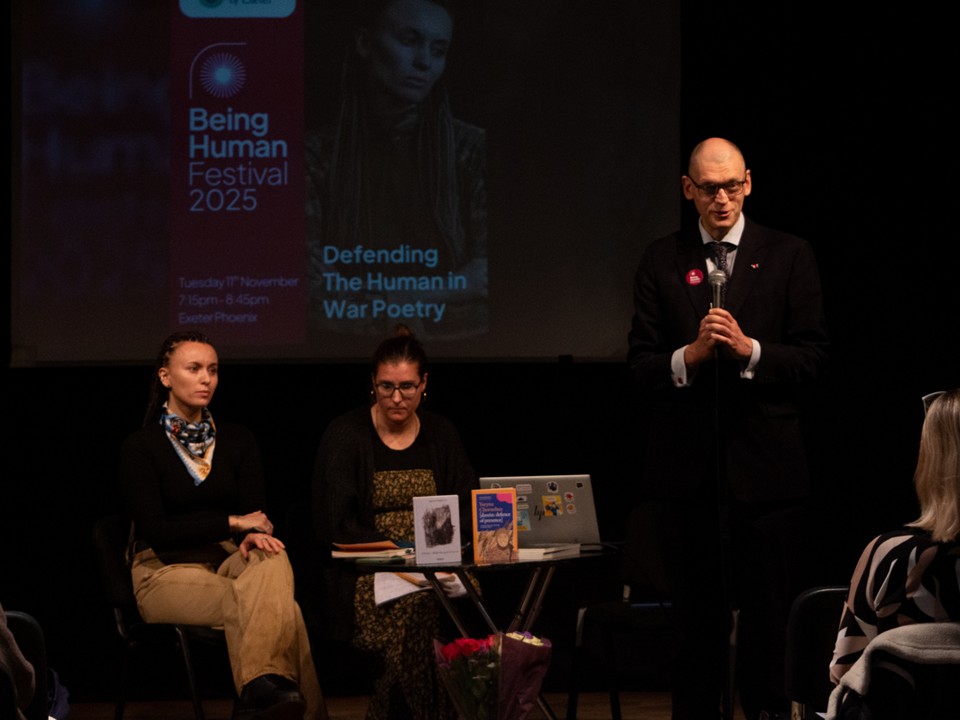
Photo credit – Charlie Stanbrook
The Being Human Festival is the UK’s national celebration of the humanities, bringing humanities research to public audiences across the country. Running from the 6th to the 15th November, this year’s festival, ‘Between the Lines’, invited academics to explore the theme of boundaries in their work.
The Being Human Festival has been running since 2017, encouraging increased engagement with the humanities to highlight the relevance of this research. As part of their 2025 celebrations, event series have been hosted at the University of Glasgow, National Maritime Museum, UCL, and the University of Exeter, alongside many more festival hubs and standalone activities.
Exeter boasts a diverse set of archives, holding more than 50,000 rare books, and more than 500 archive and manuscript collections. The Special Collections team invited members of the public to gain new insights into the applications of these resources, alongside author Elisabeth Gifford. Gifford’s novel, The Mischief Makers, took inspiration from Daphne Du Maurier’s archives, including details of her correspondence and manuscripts. While learning about Gifford’s experience, attendees explored materials and hear from the archivists who manage the collections. This special evening event opened up the archives to new audiences, and provided a novel way to learn more about Du Maurier’s life and legacy.
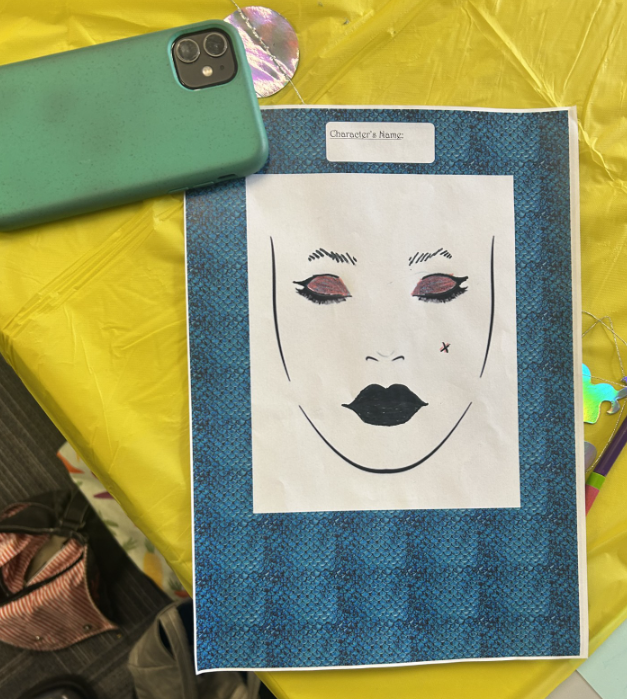
Elsewhere in the University, the From Script to Screen Workshop encouraged young creatives to investigate cinema behind the scenes. Hosted by the Bill Douglas Cinema Museum, and building on the work of the Women’s Screen Work in the Archives Made Visible project, the workshop was an opportunity to explore costuming, storyboards, props, and more. The project team described the festival as “an opportunity to share our research into women’s screen work with a younger audience, which prompted us to create hands-on, accessible activities. Children from a range of educational backgrounds were welcomed into the university to get creative in response to a film while exploring the interdependent roles involved in filmmaking beyond those most visible.”
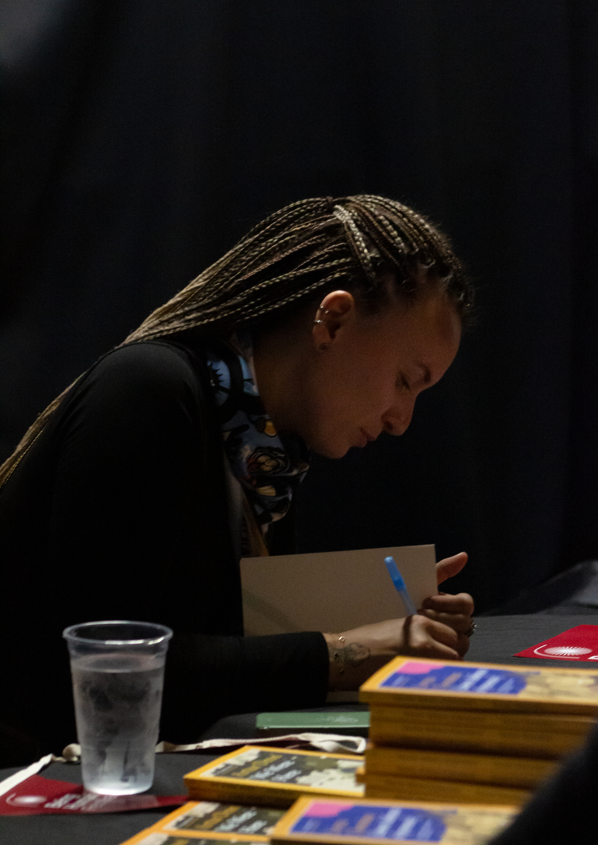
A series of events were hosted as part of the War Poetry as Existential Defence series. Professor Hugh Roberts from the Department of Languages, Cultures and Visual Studies, local poet Fiona Benson, and Ukrainian servicewoman and award-winning poet Yaryna Chornohuz contributed a series of workshops emphasising the power of poetry and creativity in the face of catastrophic world events. Each performance invited audiences to reflect on Chornohuz’s works and experiences, following the release of the English translation of her collection Defence of Presence. From conversations with Royal Marines Commando Trainees, to public readings in both Exeter and London, the weeklong series shed light on the resurgence of war poetry emerging from the horrific war in Ukraine. This work has continued to inspire new audiences, with Chornohuz’s latest collection being taken to the Royal United Services Institute as part of the launch of the Centre for the Public Understanding of Defence and Security’s new compendium.
While each of these activities took shape over the course of the festival’s ten-day run, the work behind them is ongoing. However, through the snapshots into research provided by the Being Human format, diverse publics are encouraged to explore the humanities for themselves, and see their relevance both for themselves, and for the wider community.