
Highlights from the first QAA-funded Online Round Table
On 4th July 2025, senior leaders from seven UK universities convened for an online round-table event as part of the QAA-funded Collaborative Enhancement Project, Curriculum Reform: A Whole Community Approach. This event marked the beginning of a sector-wide initiative to share strategies, challenges, and innovations in leading institutional curriculum transformation.
Meet the Panel
The round-table featured insights on curriculum reform from leaders representing:
- University of Leeds – Curriculum Redefined
- University of Bristol – Curriculum Enhancement Programme
- University of Salford – Educational Delivery Plan
- SOAS University of London – Curriculum for Success
- Newcastle University – Leading Edge Curriculum
- University of Reading – Curriculum and Portfolio Transformation
- University of Exeter – Curriculum for Change
Each institution shared its unique journey through the transformation process, reflecting on phases from discovery to implementation and evaluation.
Key Themes in Curriculum Transformation
The Round Table’s panel explored several pressing themes:
- Consultation and Engagement: Emphasising inclusive processes and student co-creation.
- Curriculum Design and Innovation: Streamlining programme structures, embedding employability, and adopting new pedagogies.
- Review and Evaluation: Using data and feedback to refine models and ensure long-term sustainability.
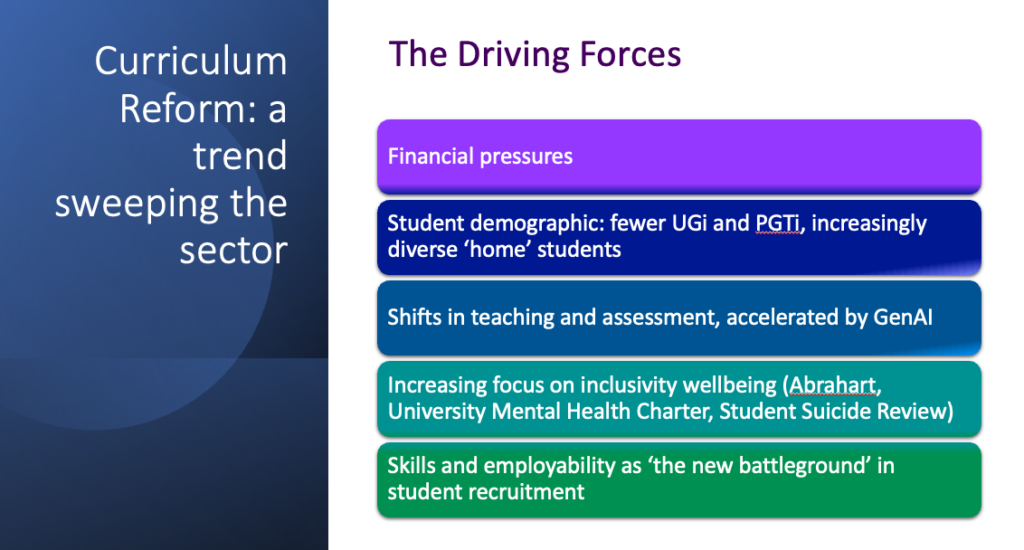
Common drivers included financial pressures, shifting student demographics, the rise of generative AI, and a growing emphasis on wellbeing and inclusivity.
Supporting the Sector in Curriculum Reform: Next Steps
This round-table event was the first in a series designed to foster a community of practice across UK higher education. Upcoming activities include:
- Resources to support consultation and evaluation, featured on this blog
- Further events, including an in-person symposium at the University of Exeter on 14th October 2025
Why This Matters
Curriculum reform is a strategic response to the evolving challenges facing higher education. By working collaboratively, institutions can build financially sustainable, inclusive, and future-focused education models.
The round-table demonstrated that while each university’s path is distinct, the sector shares common goals. Through continued dialogue and mutual support, this initiative aims to empower institutions to thrive in a rapidly changing educational landscape.