
Introducing a student led project helping students feel part of university communities
In this blog, three University of Exeter students describe their work to create more opportunities for first year undergraduates to socially connect within their programmes. As part of the University’s Grand Challenges initiative, Kiran Clarke, Isabelle McCornish and Chris Wong developed a toolkit that provides educators with suggestions and resources to help their students connect and develop a sense of cohort ‘belonging’. The activities have since been piloted across the curriculum on first year undergraduate modules at the University.
Introduction: The Problem
The transition from secondary education to university is a significant milestone, and it is natural for many students to find this change daunting and challenging. For lots, it may be the first experience of living independently away from home, often in a new city, and without the immediate support of family and childhood friends. Feelings of loneliness, isolation and a lack of belonging are not uncommon amongst young students, as forming new and meaningful friendships and settling into a routine takes time and proves difficult for many.
Most universities provide a wealth of opportunities for students to connect and build communities. Societies, clubs and sports teams not only bring together those with shared passions and niche interests but also give students the chance to explore new hobbies and develop new skills. While these activities appeal to many, some students may have limited access to such groups or may simply prefer not to participate, which can reduce their social opportunities. In such cases, coursemates often serve as one of the most fundamental and accessible ways for students to form connections.
University courses often facilitate and promote interactions between coursemates primarily through groupwork tasks, which can help those who don’t engage in extracurriculars to socialise and form relationships with other students on the same course. However, group projects are frequently dreaded by students due to issues like uneven workloads or conflicting opinions; and as a result, many students enter groupwork with pessimism or avoid it altogether, reducing its effectiveness as both a learning tool and as a means of building relationships.
The Solution
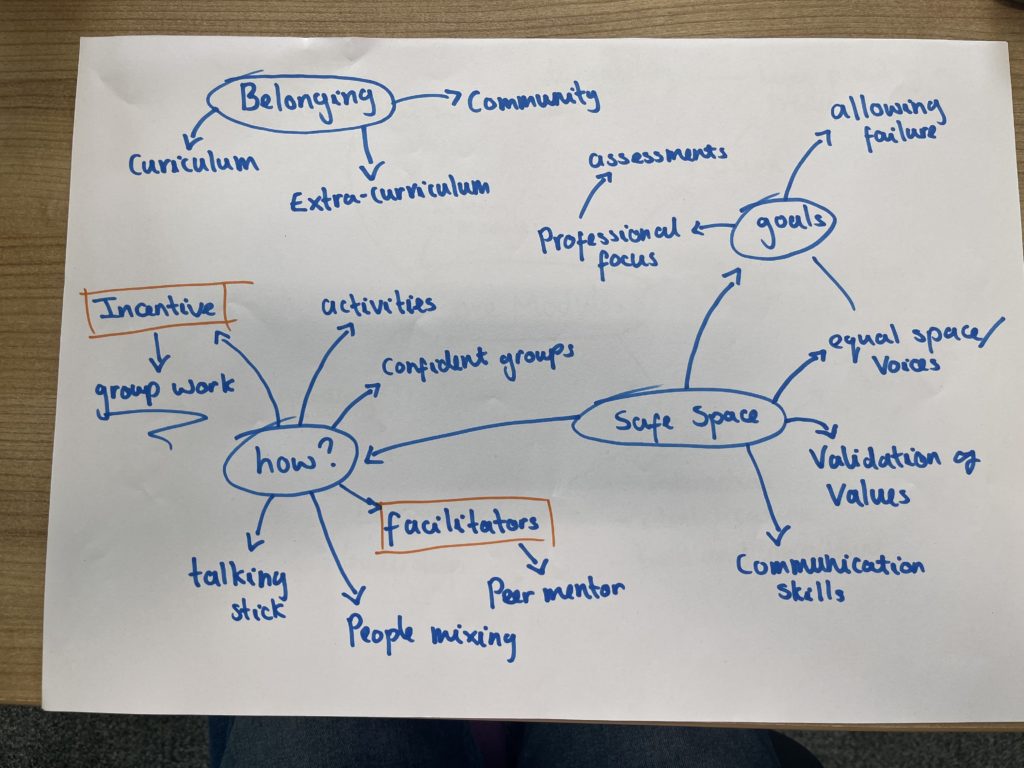
To address this, we focussed on improving core modules during the first two terms to better support new university students. Our solution aimed to foster connection, collaboration and community, while aligning with the four themes covered within Exeter’s Transition and Induction Principles to accelerate students’ proficiency in organisational, intellectual, emotional and social skills.
Preliminary research suggested that adding group-facilitation activities into seminars and workshops may help students build friendships, form new connections, and strengthen existing bonds— through encouraging communication in a safe and trusting environment. Our research also found that, while many students disliked group participation opportunities, they appreciated their academic and social value.
Our approach aims to involve personal exploration, with students sharing positive aspects of their life and personality that may otherwise go unseen. Some of these activities would be curriculum-integrated: students could work collaboratively on course-related tasks, turning early “settling-in” days into productive and supportive environments while assisting lecturers in delivering content-relevant workshops from day one.
To implement this, we assembled various facilitation devices into a toolbox and proposed to the University of Exeter to improve their group-work policy, ensuring that group activities more effectively nurture a sense of belonging among students.
The Product
To address our findings, we assembled various facilitation devices into a Toolbox for seminar facilitators to help both teach content and create belonging within the group.
The toolbox has three parts. First, we proposed to have a guide to explain the benefits of the core module changes we proposed and how to use the toolbox to facilitate achieving such benefits in the seminars.
Then, we have our tools— our Icebreakers and Melters. These are samples and templates which academics can use to create activities to be used in seminars. Through such connective activities, we hope to both build a sense of belonging and community within the group and facilitate interactive and collaborative learning.
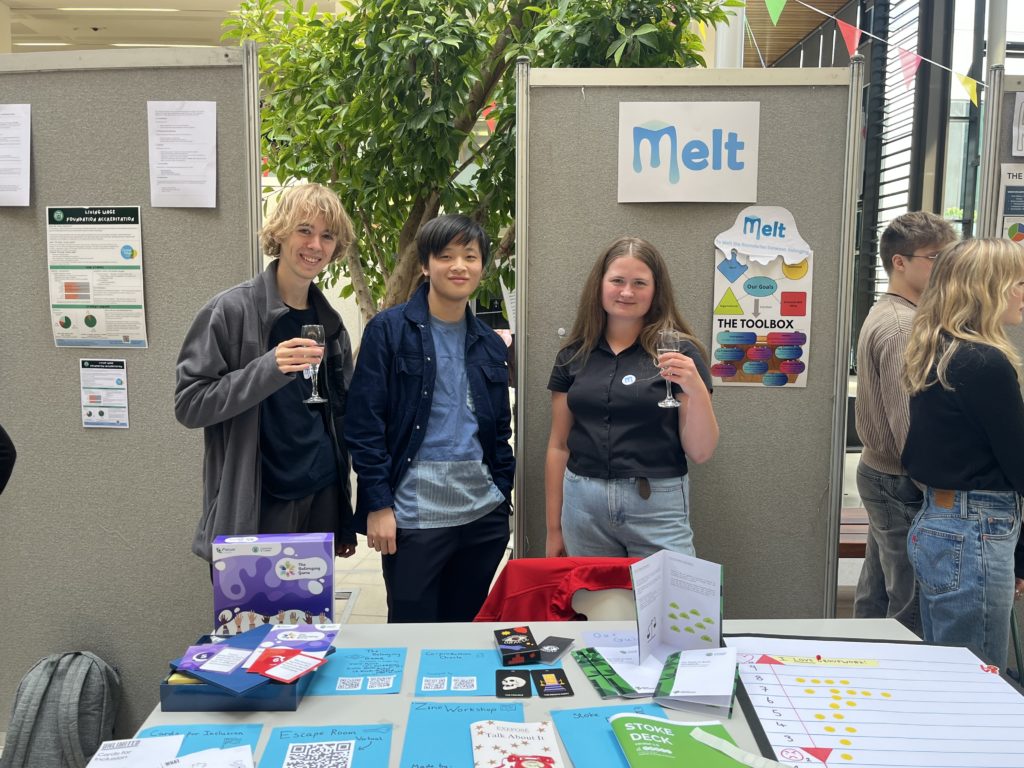
Icebreakers are intended for the start of the term. With activities such as Stanford’s Stoke Deck, which have many conversation starters for students to get to know each other, the icebreakers intend to help students in seminars get comfortable with each other and begin forming a community.
However, we believe the social interactions and interpersonal support should not end at the first week, the community and connections should be continued to be built throughout the year. To do so, we provide Melters. Whereas icebreakers focus on getting introduced to each other and the module, Melters are interactive and collaborative learning activities that continue building on those initial connections. Melters such as holding course-related ‘Zine workshops aim to develop academic knowledge (such as fundamental skills and ideas) while creating a community within the seminar group.
In creating a stable community for first-year students, we hope to provide students with more opportunities to form friendships, form communities, and find their belonging. In introducing course-related group activities, we wish to not only sustain such relationships but to also enhance the learning experiences. We believe the better learning community and environment may lead to more engaged participation in group learning activities and create better learning experiences.