
Rebecca Flemming, A.G. Leventis professor of Ancient Greek Scientific and Technological Thought, University of Exeter
The ‘far-famed physician Eutychiane’ is one of the more notable individuals commemorated in the rich epigraphic material recovered from Roman Dion, the veteran colony Octavian founded on the Macedonian royal sacred site at the foot of Mount Olympus.
The small marble funerary altar set up by her husband Ulpius Zosas in the second half of the second century CE was reused in the late Roman walls of the city, which flourished in the imperial period. The full dedication, in elegiac couplets, reads as follows (text from SEG LXI 494; my translation) .
Ἥδε περικλήι-
στος ἔην ἰατ-
ρὸς Εὐτυχιανή,
ἀνδρῶν ἰη-
τήρ, μαῖα δὲ
θηλυτέρων.
Οὔλπιος
Ζωσᾶς Ἰου-
λίᾳ Εὐτυχι-
ανῇ τῇ συμβίῳ
καὶ αὐτῷ ζῶν.
She who lies here was
the far-famed physician
Eutychiane,
a healer for men,
and a midwife
for women.
Ulpius
Zosas for
Iulia Eutychiane
his spouse
and himself, living.

The metre and literary ambitions of the epitaph have surely influenced the vocabulary, but the application of the masculine iatros to Eutychiane, rather than a feminine form such as iatrine, is striking. So is the clear statement that she had both male and female patients. I have argued that, in principle, there is no reason to think that women doctors in the Roman empire did not treat men as well as women, and this seems to prove the point. The importance of generation, supporting healthy child-bearing, in any medical practice is also underlined.
The text has not been fitted into the defined space of the die, spilling over the edges and the bottom. The name is inserted against the metre, ‘with no regard even for the number of syllables in the otherwise metrically impeccable distich’, as Julia Lougovaya remarks in her survey of the many verse inscriptions commemorating doctors across the ancient world. This is not the usual approach to the challenge of accommodating proper names, and the literary aptitude enacted in the rest of the composition is more representative of the genre as a whole. These are funerary monuments which display culture and learning as well as professional achievements.
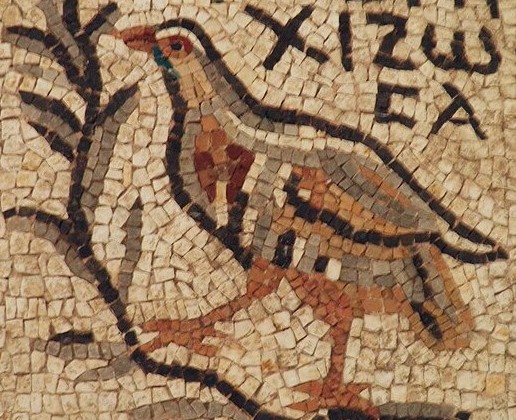
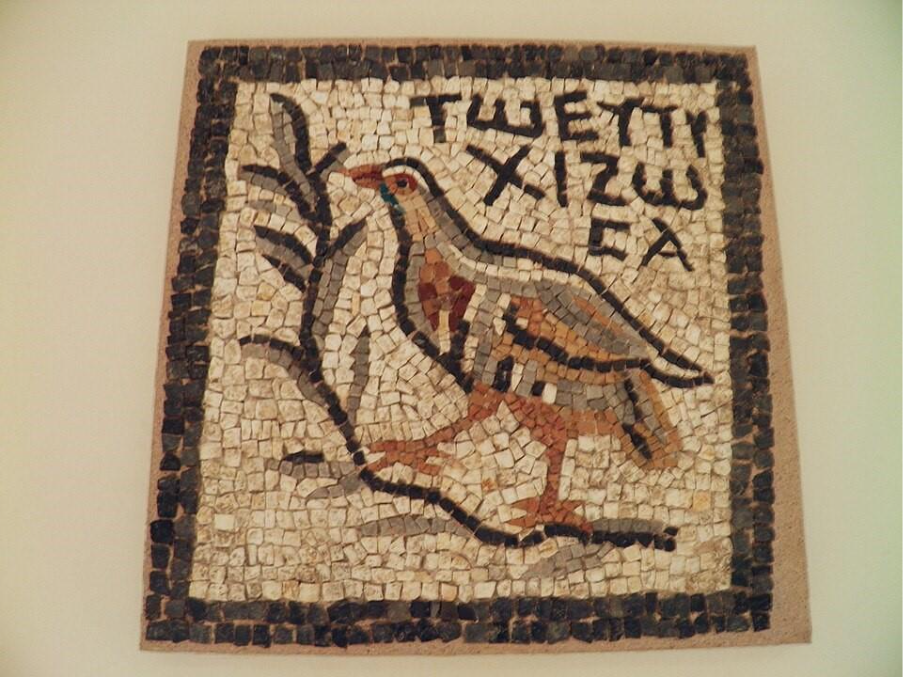
This Iulia Eutychiane may also have dedicated another marble funerary altar discovered in Dion, to a ‘Iulios’ (SEG LXI.495), and if the ‘House of Zosas’, so-called because of the name on a fine mosaic found within it, belonged to her husband, or his family, then that would certainly locate her within the upper echelons of city society. The indications of wealth and status embodied in this altar would be strengthened.
Bibliography
Dasen, V. 2016. ‘L’ars medica au féminin’, Eugesta, Revue sur le genre dans l’Antiquité, 6: 1-40. DOI: 10.54563/eugesta.624
Flemming, R. 2013. ‘Gendering Medical Provision in the Cities of the Roman West’, in E. Hemelrijk and G. Woolf (eds), Women and the Roman City in the Latin West. Leiden: Brill, 271-293
Lougovaya, J. 2019. ‘Medici Docti in Verse Inscriptions’, Archiv für Papyrusforschung 40: 139-159.
Pandermalis, D. ed. 2016, Gods and Mortals at Olympus: Ancient Dion, City of Zeus. New York: Onassis Foundation
Papageorgiou, P. 2011. ‘Μια ξακουστή γιατρός στο αρχαίο Δίον’, in Νάματα. Honorary volume for Professor Dimitrios Pandermalis. Thessaloniki: University Studio Press, 249-256.