
By Ros Shaw
Hazel dormice – arguably Britain’s cutest mammal – have been a recurring theme on Streatham Campus this year. While we’ve had occasional records from development-related surveys, we wanted to dig deeper and find out which parts of campus these elusive creatures call home.
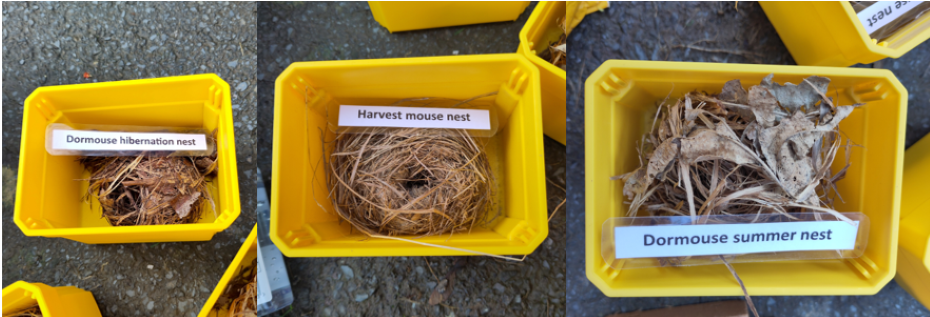
Dormouse nest and harvest mouse nest – learning to see the difference between our two mammals that make woven nests
Meet the Hazel Dormouse
Dormice are small rodents that thrive in trees and dense shrub habitats. Their diet includes pollen, fruit, seeds, and – surprisingly – more insects than previously thought. Unlike most rodents, they breed slowly, producing just one litter a year and living at very low densities.
This combination makes them rare and declining in the UK. They’re a European protected species, listed as Vulnerable on the GB Red List, and are one of Devon’s priority species for conservation.
Surveying the Campus
We’ve been fortunate to work with Devon Mammal Group, who spent the summer surveying woody areas of campus using nest tubes and footprint tunnels. Their efforts paid off – we recorded signs of (probably) two individual dormice on the northern edge of campus. That might not sound like much, but considering the average density is just 1–2 dormice per hectare (roughly one or two 5cm-long mammals per 1.3 football pitches), it’s a great result!
Interestingly, despite good habitat, we found none in the Lower Hoopern Valley. We suspect this may be because it was grazed farmland until relatively recently when woodlands were planted and brambles started increasing.
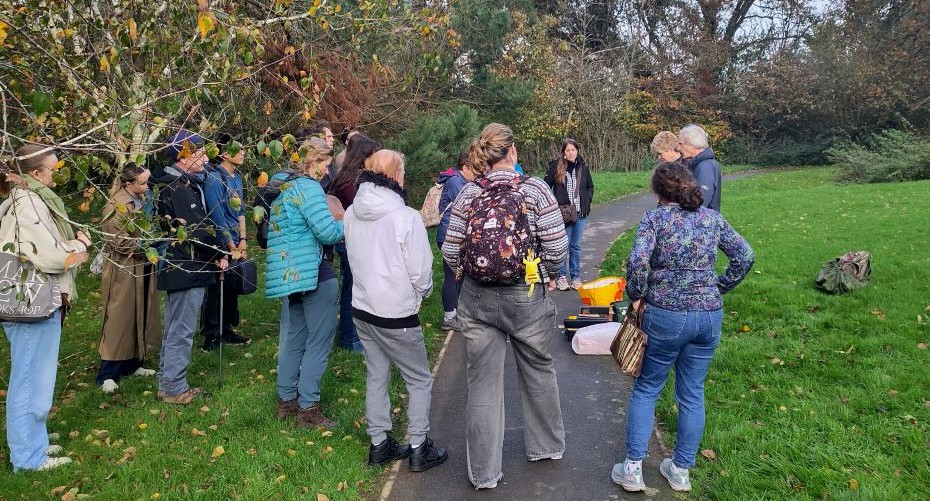
University colleagues, students and local community members learning about dormice
Sharing Knowledge
While Devon Mammal Group were on campus, we hosted two events:
- For our Grounds Team: A discussion on dormouse ecology and how we can manage habitats to support them while ensuring routine operations don’t harm them.
- For everyone: A session on how to spot signs of dormice and what we can do to help manage land for their benefit.
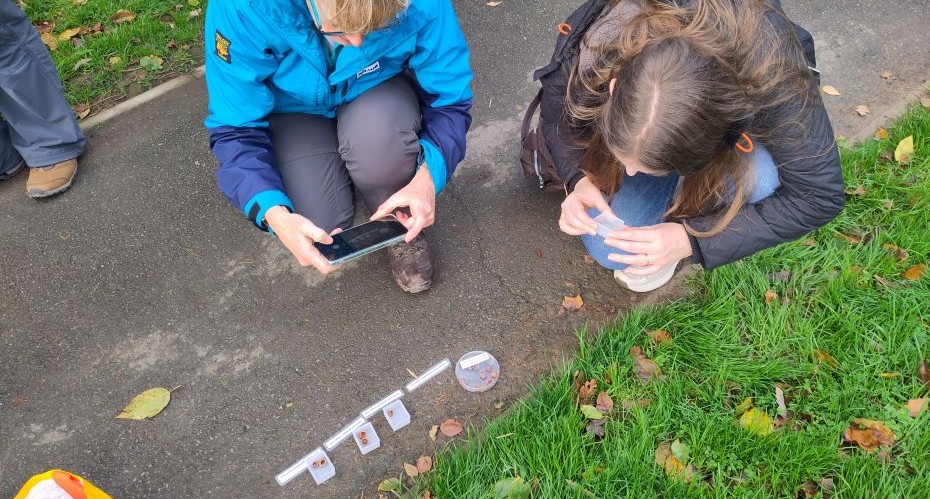
People looking at dormouse nibbled hazelnuts and comparing to nuts nibbled by other species – it can be a bit difficult!
Looking Ahead
Next, we’re exploring ways to monitor these shy mammals and improve habitat connectivity. This includes planting shrubs that provide nuts, fruits, and seeds – and they have a particular fondness for honeysuckle!
A huge thank you to Devon Mammal Group for their incredible work and for helping us help the dormice. You can join or support them here.