
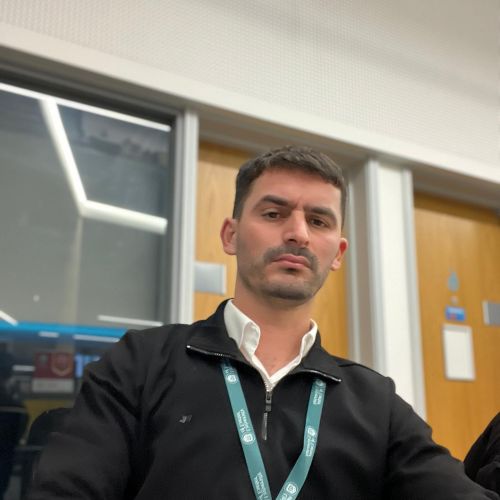
Hasan Ogredik is a PhD candidate in Politics at the University of Exeter, where his research focuses on European Union disaster risk management policy in peace and conflict, with a particular emphasis on integrating a human rights-based approach. His doctoral work examines how EU policies address the complex realities of disasters and conflict, aiming to bring together humanitarian protection, human rights, and peacebuilding in a coherent framework.
When disasters strike, whether earthquakes, pandemics, or humanitarian crises, militaries are often among the first responders. They provide logistics, medical support, security, and coordination when civilian systems are overwhelmed. Yet despite their visible role, our understanding of how militaries contribute to disaster management remains surprisingly fragmented.
So, what do we really know about military involvement in disasters, and what are we missing?
Looking at the Bigger Picture
Rather than focusing on a single disaster or country, I wanted to step back and see how the field has developed. By analysing 173 publications from 1991 to 2025, this research maps how studies on military involvement in disaster management have evolved.
Using bibliometric methods and tools like VOSviewer and AI-assisted thematic clustering, the research identifies dominant themes, influential countries and institutions, and areas that remain underexplored.
Who Shapes the Research Agenda?
A key finding is a strong geographical imbalance. Research is dominated by Western countries, particularly the United States, Canada, Switzerland, and Austria. Countries with large military capacities and frequent disaster exposure, such as India, Russia, Japan, Türkiye, and France, appear far less often.
Collaboration networks are also highly centralised, with a small group of institutions shaping much of the discussion. Military-affiliated institutions contribute relatively little, highlighting a gap between operational experience and academic knowledge.
How Crises Shape Research Trends
Research topics tend to follow major crises:
- The 2010 Haiti earthquake prompted studies on mass-casualty response.
- COVID-19 shifted attention to military medicine, public health, and preparedness.
- Recent conflicts in Ukraine and Gaza highlighted resilience, infrastructure protection, and stability operations.
These patterns show how major events shape research priorities, but they also raise questions about which issues are only studied after a crisis occurs.
What Are We Not Talking About?
Several critical topics remain underexplored: climate security, disaster diplomacy, AI in military disaster response, and cultural, social, or religious dimensions. Addressing these gaps is essential for more inclusive, ethical, and effective disaster management.
Why This Matters
By synthesising over three decades of research, this study shows how knowledge in this field is produced and where it needs to go next. This matters not only for academic debate but also for practice and policy, as disaster planning often relies on evidence that reflects a narrow set of experiences. A more balanced and collaborative research agenda can bridge the gap between theory and practice, supporting efficiency, equity, ethics, and long-term resilience.
For readers interested in a more detailed discussion, the full article is available here: https://doi.org/10.1016/j.pdisas.2025.100511