
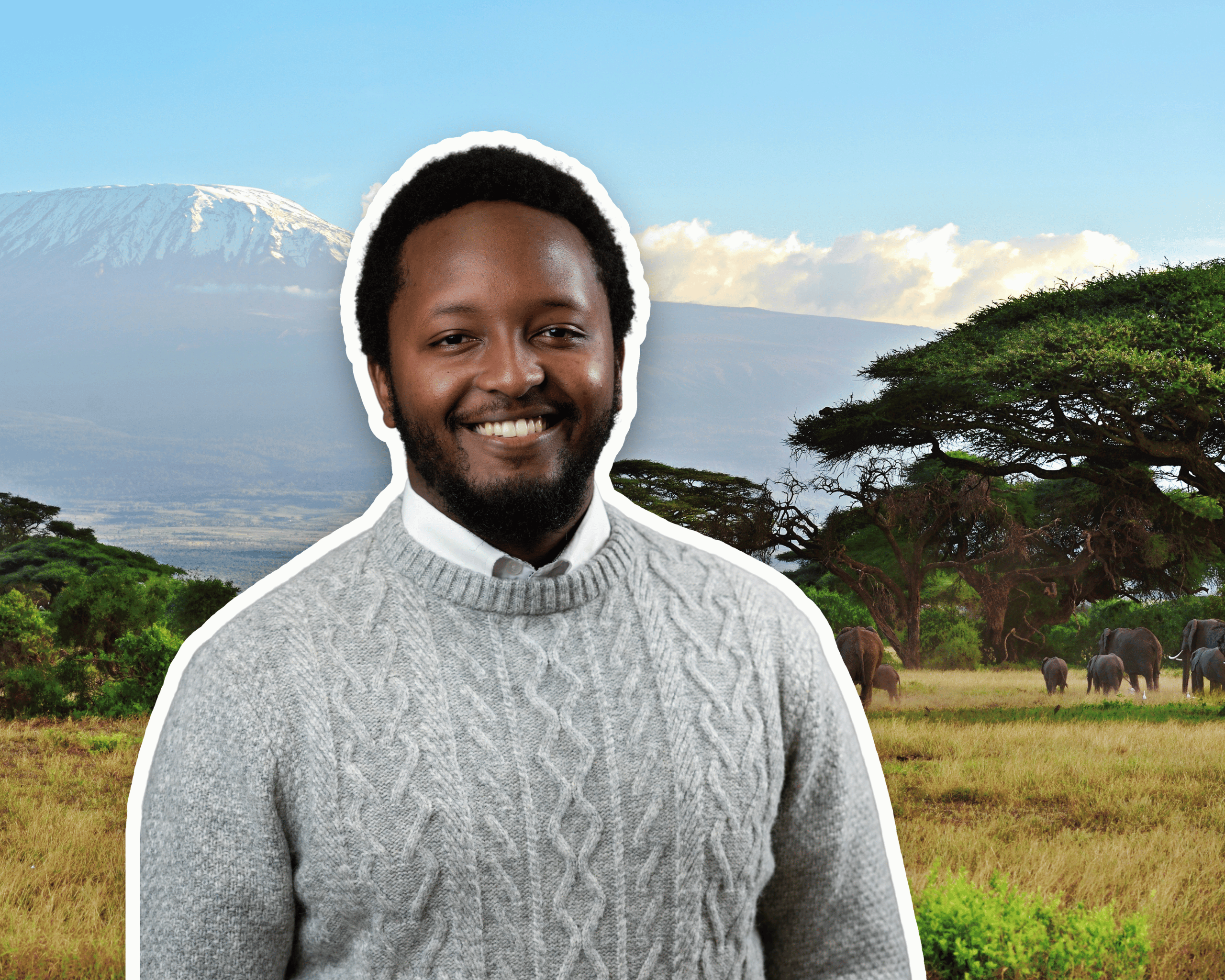
Isaac Nduta, MSc Conservation and Biodiversity (2024)
Research Fellow at the African Wildlife Foundation in partnership with the University of Exeter
Coming from a background in actuarial science, I spent years assessing asset limits and financial risk. I realised there was a massive translation gap between the natural world and the financial world. I wanted to understand how we could price nature-related risks and value ecosystem integrity with the same rigour we apply to pension funds. I chose to pursue an MSc in Conservation and Biodiversity to gain the ecological and geospatial skills necessary to bridge the gap between the biosphere and the balance sheet.
The University of Exeter, particularly the Penryn Campus in Cornwall, has a global reputation for applied conservation science. I was specifically drawn to the Terrestrial Ecosystem Restoration and Adaptation research cluster, focusing specifically on the Terrestrial Ecosystem Science and Services (TESS) Lab, because I wanted an environment that did not just teach ecology in a vacuum but looked at social-ecological systems acknowledging that conservation is as much about people and governance as it is about biology.
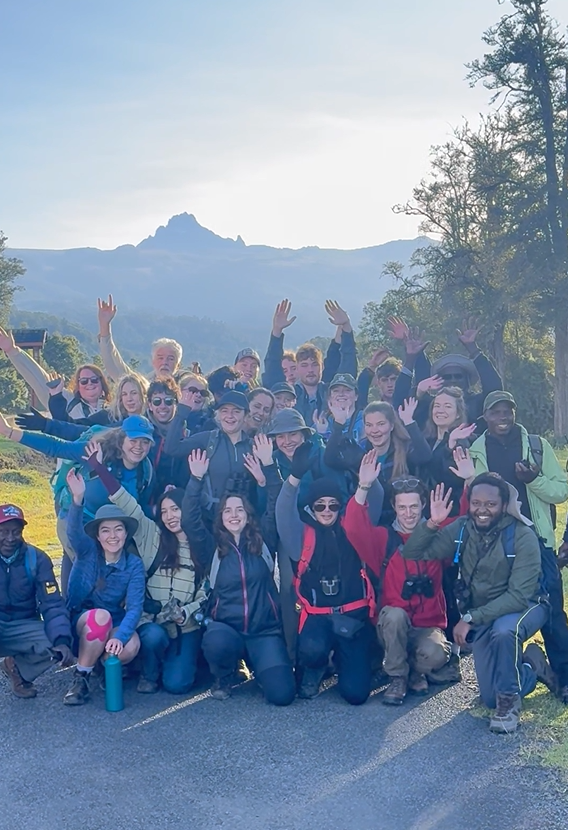
Cornwall is a unique academic hub, home to renowned researchers who are dedicated to the very ecosystems I am most passionate about, East Africa’s rangelands. My favourite thing was the immediate relevance of the curriculum; the MSc course included an international field course in my home country of Kenya, allowing me to apply global scientific frameworks to my local landscape. This was the direct bridge between my education in the UK and my commitment to conserving landscapes back home.
Since graduating, my career has moved at a high pace. I am currently a Research Fellow at the African Wildlife Foundation. My work centres on Habitat Intelligence, using machine learning and satellite data (specifically the Relative Productivity Index) to assess vegetation productivity in Kenya’s Tsavo landscape. Recently, I was also appointed as a Co-Lead (Young Professional) for the IUCN Ecosystem Governance Thematic Group (EGTG), and an IUCN PANORAMA ambassador, where I help shape global policy on how ecosystems are managed and governed.
I enjoy the detective work of distinguishing between natural climate shifts and human-induced impacts on the land. I chose this path because I am curious about governance legibility; I want to ensure that conservation isn’t just a ‘good intention’ but a verifiable, investable, and equitable reality. In the near future, I will be exploring how isolating natural climate variability from human-induced impacts can help treat nature as an investable asset rather than an invisible externality.

The most impactful experience I gained from my MSc was the perspective shift of being moved from the Global South and placed at the heart of the Global North. Seeing how life and systems operate there opened my eyes to possibilities that are often curtailed by governance issues at home. On a practical level, the unfettered access to knowledge was the turning point; being able to peruse global journals without the barrier of paywalls, in a library that never closed, fundamentally changed my trajectory. My journey was an immense uphill climb, transitioning from a background in Mathematics to Biology at the postgraduate level with no prior experience was a daunting challenge. I spent countless hours in that library, and it was through that immersion that I developed my most useful skill: accurate and rigorous research. That environment taught me that when the systemic barriers to information are removed, the only limit is your own dedication.
My advice to future students would be to not be afraid to be a ‘hybrid’. If you have a background in finance, engineering, or any ‘non-traditional’ field into biology, don’t leave those skills at the door. Conservation needs people who can speak the language of the balance sheet just as well as the language of the forest. Also, start networking within the environmental constituencies early; the bridge between academic research and global policy is built on the connections you make while you are still a student.
Isaac, MSc Conservation and Biodiversity graduate
Allan and Nesta Ferguson Foundation Scholarship
We are offering a scholarship worth £56,805 to support students from Kenya to complete the MSc in Conservation & Biodiversity.
The scholarship will be paid as a full fee discount, with the remainder paid as a cash stipend to support the successful student with their research, travel and living expensing whilst studying with us at the University of Exeter, Cornwall. This is only possible thanks tot he generosity of the Allan and Nesta Ferguson Foundation. Applications must be submitted by 30th June 2026.
Isaac studied within the University of Exeter’s Graduate School of Environment and Sustainability, which brings together experts from across the spectrum of earth and life sciences, engineering, humanities, social sciences and business. Our programmes are all designed with a focus on developing solutions to global challenges and creating a better future for our planet and its people.
Follow us! 👇