
Hello, Simran! How would you introduce your research project to someone who knows nothing about archaeology?
I would like everyone to imagine a garden. It is filled with all sorts of plants and trees, each co-existing with other organisms. Some plants thrive because they are better taken care of, or situated in more favourable wider conditions. Some are falling apart but can be salvaged if due care is taken. Others have withered away and cannot be revived. Some plants give way to new life in the soil; some are lost without a trace. The garden is also witness to encounters with various other animals, birds, and humans.
Now, re-imagine this garden as an urban landscape. A continuously changing town with a variety of historic structures. Some are protected and better preserved. Some are in a contested space between destruction and preservation. Others have vanished without a trace. All of this is happening in a wider nexus of entanglements between local communities, land, urban development, politics, and conservation frameworks.
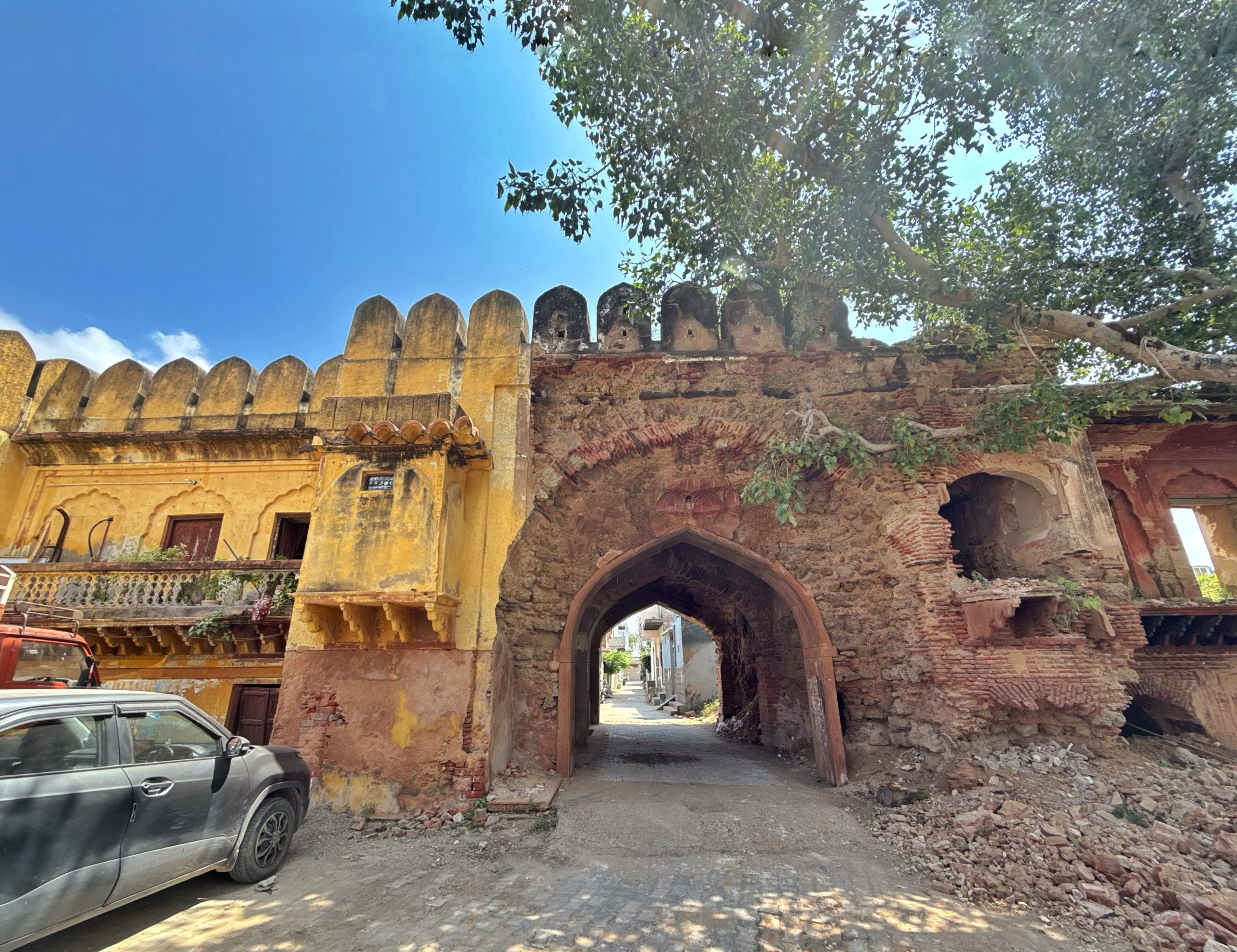
My PhD project looks at these changing historic urban landscapes in the context of India. I am specifically looking at vulnerable heritage structures: sites that were majorly neglected in mainstream site surveys in the colonial period and remain unprotected and understudied as a result. The thesis specifically looks at built heritage sites of the 18th century in the late Mughal town of Farrukhnagar in Haryana in northern India, asking whether alternate conservation approaches such as Corporate Social Responsibility might be a viable tool for sustainable heritage conservation and community engagement.
Before your PhD, your experience on archaeological sites had largely been in the UK. How did you find the process of scaling up to managing a multi-site project in India?
I would say it was both challenging yet fun! My archaeological training has been split across both India and the UK. Back in India, I began my journey as an archaeologist with Speaking Archaeologically by condition mapping built heritage sites in and around Delhi. Excavating in the UK and undertaking specialist training in condition surveys and preventive conservation was a way of improving my skills and testing out ways to better record and conserve the sites back in India. Undertaking such a training was vital given that there is still a lag in development of archaeological theory and practice between the UK and India. Heritage management frameworks are different in both countries, as are the site contexts of course. I had to constantly juggle between my fascination with new recording approaches and their realistic application in the context of my sites.
A close mentor, Dr. Shriya Gautam, advised me early on to always understand your site first. Context is the most imperative thing in archaeology. That is what guided me. I understood what the problems of my case study area were during my fieldwork and then proceeded to test out the best possible viable approaches. There was diversity in terms of structure and context of the sites within Farrukhnagar, so I had to be relational in my approach and be sensitive to individual site contexts.
Some of the sites you were planning to include were demolished while you were in the field. How did you adapt to this challenge?
Witnessing heritage loss in real time as opposed to just reading about it was both professionally and personally challenging. However sure you feel theoretically about approaching heritage loss and change, it still leaves you in shock when a site is demolished in front of you!
I was undertaking a scoping survey of Farrukhnagar at the start of fieldwork in order to identify potential sites that had not been recorded previously or were not visible. It was during this time that I stumbled across a third city gate, tucked away down a narrow lane. It was a significant discovery because it, along with two others, are the only remnants of the original five that regulated access in and out of Farrukhnagar in the 18th century. This city gate was almost invisible in current consciousness, with only a few images in online archives. I still remember recording the site as meticulously as I could. Maybe the recording exercise was guided by an impending sense or intuition. What if the site has changed when I am next here?
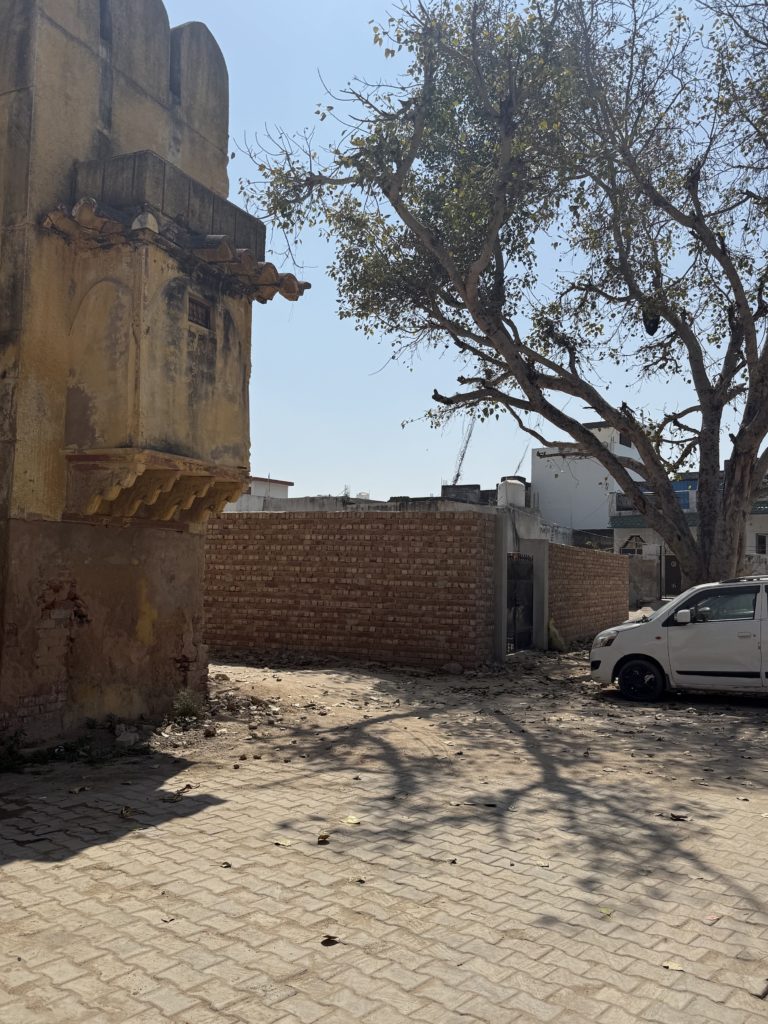
Two weeks later, I was greeted by a demolished gate. Only tiny fragments survived of its former structure. I was engulfed with a sense of disbelief at first, followed by anger and grief. Slowly, my professional perspective helped me to reconcile with the loss. While it was tragic to lose a piece of history, I sought to look at the question of “what next?” Thankfully, I had preserved it through my documentation. I was probably the last witness. I proceeded to map the structure again after the demolition and eventually made the data about the site accessible to the wider public through a curated reel on social media platforms such as Instagram, YouTube, and TikTok. By treating every site as a space that I might be seeing for the last time regardless of the protection status, I adapted to heritage loss and change through extensive on-ground documentation.
How did the public respond to your work on sites?
I occupied a liminal space of being simultaneously an outsider and an insider during my fieldwork. I was an archaeologist working on these heritage structures and an agent through whom people started noticing or shifting their engagement.
This was very noticeable during an archaeological ‘sketch walk’ I organised with Speaking Archaeologically in Farrukhnagar. As part of a nation-wide archaeological illustration competition (Skhédíos), we wanted to bring the forgotten Mughal monuments of Delhi and the surrounding regions closer to public by encouraging participants to be inspired by these lesser known sites through the medium of art. While Farrukhnagar has been a hub for heritage walks in the last year or two, our aim was to make archaeology more accessible to people in a creative manner.
The result was an illustration workshop and sketch walk around the streets of Farrukhnagar where participants sketched what they felt was heritage. This resulted in illustrations of sites located in a changing landscape, recording of motifs and architectural details which were hidden away, and a conversation about why art is integral to archaeology. The highlight was how locals engaged with it in their own ways. Some became curious about why we were drawing certain buildings while others offered recommendations for places to sketch, sites that felt like heritage to them. It became a fascinating melting pot of ways of seeing and relating to heritage, all through the medium of art and archaeological storytelling.
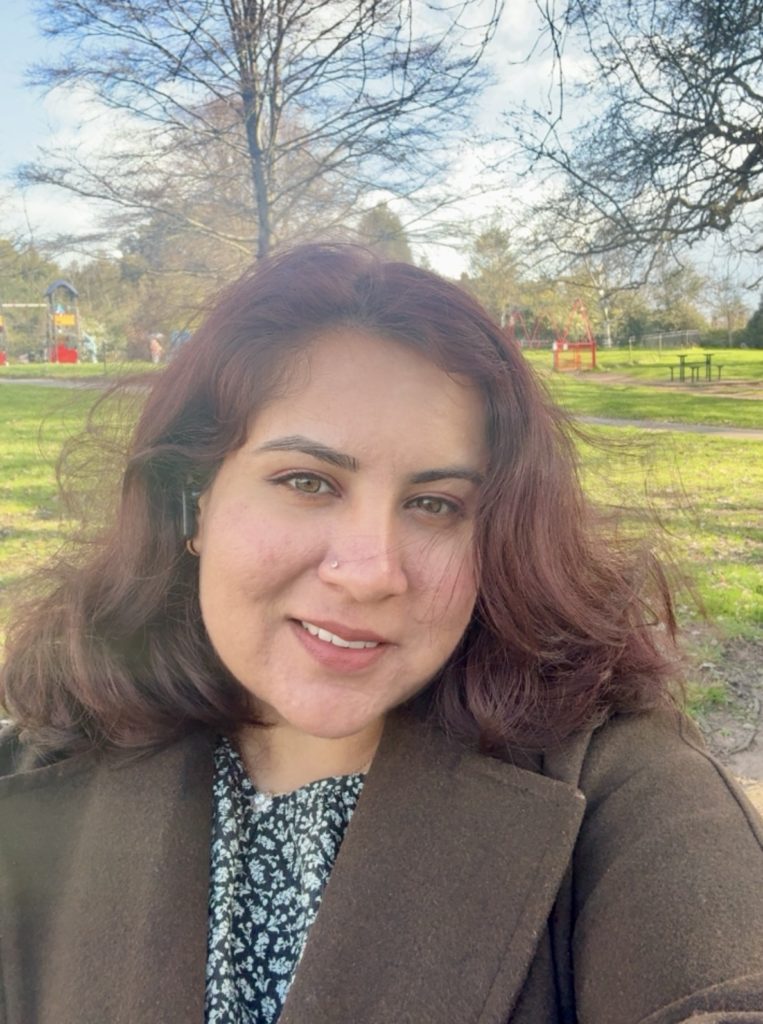
Simran Kaur is doing her PhD in Archaeology at the University of Exeter. Her research, funded by the Faculty of Humanities, Arts, and Social Sciences (HASS), looks at sustainability and heritage management practice in urban areas in India, with a specific focus on community engagement and public-private partnership. She holds an MA in Archaeology from UCL’s Institute of Archaeology (2021-2022) and is also currently a research panellist at Speaking Archaeologically. She has previously worked with Historic Royal Palaces and English Heritage in areas of public engagement, visitor services, and preventive conservation.