Posted by Laura Sangha
9 September 2025Laura Sangha
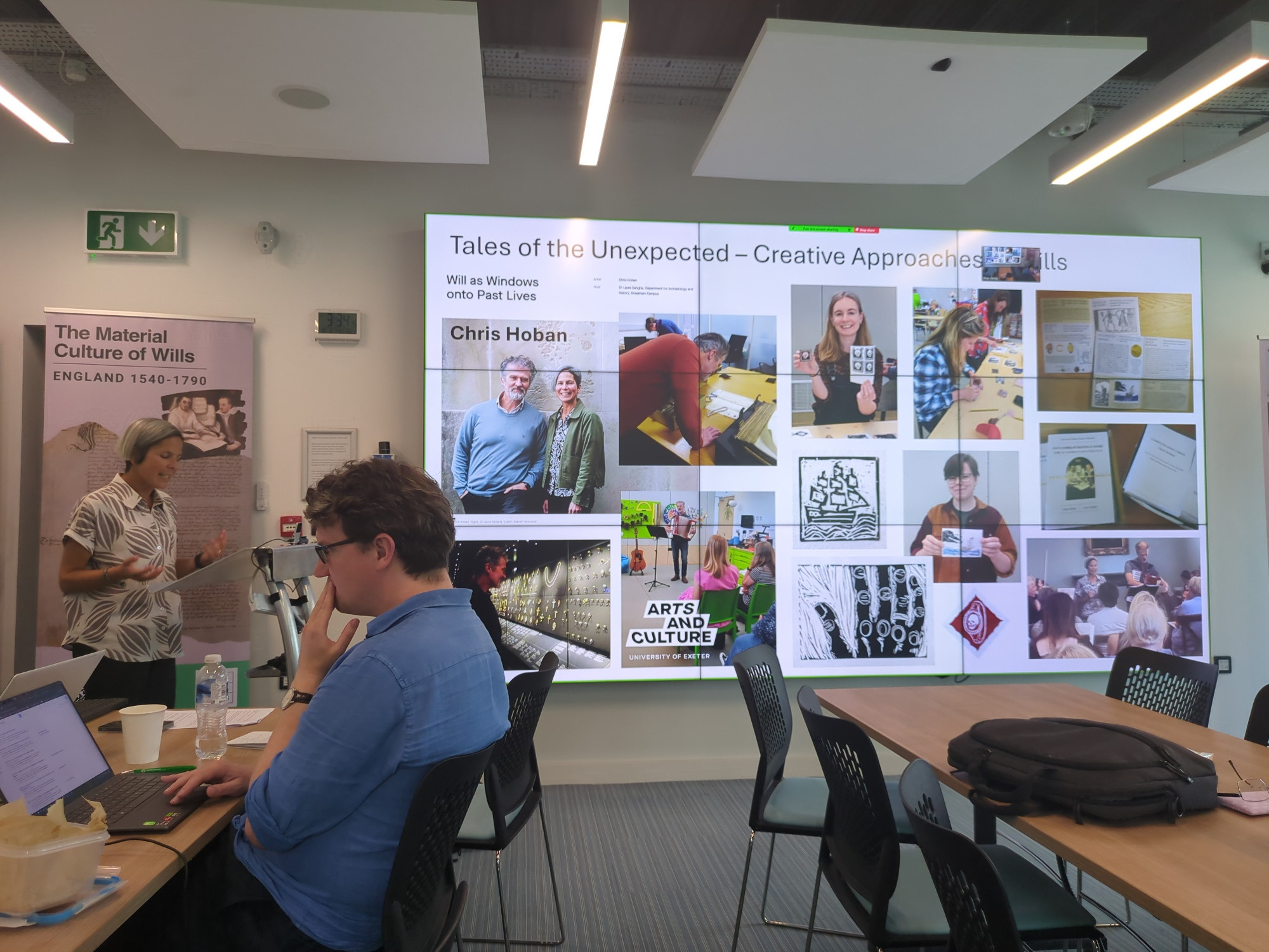
What do you get if you combine a historian, a musician, and 25,000 historic wills? All sorts of fun things! In this post I reflect on what composer, arranger, songwriter and performer Chris Hoban and I got up to during our six-month Arts and Culture Creative Fellowship. For background about the fellowship, see this earlier post.
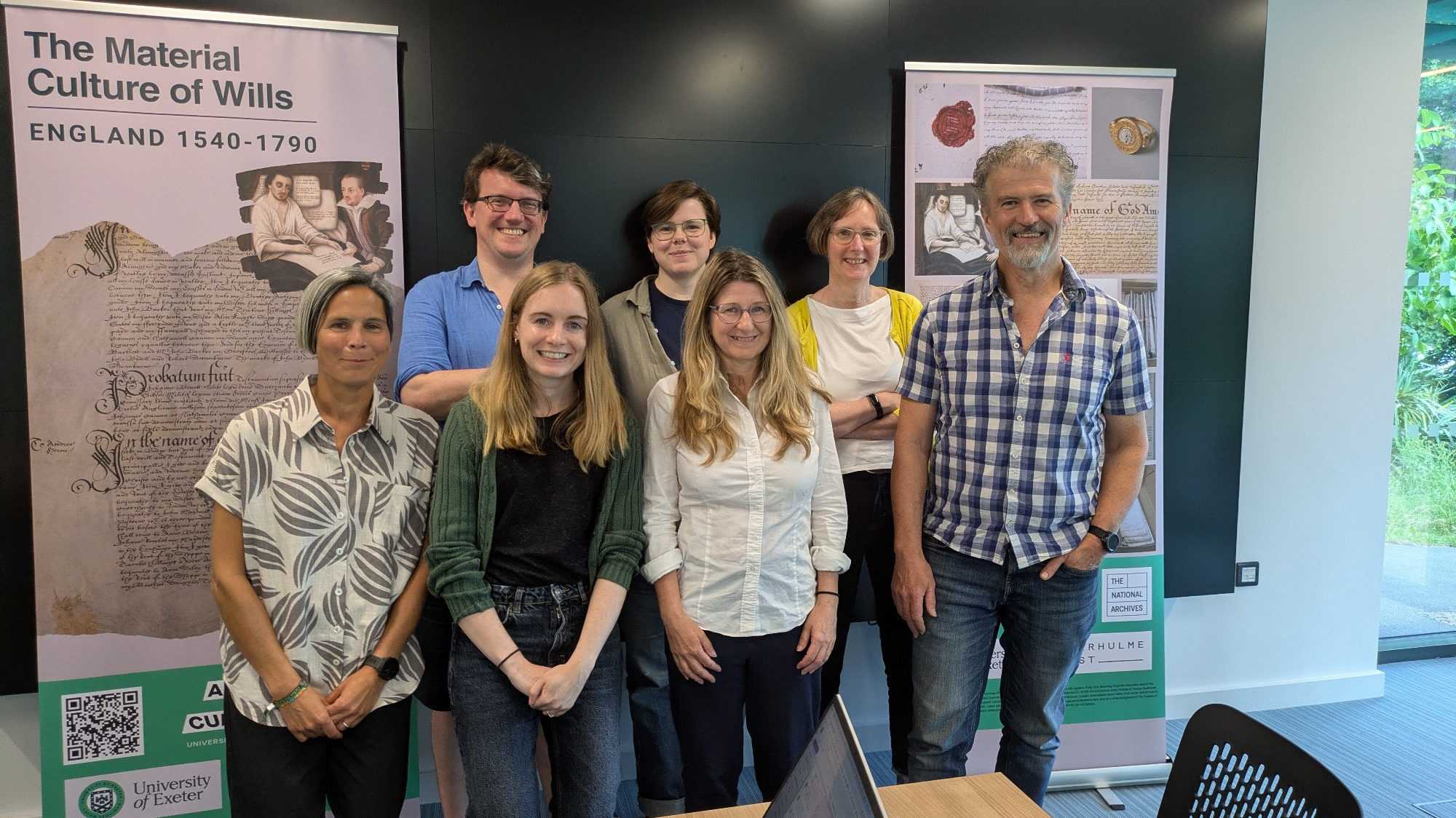
Original Wills in the archive
One of the first things Chris did was join the entire project team for a workshop at The National Archives in Kew in February. This was an opportunity for us all to see both original wills and their registered copies in person, and to talk to TNA’s early modern record specialist Ruth Selman about their collection. Though our project would be impossible without the Archives’ digital surrogates (microfilm of the TNA wills that was later digitised – this means our images are not always the best quality), it was a real privilege to consult these precious documents ‘in the flesh’. It’s an experience that collapses the distance between you and the long dead testators and gives you a feel for the documents that can’t be replicated.


Chris’ Reflective Diaries
To capture and share how our collaboration developed, Chris wrote a reflection diary. In his first instalment he covered the visit to Kew, and noted our delight in discovering that the original 1665 will of Alice Walter had survived. We were familiar with the will of this London widow since Emily had written a will of the month post about it, and both Chris and I were interested in the three rings that Alice bequeathed to her three children. More on that shortly …
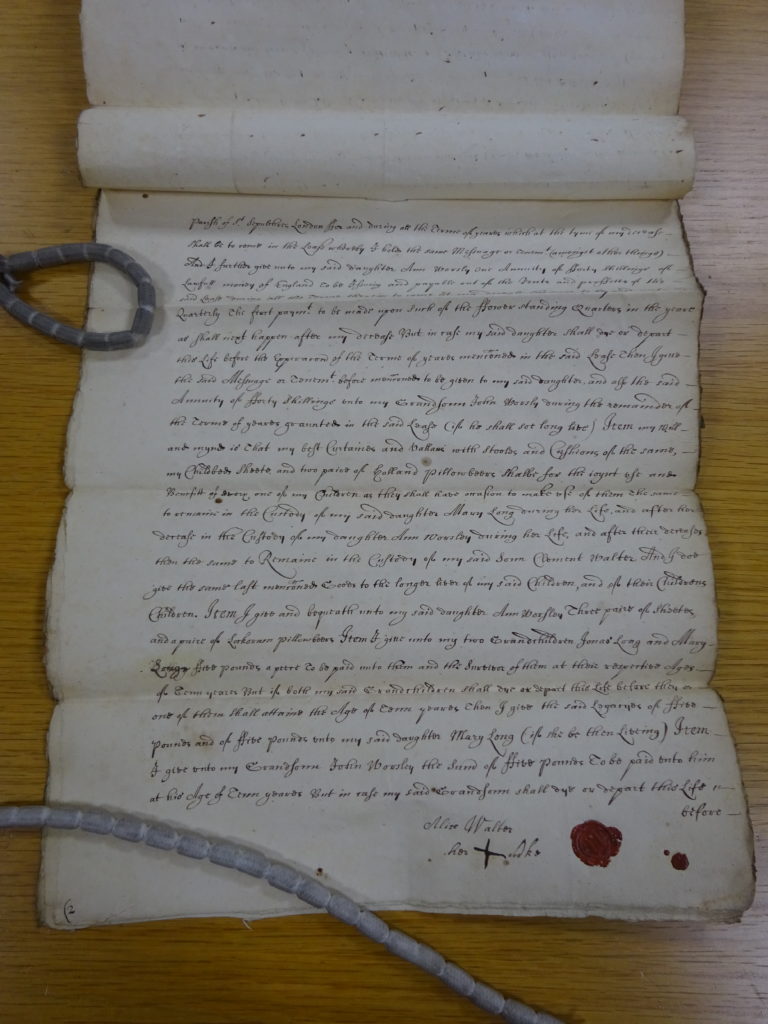
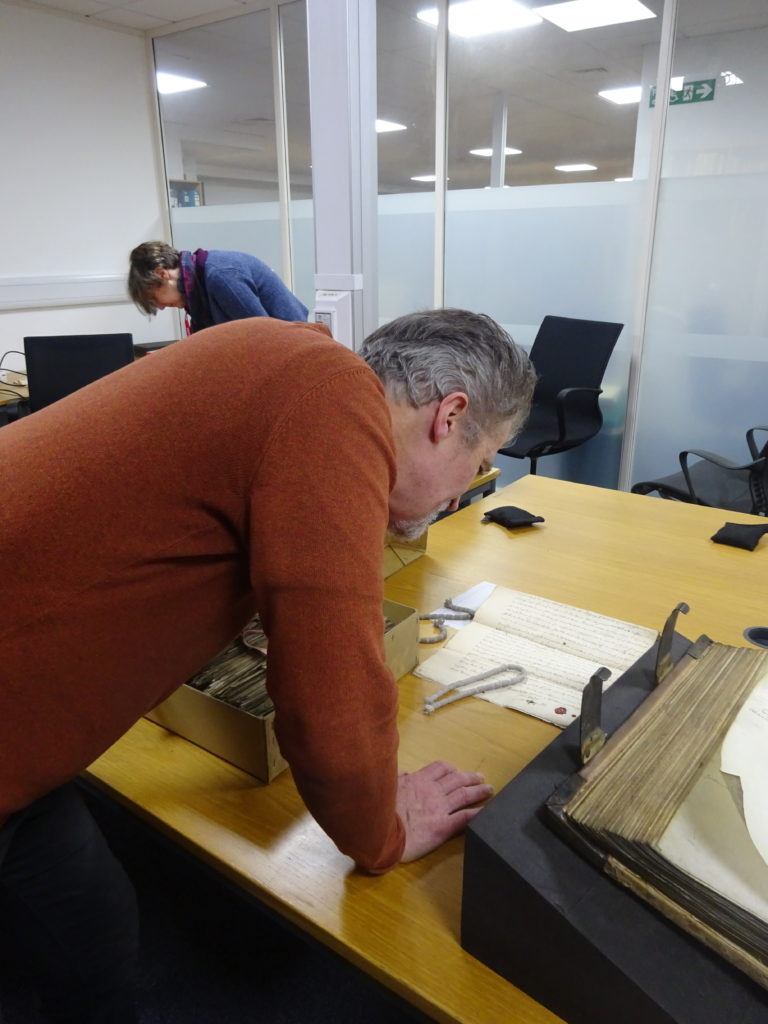
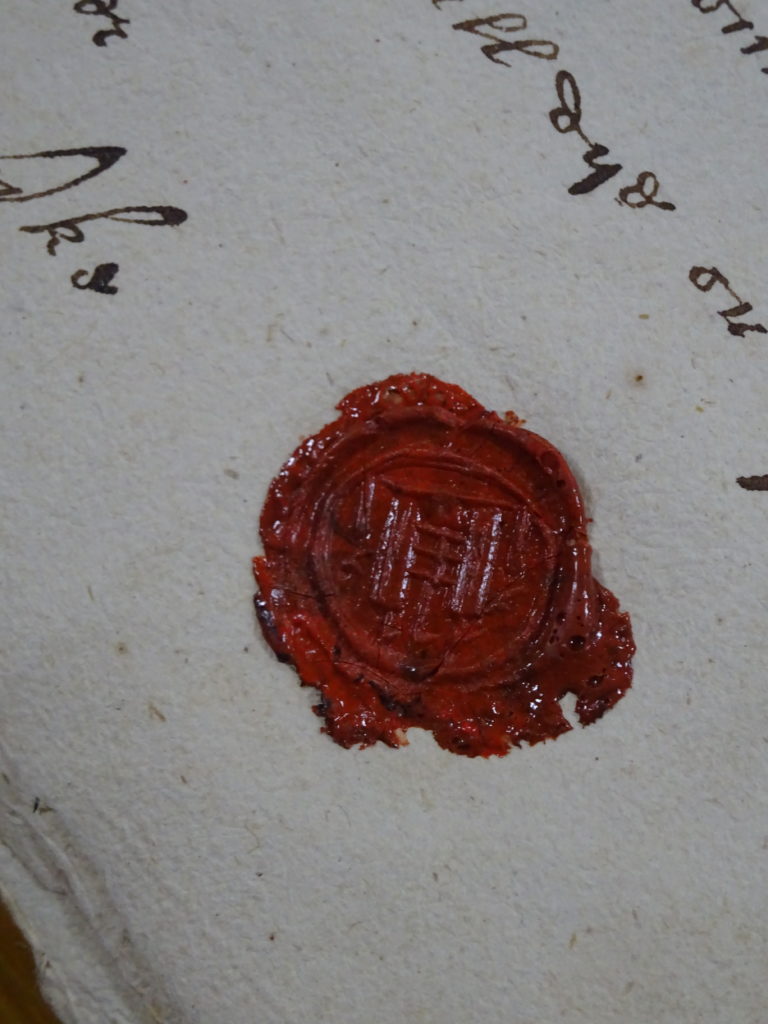

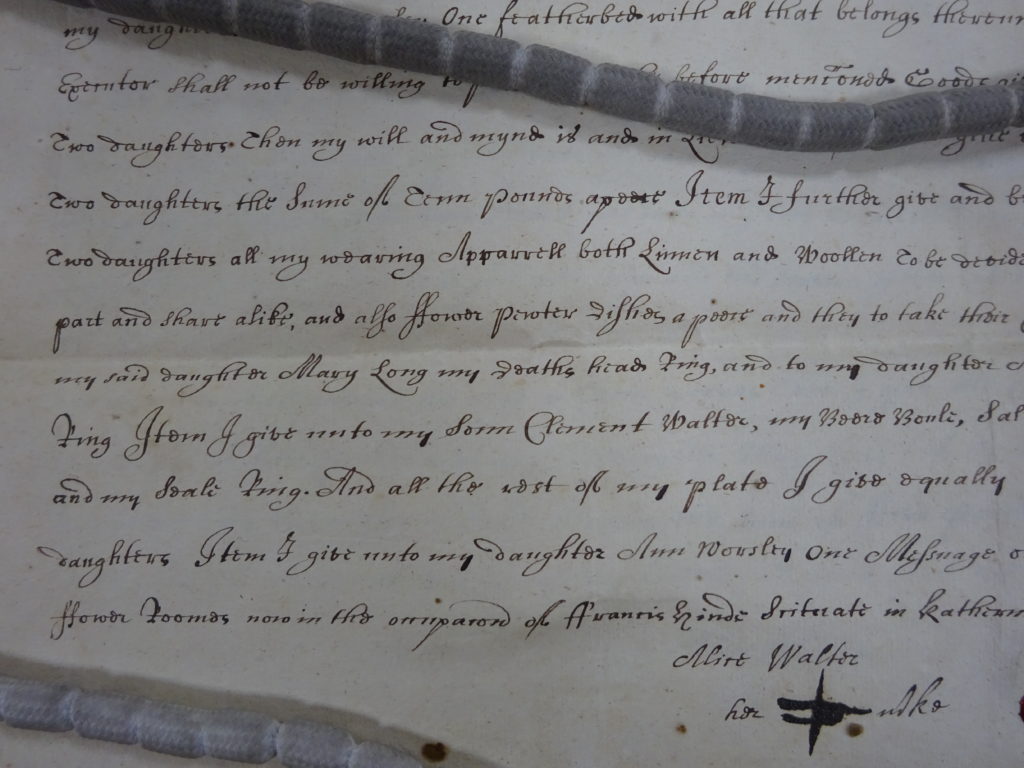
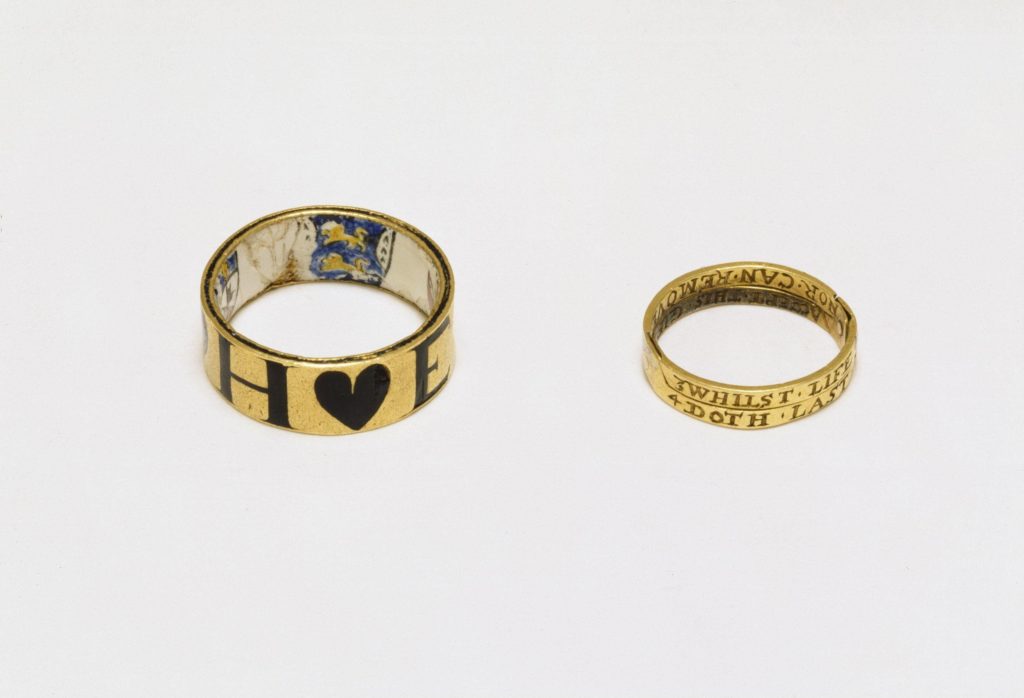
Chris pores over Alice Walter’s will at The National Archives. The close-up shows Alice’s bequests of 3 rings, including a seal ring to her son – likely the ring she used to create the wax seals at the bottom of each page. Gold and enamel mourning Ring, seventeenth century, British Museum AF.1521, © The Trustees of the British Museum. Shared under a Creative Commons Attribution-NonCommercial-ShareAlike 4.0 International (CC BY-NC-SA 4.0) licence. Gold rings, 1600-1700 (made), England © Victoria and Albert Museum, https://collections.vam.ac.uk/item/O118508/ring-unknown/.
In Chris’ March diary he mused on the different voices that emerge from wills and the sometimes very surprising stories that get related by testators, and in his final entry he gives us a sense of how the wills we had been exploring had started to become music and lyrics. Do have a look at the entries if you are interested in the way that creative approaches can open up historic documents in new and exciting ways.
Material culture at the Victoria and Albert Museum
Having seen the wills themselves, Chris and I met up in London to take a spin around the Victoria and Albert Museum, making a beeline for the ‘real life’ versions of all the ‘material culture’ that we had been encountering in the wills we’d been looking at. One highlight was the spectacular bed – for many early modern people the most expensive possession they owned – complete with mattresses (three), bolster, valances, curtains and coverlet, all objects we find in wills. We also spent some time with the cases and cases of gold and silver jewellery, including three different types of ring that Alice Walter bequeathed in her will – a wedding ring, a seal ring, and a death’s head ring. We saw ceramics, pewter, glassware, chests, an embroidered coffin pall, books, musical instruments and a spectacular wassail bowl, although in truth we only really scratched the surface, and could have spent several days wandering around the beautiful galleries.


Linocut Print Workshop
Chris and I were having lots of conversations and one thing that kept coming up were early modern ballads – the hugely popular songs of the day that are also a vital source of evidence for historians, particularly those interested in England’s cultural landscape. These ballads linked the oral culture of the majority with the literate world of the written word, since the lyrics were not only sung, but were also printed and sold as ‘balladsheets’. These were very cheap, one-page publications, very often illustrated with a woodcut image.
Chris and I talked about the ballads’ combination of text, tune and image and started to wonder what adding a visual element to our own collaboration would bring – what if we gave people some of the lyrics sparked by the wills and asked them in turn to draw on their creativity to illustrate them? The Arts and Culture team put us in contact with Emma Maloney of Exeter’s Double Elephant Print Workshop and she expertly assisted us in organising a print workshop on a sunny day in May where we did just that. Participants were given wills and lyrics to read in advance, and were asked to create a linocut that would illustrate one of the songs.


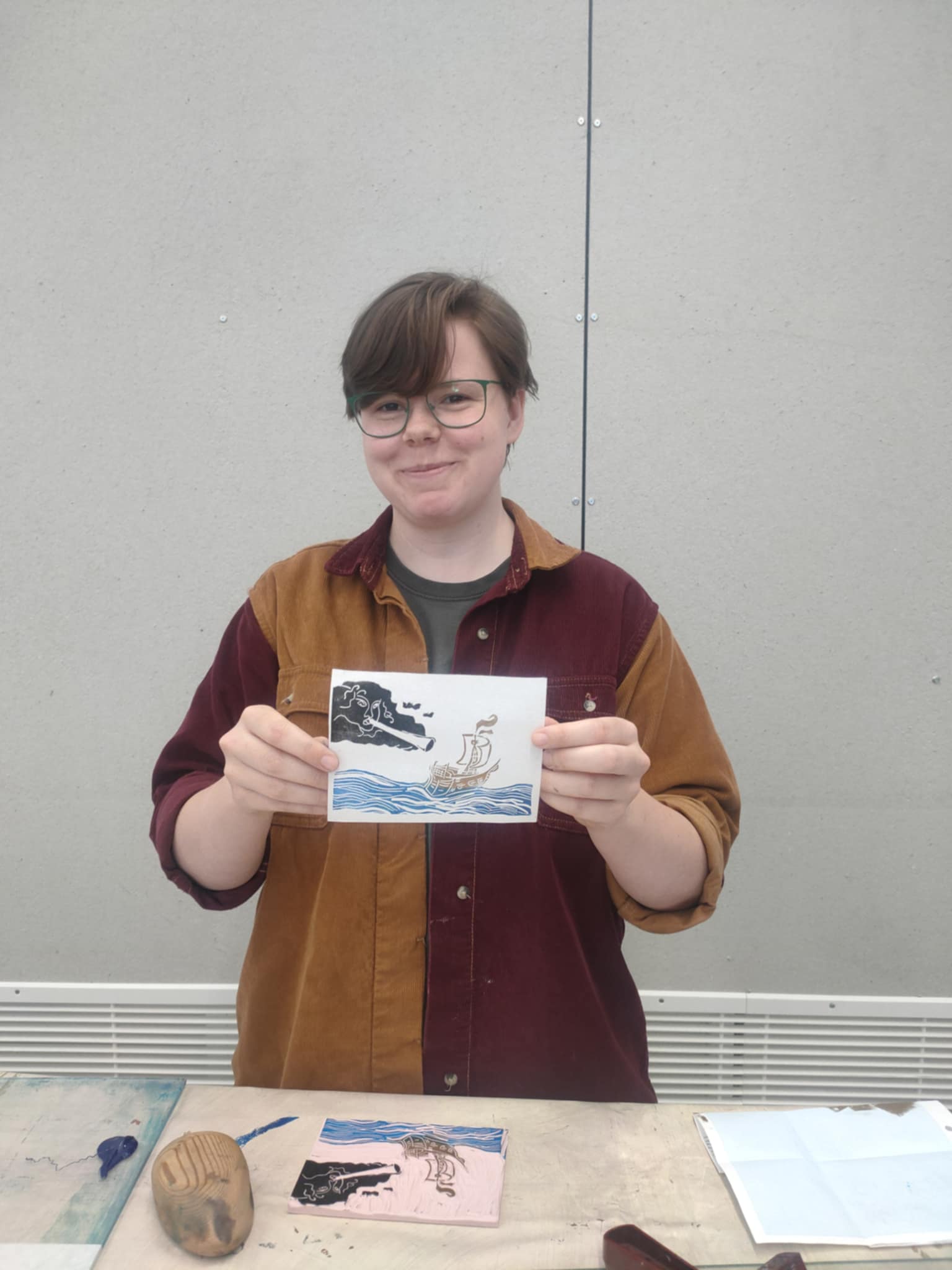
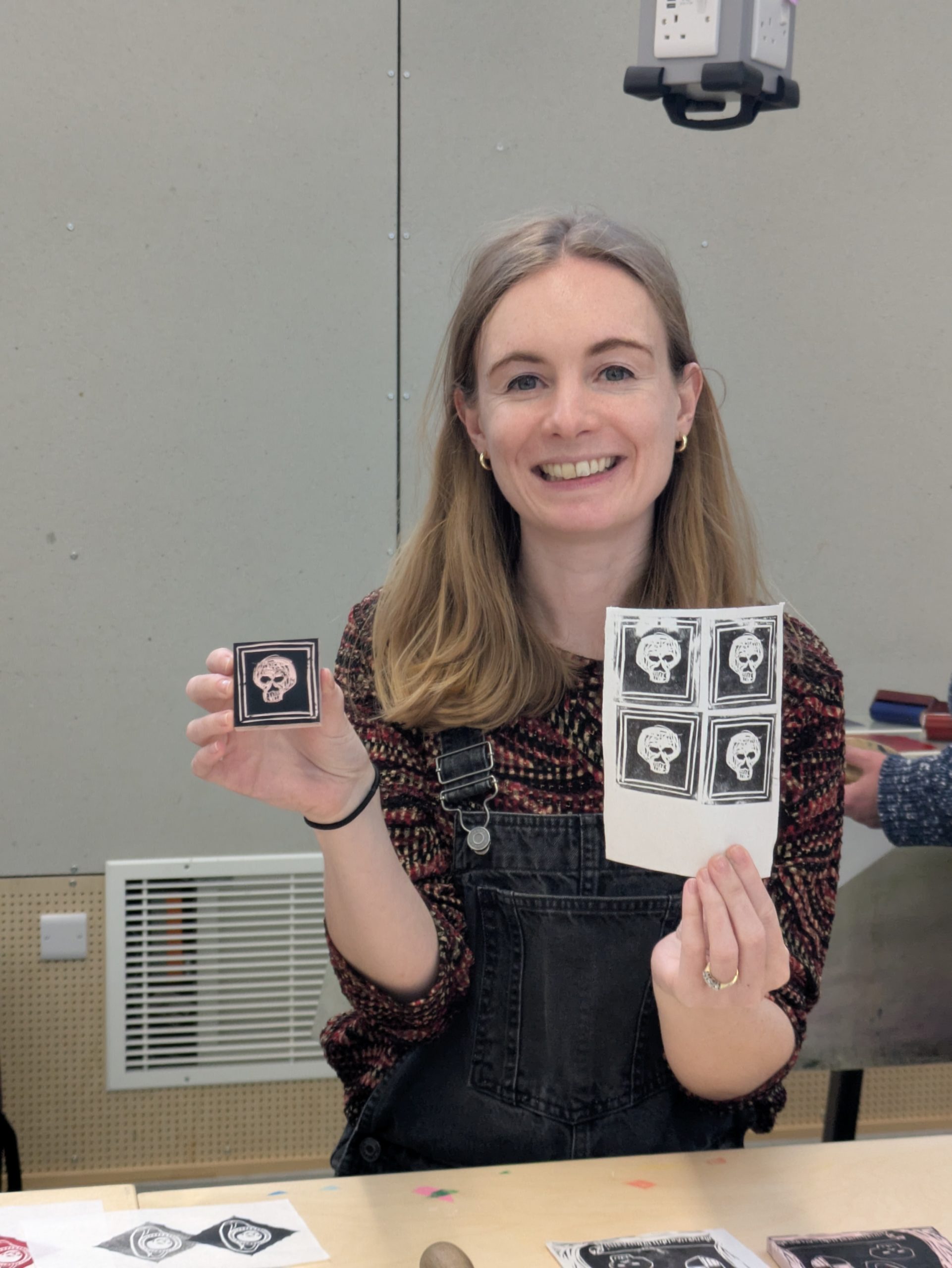
On the day Chris performed a few of the songs he had written and then we all got stuck in with our carving tools and ink rollers. I was frankly in awe of the skills on show by the attendees, many of whom drew inspiration from ‘The Rings on My Fingers’, Chris’ song with its roots in Alice Walter’s will. A halyard shanty about a Devon mariner who sold his trumpet so that his crewmates could have a party also proved popular, as did the very traditional memento mori motif, the grinning skull.


Prints created by (from top): Fiona Rourke (hand); Kit Barton (ship in colour); Jane Tozer (ship in black and white); Kate Watson (red ring); Emily Vine (grinning skull); Kit Barton (4 rings); Sarah-Jayne Ainsworth (gold rings motif); Esme Thompsett (hand and 3 rings); Laura Sangha (shield); Jane Witkin (trumpet player).
The afternoon not only gave me lots to chew over about the relationship between images, symbols and cultural meaning, it also brought a new-found appreciation for the enormous skill of early modern illustrators who carved their images into wood – a process that must have been far more challenging that working with the soft, forgiving lino that we used!
An Evening of Stories and Songs
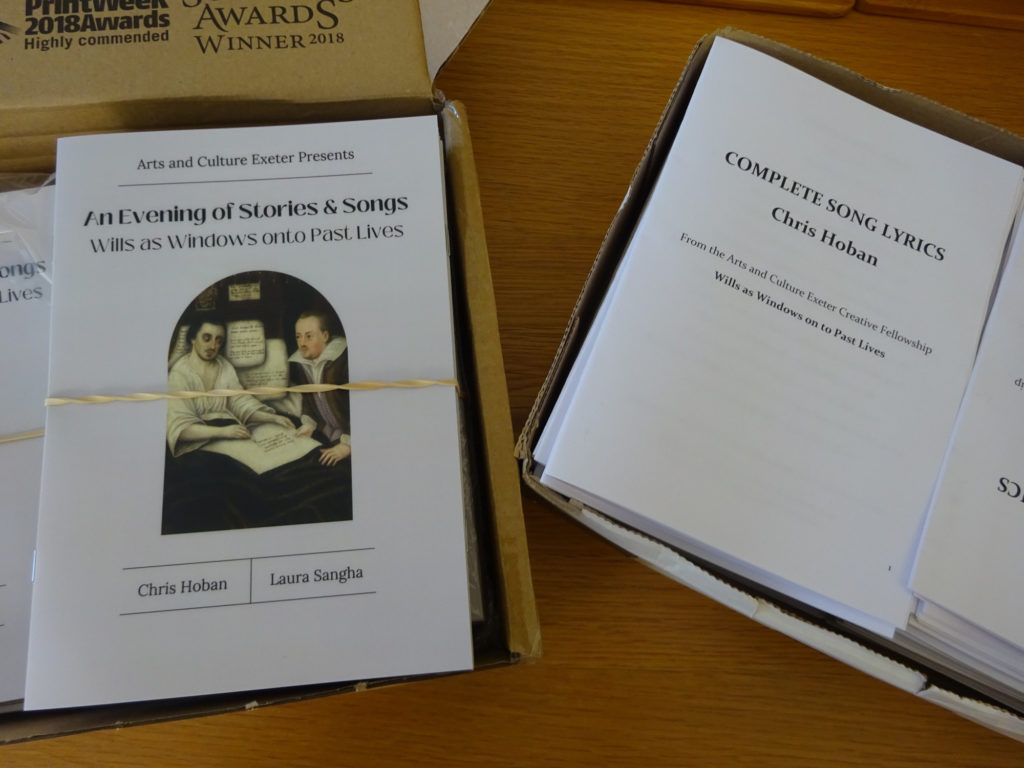
You can probably tell that my collaboration with Chris has been exciting, surprising, challenging and extraordinarily enriching. As we talked about and dug into the wills we were sent in so many different directions – to the trumpeter’s ship, to plague ridden London, to the house of an Exeter alderman with a tombstone in the hall, and to the Devon coast to collect seaweed. Along the way we talked to other historians, to archivists, to other creative practitioners and more. As our collaboration drew to its official close, we decided we’d like nothing more than to share its fruits with a wider audience, including many of the people we’d encountered during our explorations. We therefore put together a joint performance, ‘An Evening of Stories and Songs’, which took place in Exeter back in June 2025. In many ways it was the culmination of our adventures – I won’t say more than that now, but look out for a future post with full details on how it went…
Creative History
Almost a decade ago I wrote a blog post about what I saw as the key features of the discipline of History, trying to summarise what was distinctive about the way that historians go about their work. Though I reflected on the fact that remembering and talking about the past was part of ‘being human’, my focus was on History’s more ‘scientific’ elements: rigour; facts, evidence and footnotes, the distinctive elements of critical and analytical thinking and so on.
Yet looking back on my application to become an academic host for a creative practitioner from last year, I wrote there that although most people perceive of History as science, in reality the process of producing History is inherently creative. The work of transforming the stuff that survives from the past (texts, objects, landscapes, buildings …) into histories is a creative act, just as much as the process of turning it into a song, an illustration or a conversation. I consider myself extremely fortunate to have been given the chance to explore these creative acts in depth through the fellowship, and I am already plotting to continue to tap into creativity in my own work (and alongside Chris) in the future.