Posted by Edward Mills
23 March 2026It’s Orme Week! This Wednesday is the hottest day in the Exeter Medieval Studies calendar, when we’ll welcome Julia Crick to deliver the 2026 Orme Lecture, teased in last week’s blog post and with attendance now bookable via Eventbrite. An important part of the celebrations for the Feast of Orme (as it’s colloquially known) is the Postgraduate Symposium, which sees PhD students from the Centre sharing their ongoing work. This year’s symposium will take place at 2pm (on Wednesday 25th March, obviously!) in Amory Building, room 128, and all are warmly invited to attend. The speakers — Clementine Pursey, Aymeric Lamy, and Shunran Tu — have kindly provided abstracts, which we’re sharing on the blog this week as a preview of what to expect.
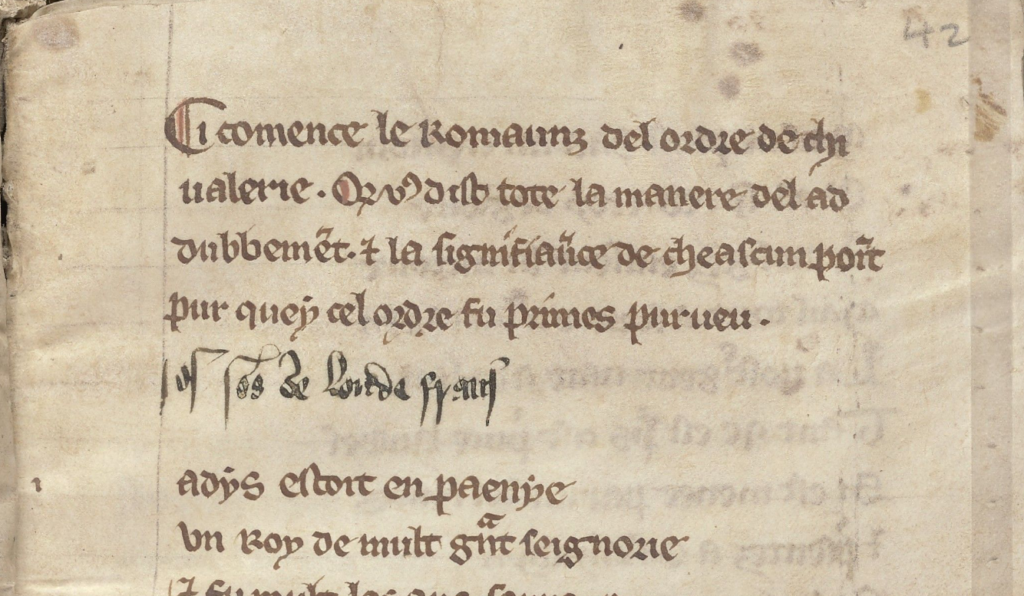
Like most English monasteries, the library of Lacock Abbey is now almost entirely lost, with only one collection of literature surviving. Rediscovered in 2011, USA, Beinecke Library, Osborn a56 contains four Anglo-Norman texts copied in the same early-fourteenth century hand. As the only known versions of these works from an English nunnery, the codex offers a rare opportunity to consider how female audiences engaged with them. This paper focuses on the first two texts: the Tretiz, a French verse vocabulary by Walter de Bibbesworth, and the Ordene de Chevalerie, an anonymous poem in which a Christian knight instructs Saladin in chivalric and spiritual ideals. Despite their markedly different contents, this paper argues that these texts functioned together as instruments of behavioural guidance for women. While the Tretiz has been read primarily for its linguistic value, the short narratives it uses to teach vocabulary could also model conduct for men and women in secular households. The Ordene, by contrast, frames ideal Christian conduct through an explicitly masculine lens. By juxtaposing familiar domestic scenes with exoticized crusading encounters, the manuscript invites reflection on how the nuns’ dual identities as women and monastics were shaped by external authors. More than passive educational tools, these texts reveal a desire for the nuns to participate actively in behavioural discourse through a prestige language accessible to them.
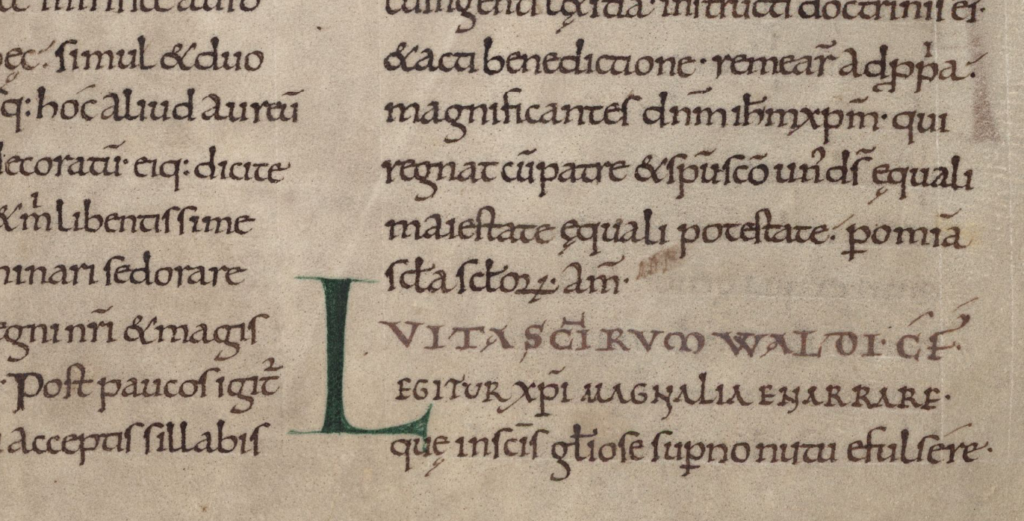
The boom of hagiographic writing in eleventh-century England was both a vehicle for and a product of the expanding reach of monastic ‘reform’ promoted by monk-bishops. While this genre—chiefly produced and preserved within monasteries—is often dismissed by historians of the English countryside for its reliance on hagiographic topoi and imitations, this paper argues that narratives depicting the eruption of the divine into the daily lives of local laypeople are historically significant. By applying recent methodology developed by historians of the Carolingian countryside and James C. Scott’s framework of ‘public’ and ‘hidden’ transcripts to recurring miracles—specifically those concerning the refusal to observe saints’ feast days—this study demonstrates how hagiography illuminates non-elite agency and the intensification of labour across the Norman Conquest. Ultimately, it suggests that a more inclusive reading of the evidence sheds light on the socio-economic and religious tensions occurring at the intersection of ecclesiastical authority and low-level lay resistance.
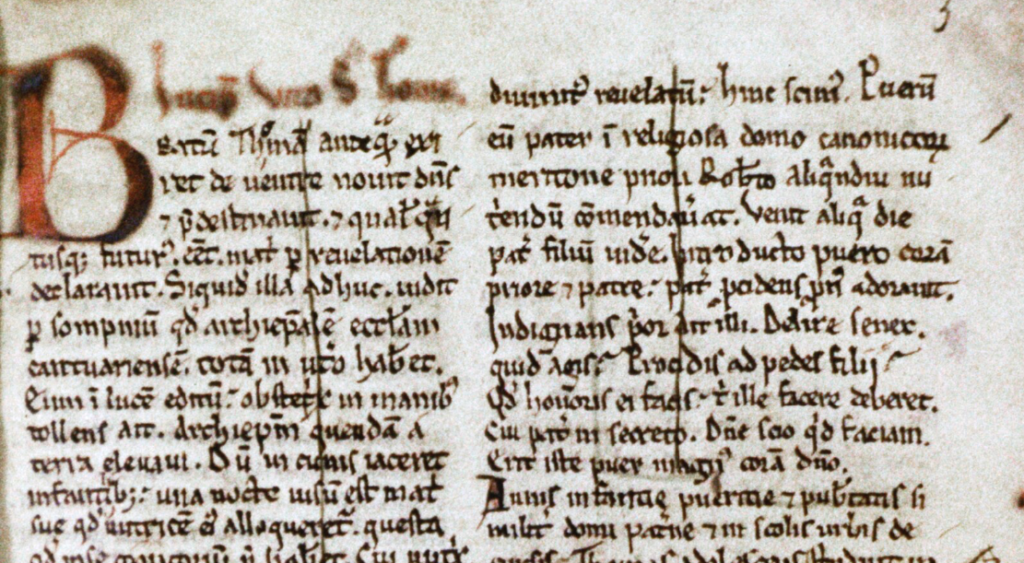
This paper examines how the idea of “speaking truth to power” is represented in twelfth-century ecclesiastical writing, with particular attention to William Fitzstephen’s Vita of Thomas Becket. In Fitzstephen’s narrative, Becket emerges as a paradigmatic truth-teller whose willingness to admonish royal authority forms a central element of his sanctity and moral authority. At the same time, the text portrays other clerics negotiating the risks of truthful speech within the royal court, revealing different strategies of counsel, rebuke, and political prudence. By reading Fitzstephen alongside contemporary reflections on counsel and kingship—particularly those of John of Salisbury and Herbert of Bosham—this paper explores how medieval writers conceptualised the ethical responsibility of advising rulers and the sanctity of political truth-telling. In doing so, it argues that hagiography provides an important perspective on the moral and political significance of speaking truth to power in the twelfth century.