
Posted by Catherine Rider
11 May 2026We welcome back Catherine Rider to the blog this week, as she reports back from her latest archival explorations in Malta.
In March I went to Malta for a workshop and a couple of days of archival research. As some of you will know, I’ve been working on a string of collaborative projects there for the last 12 years or so. This workshop was for a project on the capture of the Sultana Binganem led by my colleague and collaborator Professor Dionisius Agius in the Institute of Arab and Islamic Studies, and funded by the British Academy. The Sultana was an Ottoman galley which was captured by the Knights Hospitaller, who were based in Malta, in 1700. (So this is very late in time by my medievalist standards!).
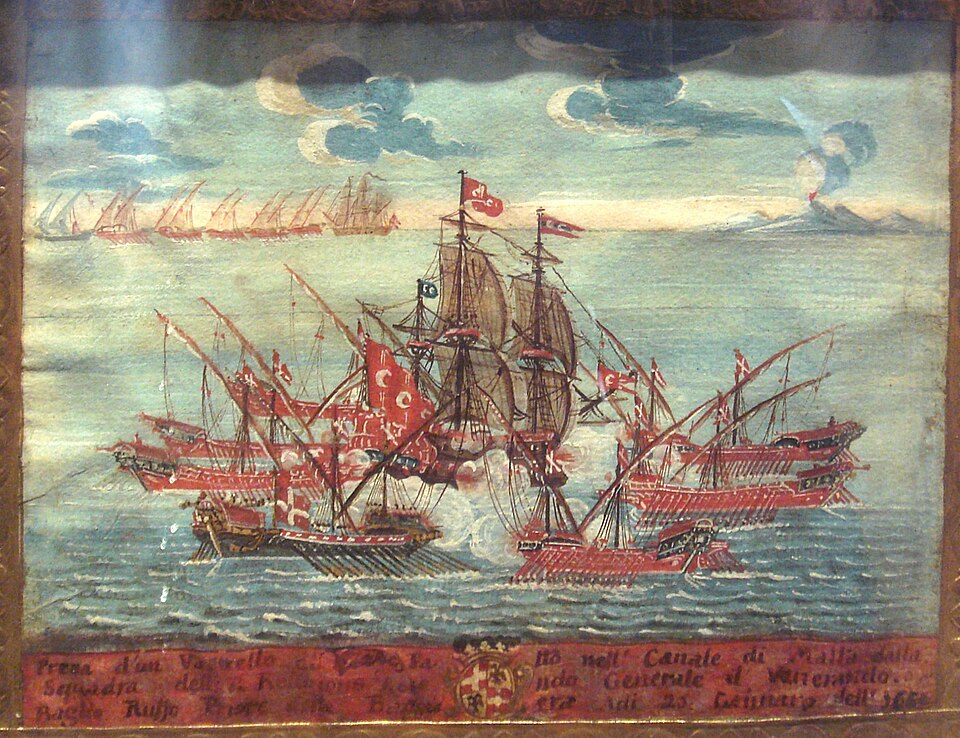
The project is an interdisciplinary one that brings together experts in early modern ships and shipping, warfare, art, daily life – and the Inquisition, which is where I come in. When the ship was captured, the Knights enslaved the Muslim soldiers, sailors and rowers on the galley – a practice that was customary for captives in both Christian and Muslim states around the Mediterranean. Among them was a man named Hag Ahmed Hoggia, a clerk on the ship. A few years after the ship’s capture, Hoggia was reported to the Inquisition, because two of his fellow captives claimed he hadn’t been born a Muslim: they said instead that he had been born a Christian and had converted to Islam. If this was true, that meant he was guilty under canon law of apostasy – an offence that fell under the jurisdiction of the Inquisition. In Malta the inquisitors were quite used to dealing with apostasy cases and did not always punish them harshly: often they involved people who claimed they had been forced to convert to Islam while enslaved and now asked to return to Christianity. Generally the inquisitors accepted them back into the fold and gave them penance. So, if Hoggia had pleaded guilty, he would probably have got off fairly lightly – but instead, he denied firmly that he had ever been a Christian, and instead described how he had been born a Muslim in Constantinople (modern Istanbul). This meant there was a trial before the Inquisition, in which Hoggia talked about his life, and so too did many witnesses. The document survives in the inquisition archives in the Metropolitan Chapter Archive in Mdina.
My part in the project is to write about what these various witness testimonies tell us about interactions between Christians and Muslims on Malta, and across the Mediterranean, and I’m focusing on everyday, informal contact: people talking in shops, prisons, on ships, and so on. It’s a fascinating project because the trial is full of competing claims, and different versions of Hoggia’s life. Was he a Russian Orthodox Christian from eastern Europe who had been enslaved and converted to Islam, as some of the witnesses claimed? Or a free-born Turkish Muslim who happened to be working on the Sultana when it was captured? How could you tell, in an era before passports and birth certificates? We’ll never be quite sure, but when the witnesses tried to prove their stories, they tell us a lot about life in the port cities and ships of the early modern Mediterranean.
The workshop brought together the various collaborators on the project to discuss their chapters for the project book, and we also had a tour of the Notarial Archives in Valletta, which holds further documents relating to the Sultana (and a wealth of other material). A lot of it was outside my usual academic interests but I learned a lot!
Featured image: the courtyard of the Inquisitor’s Palace in Malta. Marie-Lan Nguyen / Wikimedia Commons.
