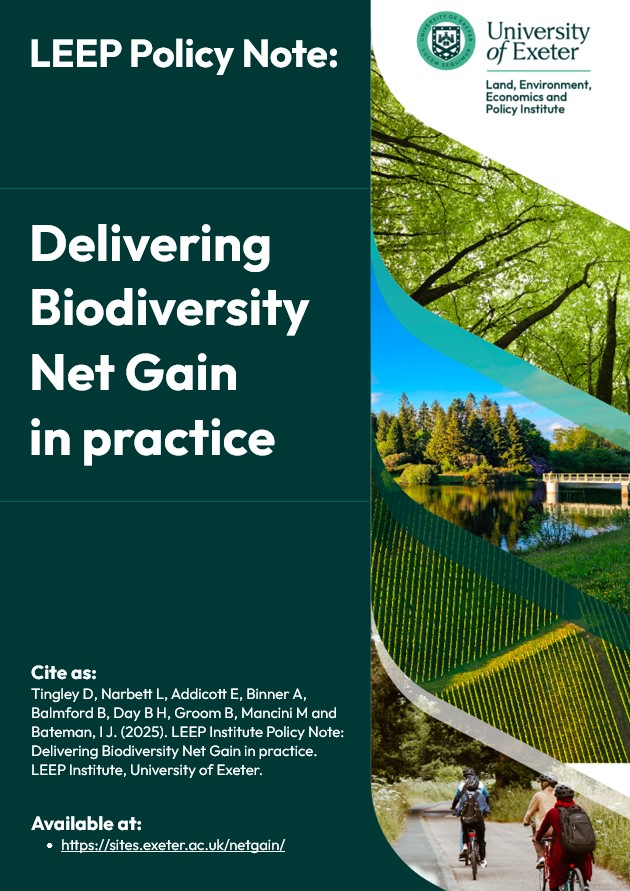
In addition to traditional research, theses webpages also include links to our Policy Note, a Podcast and newly created Game & Primary School Teaching Resource. These engagement and communication materials help bring our research findings to a broader audience.
The creation of these webpages and resources has been made possible with funding from The Esmée Fairbairn Foundation. Please see the Acknowledgements section below for information about other research funding sources.
The introduction of the UK’s Biodiversity Net Gain (BNG) legislation is aworld-leading step forward.
BNG legislation seeks to address the unprecedented loss of wild species generally, and in the UK specifically. It became mandatory in the UK in 2024. It was introduced as part of the Environment Act 2021, which requires developers to ensure that wildlife habitats are left in a better state than before development.
In the UK, development and new housing construction, in particular, is a major driver of biodiversity loss.
Biodiversity in the UK has already declined by almost 50% since the start of the century and the UK is regarded as one of the most nature-depleted countries in the world. Biodiversity decline could cost the global economy US$10 trillion by 2050.
LEEP research broadly finds:
The benefits of Biodiversity Net Gain (BNG) policy are constrained by its complexity and how it is implemented.
Simple changes could drastically improve its performance.
Key recommendations include:
BNG policy should be strengthened and better implemented as a tool to tackle the biodiversity crisis.
The Biodiversity Metric could be simplified and refined to focus on wildlife at greatest risk.
Biodiversity improvement, public access to green space and wider environmental improvements are all important, BUT each need separate provision.
The right place (and right funds) must be selected for biodiversity improvement.
If decision makers choose to use BNG to benefit people through environmental improvements, then consideration of who should receive these benefits is needed.
For full details and references, please see the Policy Note.
Faccioli, Michela, Diana M.Tingley, Mattia C.Mancini, and Ian J.Bateman. (2025). “Who Should Benefit from Environmental Policies? Social Preferences and Nonmarket Values for the Distribution of Environmental Improvements.” American Journal of Agricultural Economics, 107(3): 725–751. https://doi.org/10.1111/ajae.12467
Mancini, MC; Collins, RM; Addicott, ET; Balmford, BJ; Binner, A; Bull, JW; Brett, HD; Eigenbrod, F; zu Ermgassen, SOSE; Faccioli, M; Fezzi, C; Groom, B; Milner-Gulland, EJ; Owen, N; Tingley, D; Wright, E; Bateman, IJ. (2024). Biodiversity offsets perform poorly for both people and nature, but better approaches are available. One Earth, 2024; 7, 2165-2174. https://doi.org/10.1016/j.oneear.2024.10.002.
This Policy Note summarises key findings from across LEEP’s research portfolio, and provides recommendations for improving how Biodiversity Net Gain could be delivered in practice.
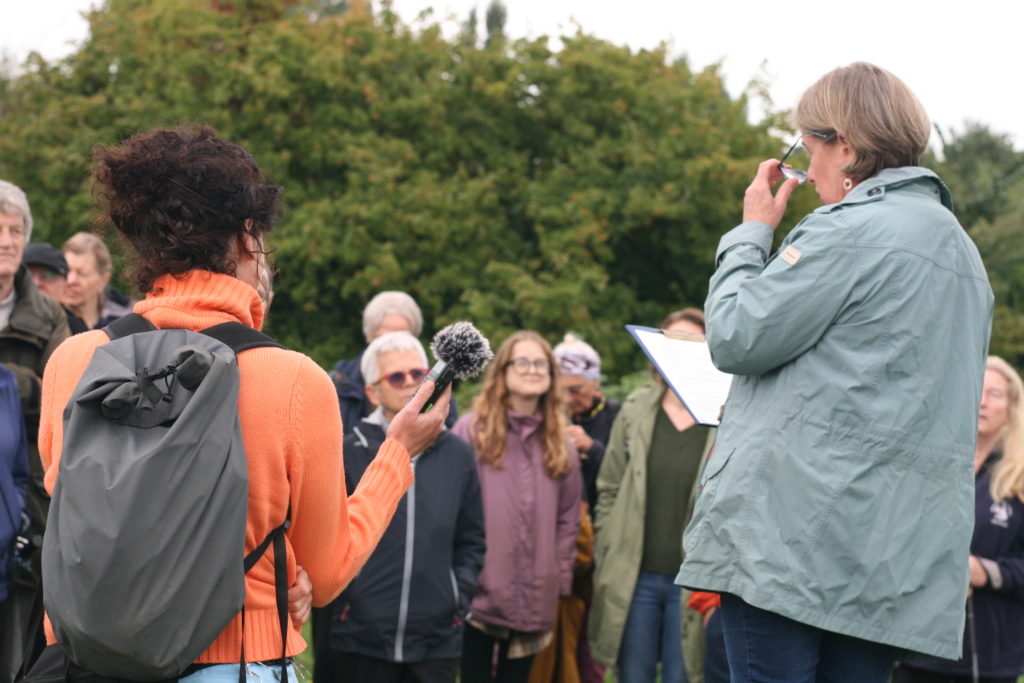
A 30 minute Podcast drawing on conversations recorded during a community walk discussing our research findings, and interviews with experts. It is a Walkie Talkie production by Agile Rabbit.
This fun game and teaching resource explores Net Gain trade-off choices for both nature and people. It has been designed as a Key Stage 2 curriculum teaching resource (for 8+ year olds).
Acknowledgements
The LEEP research team are grateful for research support from the following sources:
The Esmée Fairbairn Foundation, From Biodiversity Net Gains to Environmental Net Gains: Widening the Net and Engaging Communities.
NERC, AGILE Sprint 1: Operationalising Treasury Green Book Guidance on Biodiversity (NE/W004976/1).