
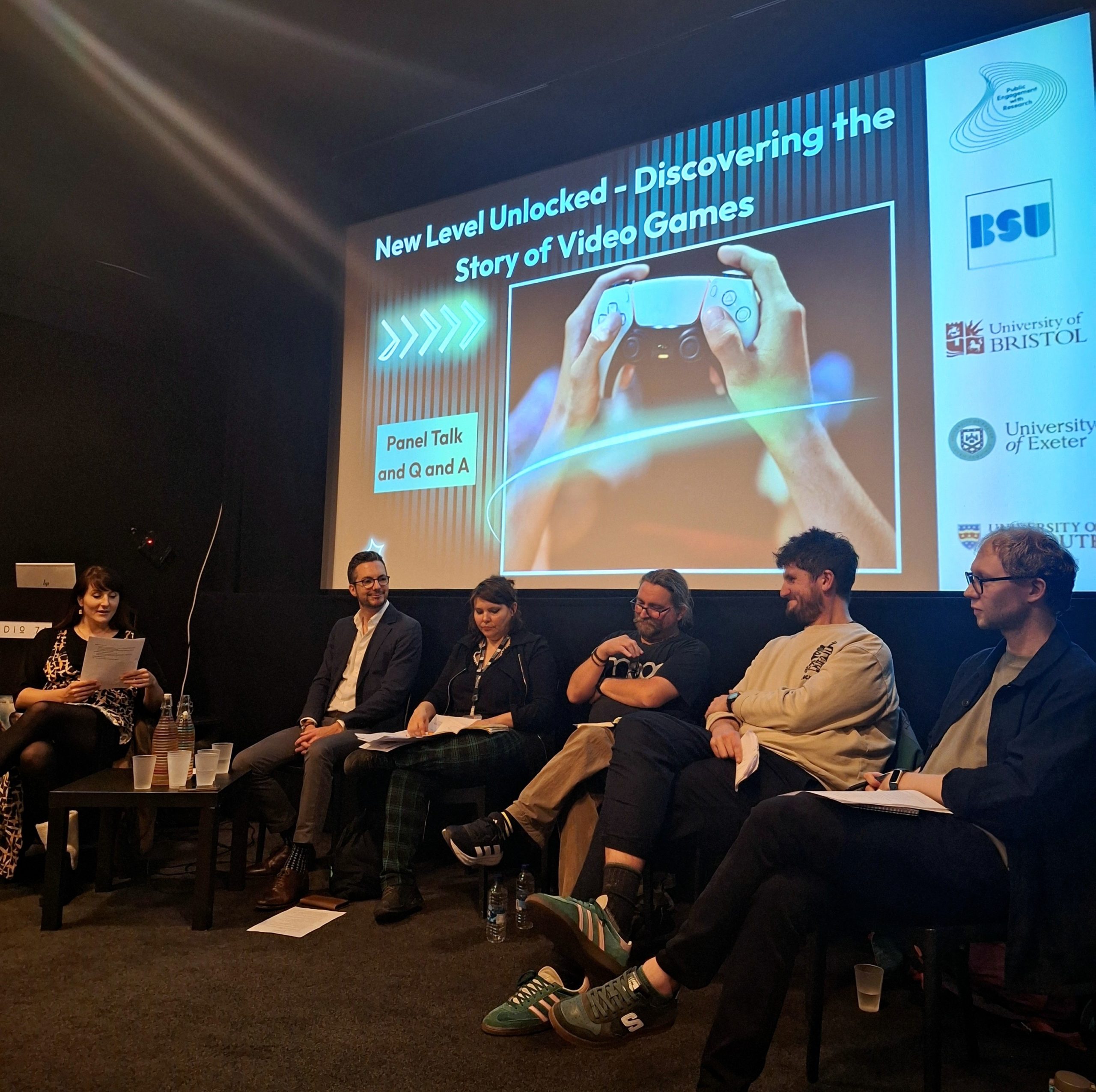
The latest event in our series on play and serious games explores the world of video game research. Featuring expertise from the Universities of Exeter, Bristol, and Plymouth, and Bath Spa University, this panel talk and Q and A invited audiences to learn about what video games mean for the people who play them.
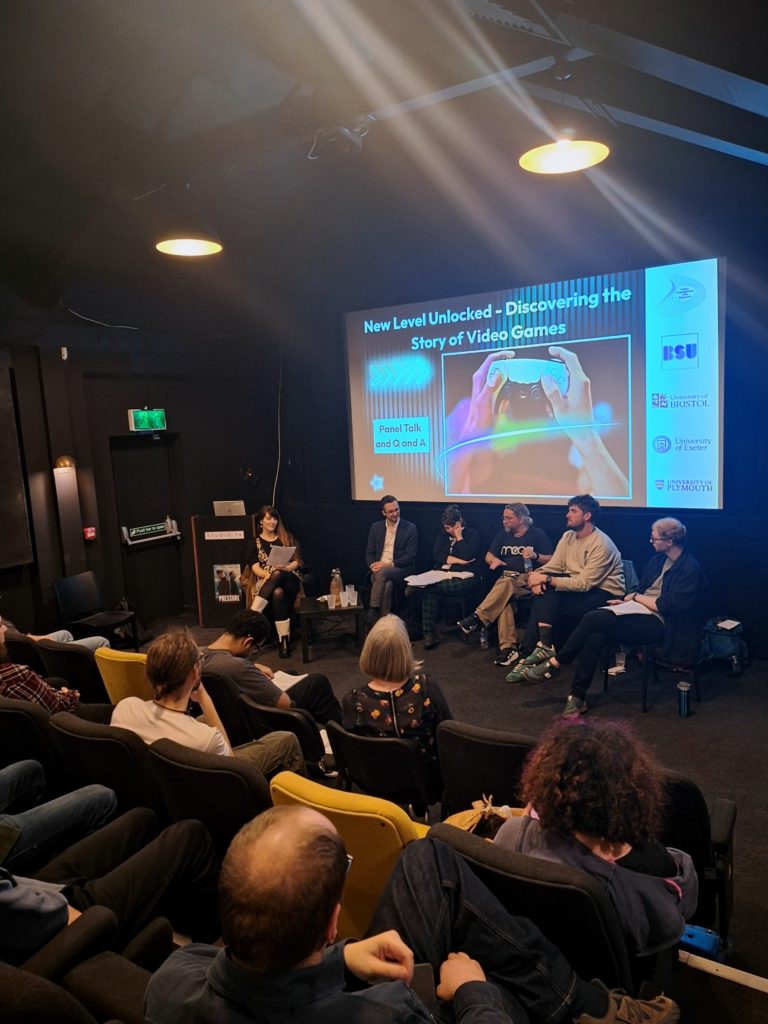
Games can be an invaluable tool for researchers looking to explore their research from a new angle, whether for the purposes of pedagogy, or engaging new audiences. But what about research into games themselves?
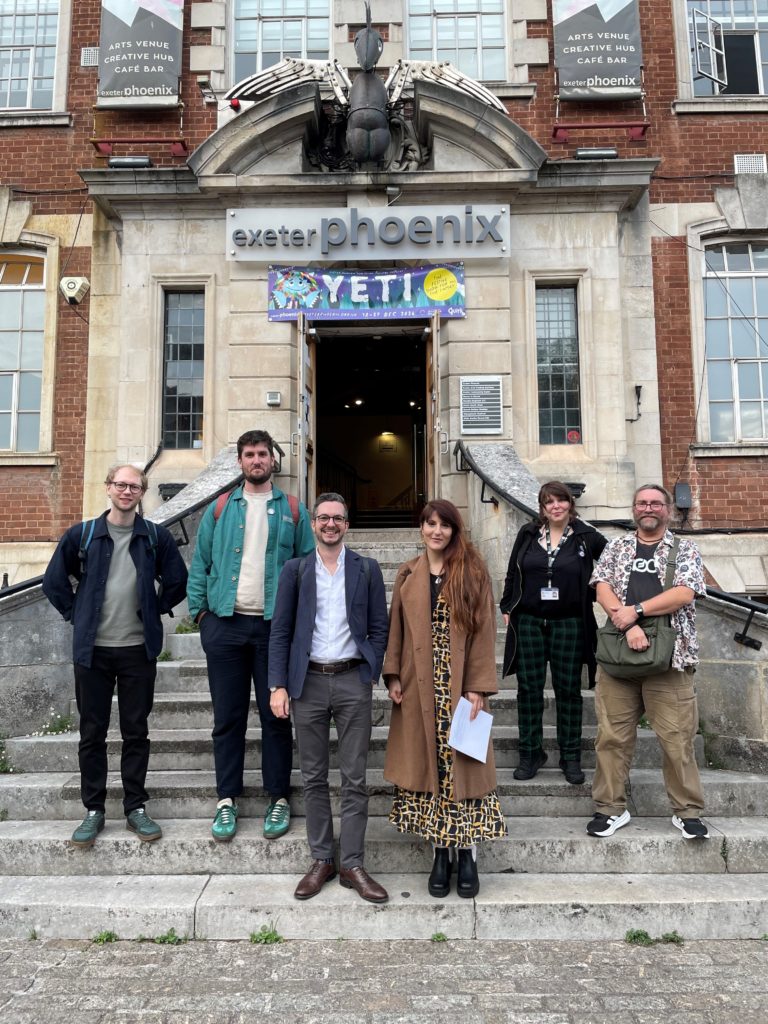
‘New Level Unlocked – Discovering the Story of Video Games’ invited attendees to hear from leading video game researchers from across the South West in a panel talk and Q and A session at Exeter Phoenix. The discussion raised interesting points around the unique role of video games in storytelling, how they connect us to the past, and what they could look like in the future.
Organised by the Public Engagement with Research team, this panel heard insights from Dr Rob Sherman (University of Exeter), Dr Amy Cutler (University of Bristol), Dr Richard Cole (University of Bristol), Dr James Sweeting (University of Plymouth), and Professor James Newman (Bath Spa University). The talk was moderated by Creative Director and Narrative Designer, Ruth Mariner.
The conversation started with a deceptively simple question: what is a video game? The panel discussed the connection between video games and art; their comparatively short history as media; and how in this short space of time, games media is constantly adapting.
Discussions turned to look at nostalgia, both for game players, and for the game makers. Those who make video games often began as players, and draw on the beloved games of their childhood to create new games and rereleases using updated technologies. But which of these ‘old-school’ games stand the test of time, and why? And what makes them appealing to newer audiences, with their own memories of gaming past?
Video games offer a new method of storytelling, bringing these nostalgic narratives to new audiences for them not only to observe, but to experience for themselves, playing as the main character. Modifications can be used to change the fabric of the story, and players are challenged to make their own decisions in situations that range from the everyday to the impossible. Games, the panel noted, affect not only our feelings about the past, but influence how we perceive the present. They can engage with politics, challenge people’s sense of morality, and expose players to new perspectives and voices.
The researchers similarly shared their thoughts on the video games of the future. With tools like AI impacting how games are developed, and how we engage with technology more generally, video games may continue to evolve in unpredictable directions, and communicate with their audiences in new ways.
Thank you to the researchers who participated in this event, and to the audience members for sharing an insightful mix of questions!
If you would like to hear more about the event, a full transcript of the talk will be available shortly.