

Hi, I’m Giang Chu, a postgraduate international student from Vietnam, currently studying MSc Sustainable Business Management at the University of Exeter’s Penryn Campus in Cornwall.
University life can be incredibly rewarding – but it’s also intense. When exam season kicks in or multiple deadlines hit at once, it’s easy to feel overwhelmed. If you’re experiencing that right now, I want you to know: you’re not alone. There is so much support around you on campus and many strategies you can use to make things easier for yourself.
When the stress hits: you’re not alone
One thing I’ve learned as a student is that feeling overwhelmed doesn’t mean you’re failing. It usually just means you care deeply about what you’re doing.
When I first arrived in the UK, adjusting to a new academic culture was both exciting and a bit overwhelming. The reading lists felt never-ending, expectations were higher than I was used to, and there always seemed to be another assignment around the corner. Exam season, especially, was tough. The pressure crept in – not just from studying, but from trying to juggle everything else at the same time.
I used to think I had to keep it all together on my own. But over time, I realised I didn’t have to. At Exeter, there’s always someone to talk to and support to lean on. You’re never expected to figure everything out by yourself.
Support that really helped me
Exeter’s Wellbeing Services
One of the most difficult moments for me during my first term was winter. The days were short, the skies were grey, and being so far from home during the colder months really started to affect my mood. I found myself feeling unusually low and unmotivated, even though I had so much to do academically. It wasn’t just stress – it was a kind of heaviness I hadn’t felt before.
That’s when I decided to reach out to the Wellbeing Team. I booked a one-to-one session with a practitioner, and it honestly made such a difference. It was the first time I’d spoken openly about how I was feeling since arriving in the UK. The practitioner listened with such empathy – no pressure, no judgment – just space to breathe, reflect, and feel understood.
After that session, I also started joining some of the Wellbeing workshops – on topics like managing anxiety, time pressure, and even mindfulness techniques. These small steps helped me feel more in control and less alone.
If you’re feeling low or overwhelmed, especially during darker months or exam season, I really encourage you to reach out. You don’t have to wait until things feel unbearable. Just sending a quick email or popping into the office could be the first step toward feeling like yourself again. Reaching out isn’t weakness – it’s self-care.
Academic and pastoral support
Another game-changer for me has been the academic and pastoral support available at Penryn Campus. Every student at Exeter is assigned a personal academic tutor, and I feel really lucky to have someone who’s not only supportive but genuinely invested in my journey.
My tutor has given me incredibly helpful advice – whether I was trying to choose a dissertation topic, navigate academic expectations, or even think ahead about my career path. When I was stuck on my dissertation outline, a quick conversation with them helped me regain clarity and motivation.
During the exam period, my tutor also helped me break down the assessment brief and gave really thoughtful feedback on how to improve my structure and argument. We even had small group discussions where students could share their ideas and get collective feedback, which was such a useful space to feel supported and less alone in the process.
If I could give one tip to any student, it would be this: make the most of your tutor’s office hours. Don’t be afraid to reach out even if you’re not “stuck”– sometimes a casual chat can bring new ideas or confidence. And go in with an open mind – your tutor might offer perspectives you hadn’t considered, especially when it comes to research direction or long-term goals.

Postgrad pressure: managing a mountain of deadlines
Let’s be real – postgrad study often feels like a big step up from your undergraduate degree. In the space of two weeks, I had to juggle a long essay, a 2,500-word report, a group sustainability strategy presentation, and my dissertation proposal draft. All due around the same time. This pressure might feel even more intense if you also have exams to revise for!
Here’s how I cope with it:
- Break big tasks into mini-goals. I turn a 3,000-word essay into daily writing targets so it feels doable.
- Time-block my days. I schedule reading, writing, revising, breaks, and even social time using colour-coded blocks – it gives me structure and helps me stay calm.
- Start group work early. Coordinating with classmates takes time, especially across different time zones and commitments.
- Forgive myself on off days. Some days I make big progress, and other days I just take a walk—and that’s okay.
It’s not about doing everything perfectly; it’s about staying consistent and being kind to yourself.
Where I study makes a big difference to how I feel – especially when I’m dealing with tight deadlines or trying to get into the flow with writing. I’ve learned that changing my environment every now and then keeps me refreshed and more productive. These are my go-to study spots on and around Penryn Campus:
- The Penryn Campus Library – It’s quiet, warm, and filled with natural light. I especially love the 2nd floor for writing sessions—it’s peaceful and helps me focus without distractions.
- Sustainability Café – When I need a more relaxed setting, this is perfect. The big windows and the eco-friendly atmosphere make it a calming space to revise or do light reading.
- Koffie Café (on campus) – Tucked in between lecture theatres, it’s my favourite spot for a quick productivity boost. They serve Starbucks coffee, and the pizza is surprisingly good—especially when you need something warm and satisfying during a long study day. With the background chatter and comforting smells of fresh coffee and food, it’s the ideal setting for editing assignments, catching up on reading, or just taking a well-deserved break.
- Tremough House – If I’m in the mood for something quieter and more atmospheric, I head to Tremough House. It has this lovely old-vibe charm, with wooden beams, large windows, and plenty of character. It’s a peaceful corner of campus, and I often go there when I want to escape the hustle and take my time working through ideas or reading slowly.
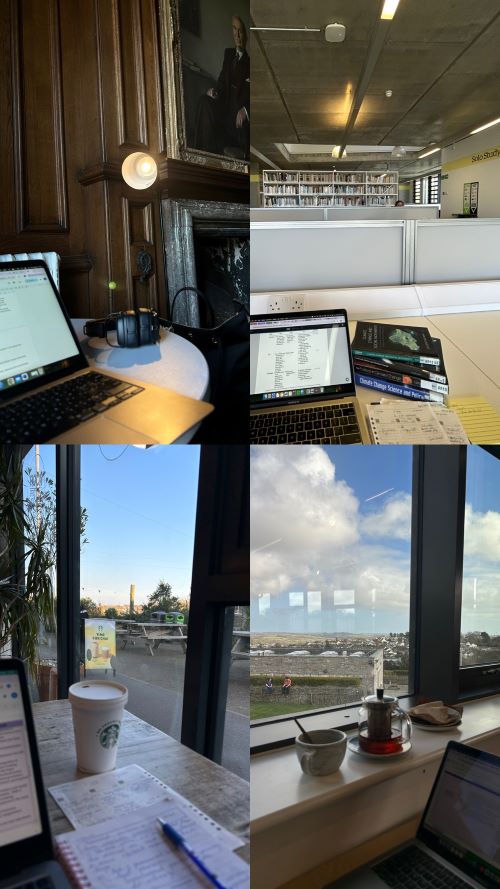
Tip: If you feel stuck, try switching your environment. Even moving from the library to a café or a sunny bench outside can give your brain the refresh it needs.
Small habits that keep me grounded
Coping with stress isn’t just about working smarter – it’s also about taking care of yourself. These little habits have made a huge difference for me during my time at Exeter:
- Walks to Falmouth Harbour – Just 20 minutes from campus, the sea breeze and sound of waves always help me clear my head and feel recharged. It’s my go-to place after long days in the library.
- Pomodoro technique – I work in 25-minute focused blocks followed by 5-minute breaks. Sometimes I light a candle or play soft background music to create a calm study atmosphere – it makes even intense days feel more manageable.
- Meal prepping – Cooking a few meals in advance saves time and decision fatigue. I always keep some quick snacks and herbal tea nearby for study breaks.
- Digital detox hours – I switch off notifications and put my phone on ‘Do Not Disturb’ for an hour or two during key study times. It helps me stay focused and reduces stress.
Day trips with friends – One of the best parts about studying in Cornwall is how easy it is to escape into nature. On weekends, I love taking day trips with friends – there are so many beautiful spots nearby, from beaches and gardens to coastal hikes. One of my favourites was our visit to St Michael’s Mount – we explored the historic castle, walked across the causeway, and enjoyed ice cream with a view. Taking a proper break like this reminds me that uni life isn’t just about deadlines – it’s also about making memories.
Some final tips from me to you
If you’re approaching deadline season, here are my top takeaways:
- Use the support. Study Zone, wellbeing services, personal tutors – reach out early.
- Find your rhythm. Not everyone works best in silence or at night – you might prefer starting early in the morning or studying with music on. Learn what works for you.
- Rest is part of the process. Taking breaks is not laziness – it’s maintenance.
- Celebrate small wins. Finished reading? Drafted a paragraph? That counts.
- Don’t isolate yourself. Stress shrinks when you share it – with a friend, a mentor, or even a flatmate. Make sure you keep talking to the people around you and use the University’s support services if you need them
You’ve got this
Whether you’re preparing for exams, juggling multiple assignments, or writing your dissertation, stress is something every student goes through. But it’s something that can be managed with the right tools and support.
At the University of Exeter’s Penryn Campus, I’ve found a place that not only challenges me academically but also supports me holistically. With the sea nearby, green spaces to walk in, and a community that genuinely cares, this campus has become a place where I can grow – and breathe.
One of my favourite ways to recharge is going on a nature walk with friends – whether it’s the woodlands behind campus or just wandering through the gardens near Tremough House. Being surrounded by nature (and laughter) reminds me there’s more to life than just deadlines and exams.