

The Sustainability Projects Fund (SPF) is a fund to help the University meet its sustainability commitments, set up by the Sustainability team in 24/25. It is for small to medium-sized projects, open to both staff and students, and had £100,000 budget allocated to it for the 24/25 and 25/26 academic years. Funding was allocated across two funding rounds in April and October 2025 where we received many fantastic applications, 47 in total!
After careful consideration, 16 projects were awarded funding. You can read a short summary of each below. If you would like to contact any of the projects, get in touch via the contact details if listed or email the Sustainability inbox sustainability@exeter.ac.uk.
Circular economy
Replacing pipettes in LSI
This project is seeing the replacement of the majority of single-use plastic pipettes in LSI with reusable glass pipettes, together with a washing and sterilising system. Notwithstanding labs that are currently using glass pipettes, it is hoped that making the transition in the LSI can be a model for other labs to follow across the University. Contact: Stephen Goff.
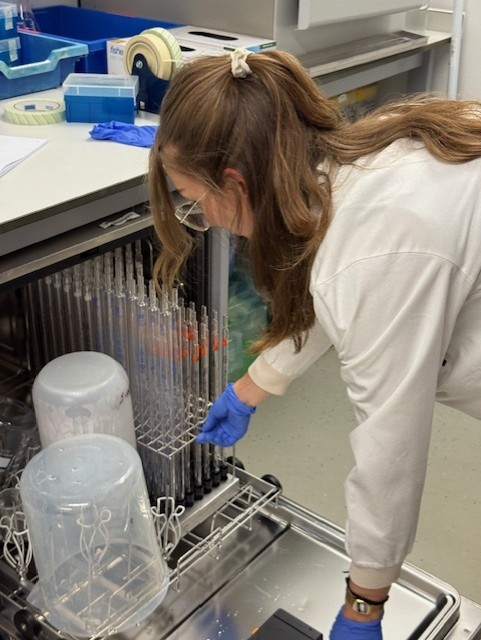
Credit: Stephen Goff / LSI
Repair Café
The SPF has supported the setup of a regular Repair Café on Streatham Campus. With community and University repairers, and open to students, staff and local residents, the café offers free repair of electronics, clothing, household items and much more. Contact: repaircafe@exeter.ac.uk.
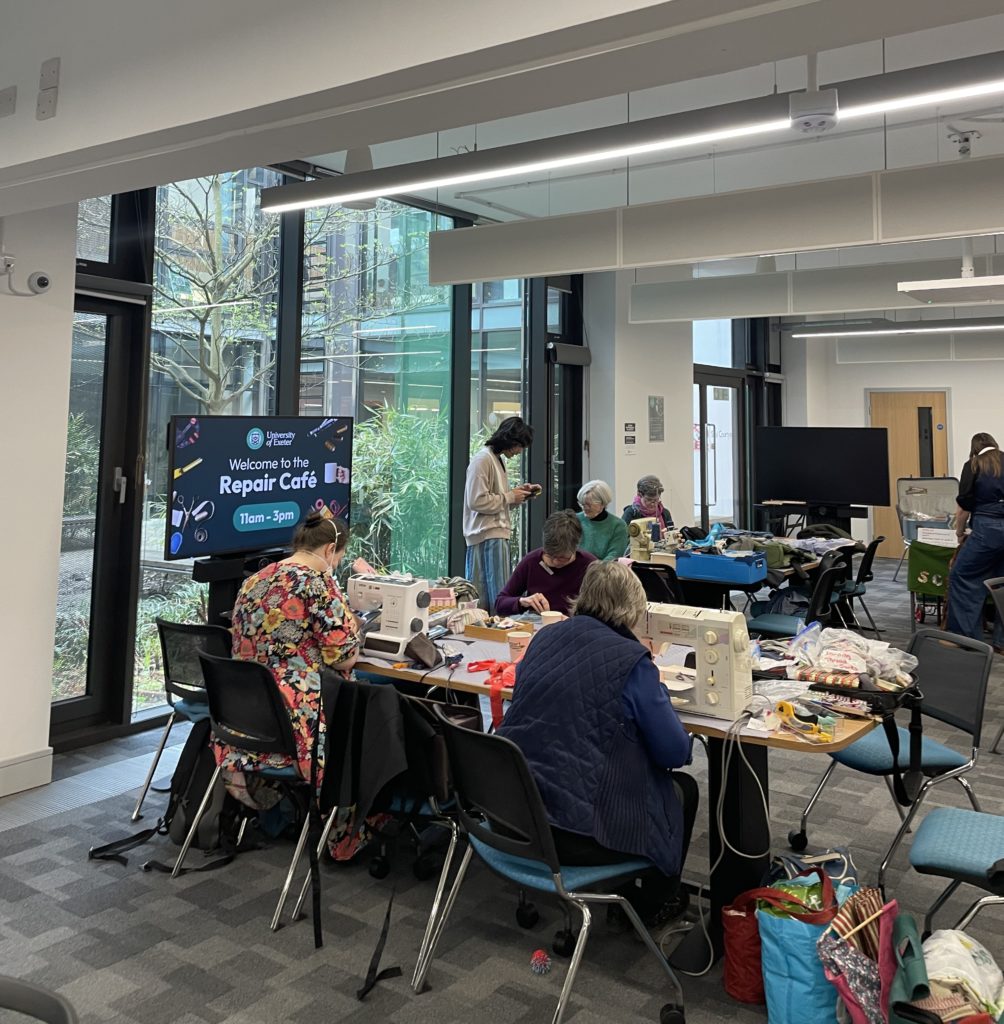
Credit: Meg Haslam
Waste to raw pellets for 3D printing
Did you know that around 33% of all 3D prints become waste? This project aims to develop a machine that converts 3D printing waste into reusable pelletised material, reducing material waste and cutting costs. Beyond internal use, this technology has commercial potential, enabling broader adoption outside the University. Contact: Dr Jingchao Jiang.
Clothes swap kit
A clothes swap kit (rails, tables, hangers) has been purchased to enable termly clothes swaps within Exeter Innovation. The kit will also be available for all staff to borrow. Contact: Julie Pearce.
Biodiversity
Tree propagation unit
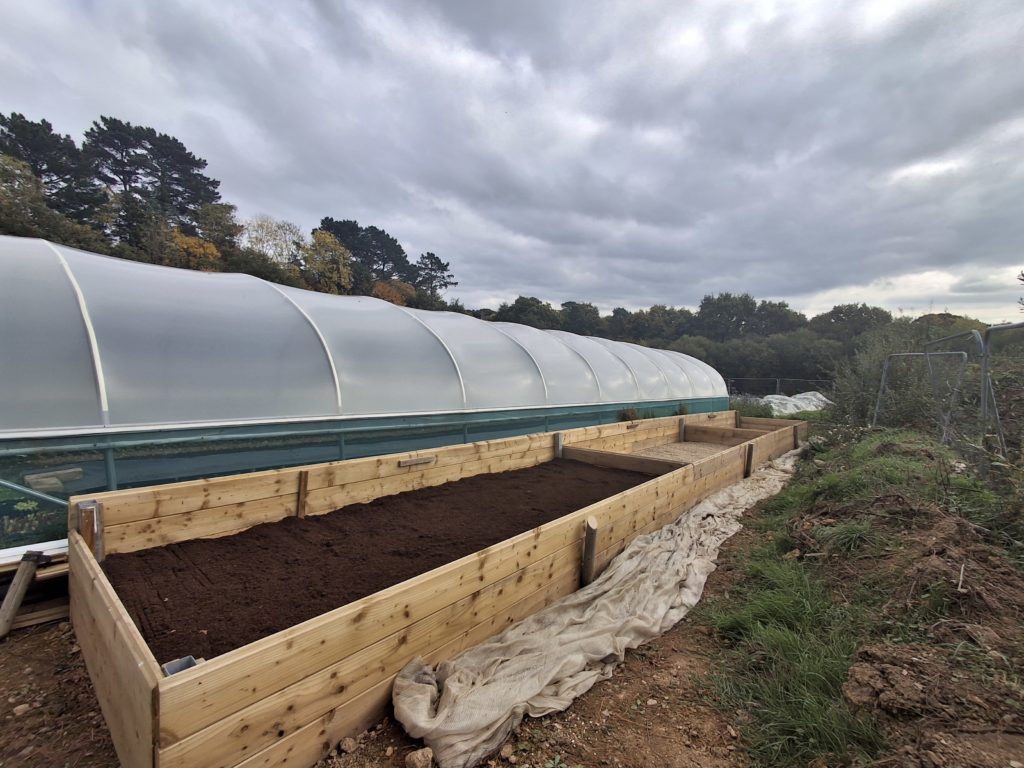
Adam Bishop and Colin Brown in the Grounds team have built a large cold frame to propagate trees and woody plants from seeds and cuttings collected from the plant collection on site or from other locations. These plants will be for the conservation and enhancement of the plant collection and to provide native plants for natural areas. Contact: Jess Evans.
Penryn Campus sustainability volunteering
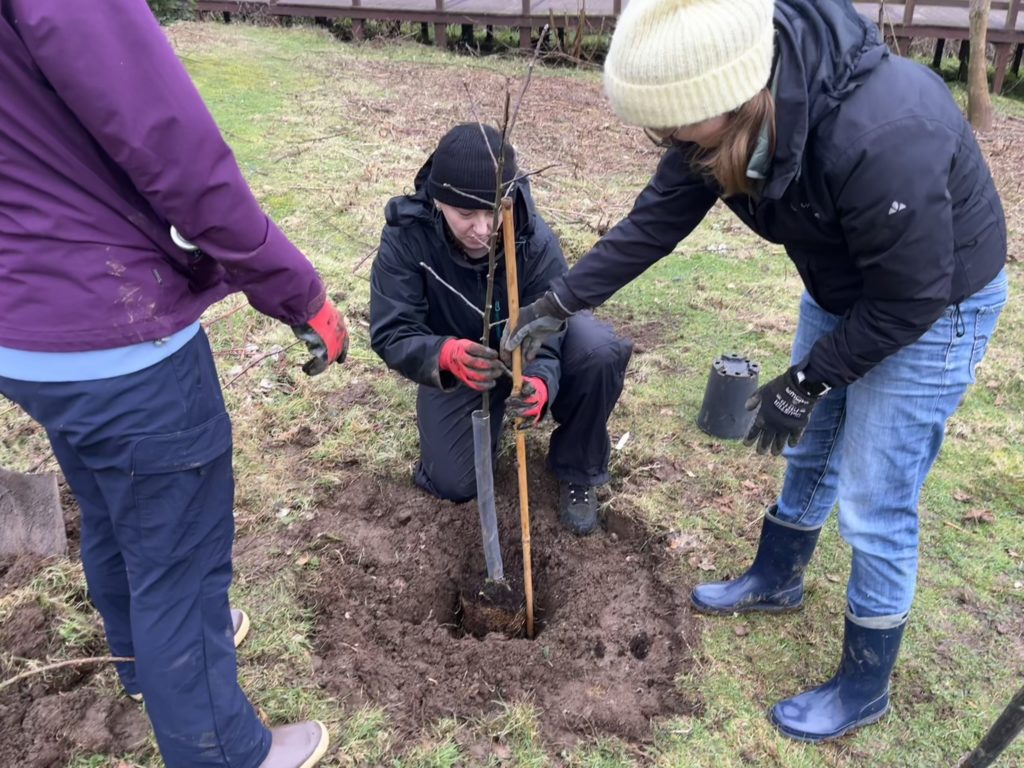
Purchase of seeds/saplings and employment of a student intern to organise and run staff and student sustainability volunteering sessions on Penryn Campus throughout the year. Contact: Chez Crickmere.
4G trail cameras
This project saw the deployment of enhanced 4G camera traps across Streatham Campus, trialling tech that requires minimal time investment in network maintenance while improving near-real time data availability. A more quantitative understanding of wildlife will enhance stewardship decisions of our environment. Contact: Dr Matthew Witt.
Nesting box creation and installations
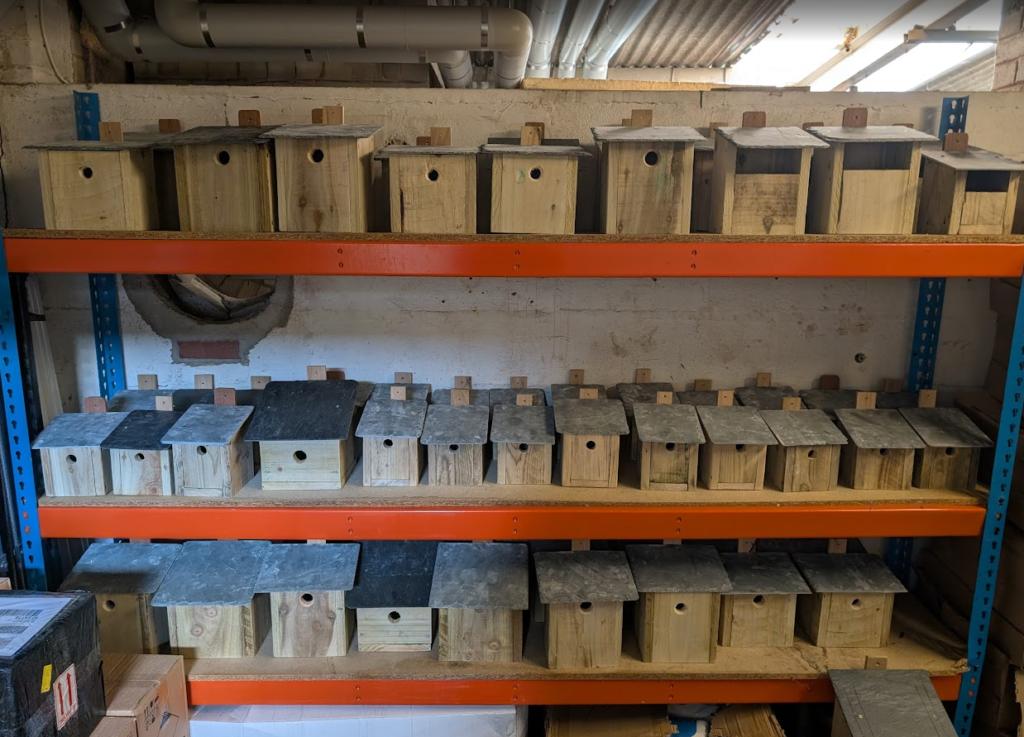
Three community workshops were led by Co-Create to build 60 bespoke nesting boxes, designed with species-specific apertures to support amber and red-listed bird populations identified in the UoE Breeding Bird Survey 2025. Installations will be done by the Grounds team.
Wayfinding walks and mapping
Organisation of seven walks through Streatham Campus, engaging varied knowledges and experience, and creation of a series of campus maps to offer visual representation and alternative ways to link campus biodiversity with diverse human experiences.
Contact Clara Kleininger-Wanik or visit the Wild Wednesdays page.
Energy
Lighting replacement in Penryn glasshouses
This project will see the replacement of 40 high-pressure sodium lamps with state-of-the-art Sunstream MKII LED growth lights which offer advanced white, red, and blue light spectrums. The upgrade will reduce energy consumption, enhance reliability, modernise plant growth infrastructure significantly and improve the overall functionality of the glasshouses.
Baseline evaluation of Mirielle Gillings Neuroimaging Centre
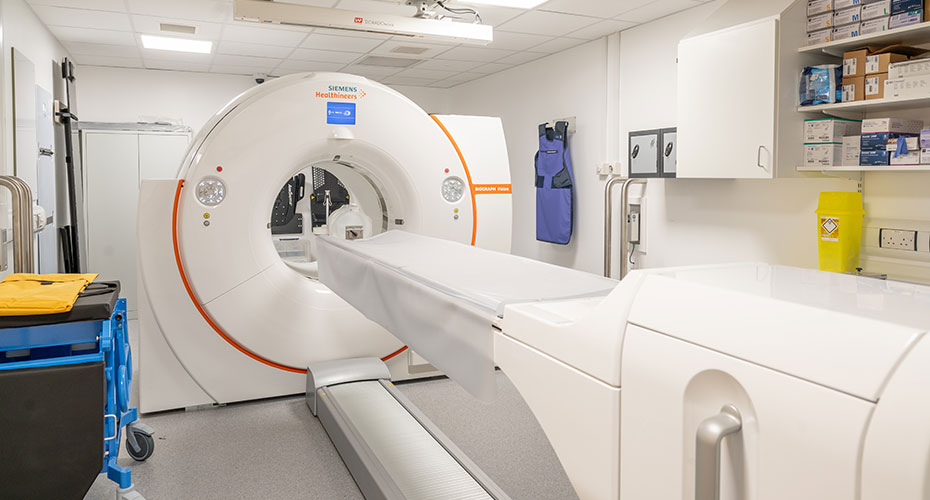
Lifecycle assessment standards will be applied to deliver a comprehensive assessment of the environmental impacts of the MGNC imaging facility, providing an evidence base to guide decarbonisation and resource efficiency measures. Contact: Robert Meertens or Sam Hu.
Curriculum
HASS SDG mapping and visualisations
This project continues the work to map HASS modules to the SDGs. Visualisations will be created to enable a quick overview of the breadth, depth and complexity of HASS educational offer. A blog and report will also be created to share learnings more widely. Contact: Dr Nick Kirsop-Taylor.

HLS SDG curriculum mapping
This project will review how sustainability is currently linked across the HLS taught portfolio, support academics to incorporate SDG content into module ELE pages, and produce a practical report identifying strengths and gaps in coverage with guidance for enhancement. It will also develop promotional materials showcasing examples of best practice in embedding sustainability in teaching.
Travel
HLS between-campus commuting mapping
This project seeks to measure and understand in more detail what motivates current travel activity between our campuses and what would motivate and support change. It will provide the evidence required to propose and implement interventions to increase active travel and public transport use. Contact: Prof Rich Smith.
Impacts of flexible staff work location
This project reviewed the literature relating to comparative carbon emissions for the different elements of working from home and working on one of our campuses. This informed a report presenting the data to inform University and personal choices about the carbon impacts of choices relating to flexible working arrangements. It delivered an overview of the relative costs/savings of different options as well as a comparison calculator. Contact: Prof Peter Connor.
Student-led
Business and Finance Society sustainability initiatives
Through year-round programming, including speaker events, office visits, panel discussions and a dedicated sustainability panel at the Future Leaders Summit, BFS will showcase careers in sustainable finance, ESG, ethical business and climate policy.