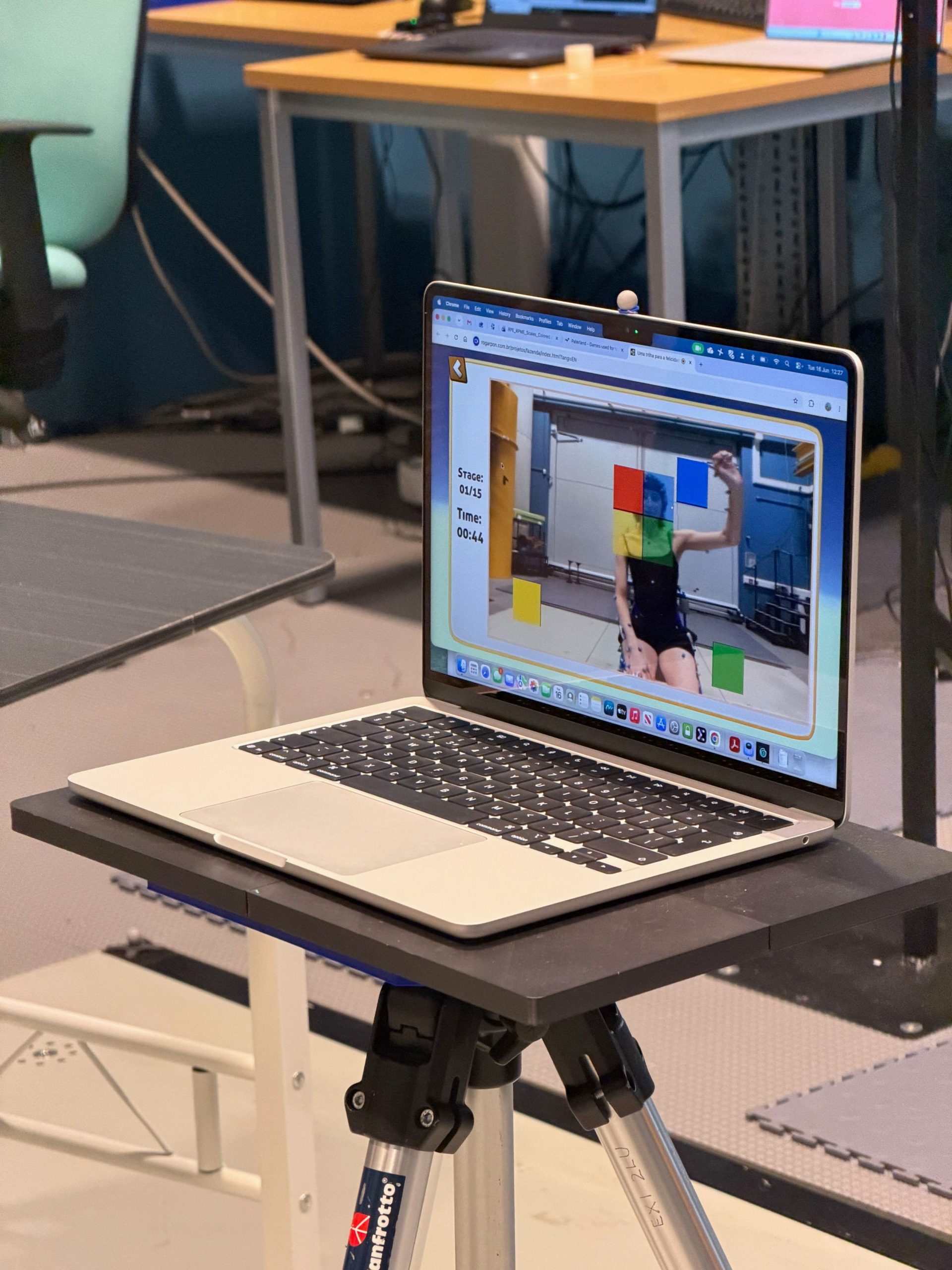
Researchers from the University of Exeter and the University of Oxford are working to better understand how movement and brain activity interact in healthy control volunteers and in patients who have Friedreich Ataxia (FA), a rare neurological condition.
Using non-immersive movement‑based games, full‑body motion capture, heart‑rate variability sensors, and a non‑invasive fNIRS brain activity headset, researchers are developing a new tool to measure movement in FA and support future research and clinical trials.
All sessions take place in the VSimulators’ motion and physiological research facility.
Project lead Prof Andrea Németh, Professor and Consultant in Neurogenics at the University of Oxford and Hon Professor at the University of Exeter, said: “By combining motion capture, physiological monitoring, and brain activity data, we’re gaining the most complete picture yet of how people with and without FA move and think during everyday actions. We hope this will help us design better monitoring tools – and ultimately better treatments – for people with Friedreich’s Ataxia.”
With thanks to the FA Alliance Innovation Fund and the NIHR Biomedical Research Centre: Exeter for their support.
STEP‑OUT FA Study now underway at VSimulators