
What Is Worth Waiting For? Continuity of Care at a Crossroads
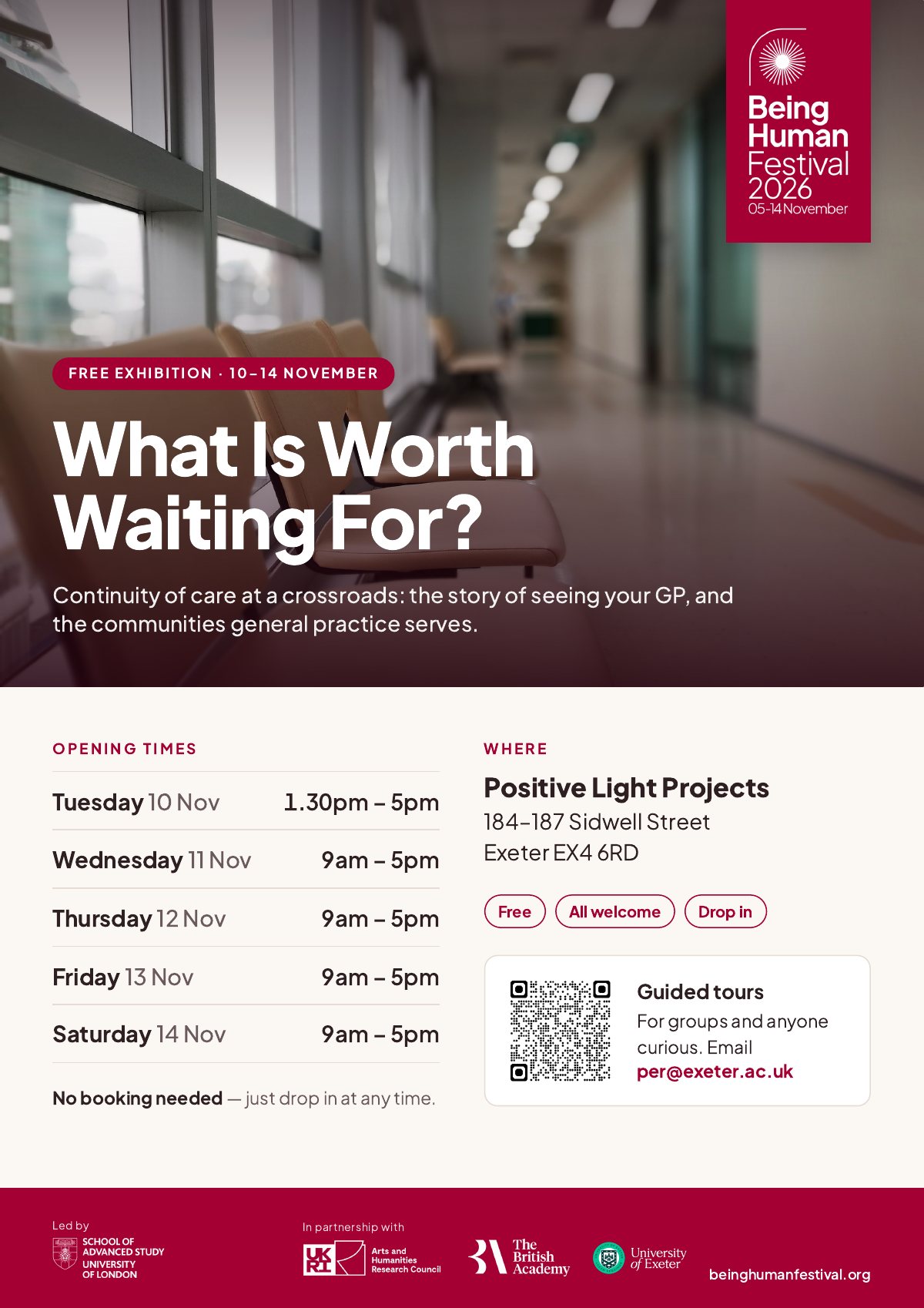
From Tuesday 10 to Saturday 14 November 2026 the exhibition filled the street-level gallery at Positive Light Projects, 184–187 Sidwell Street, Exeter: a small museum of continuity and waiting.
Four movable walls and the long wall carried fifty years of research, one era per face. Between them were the waiting wall, the voices, the archive, the books, the future table and the booth.
It was free, and anyone could walk in from the street.


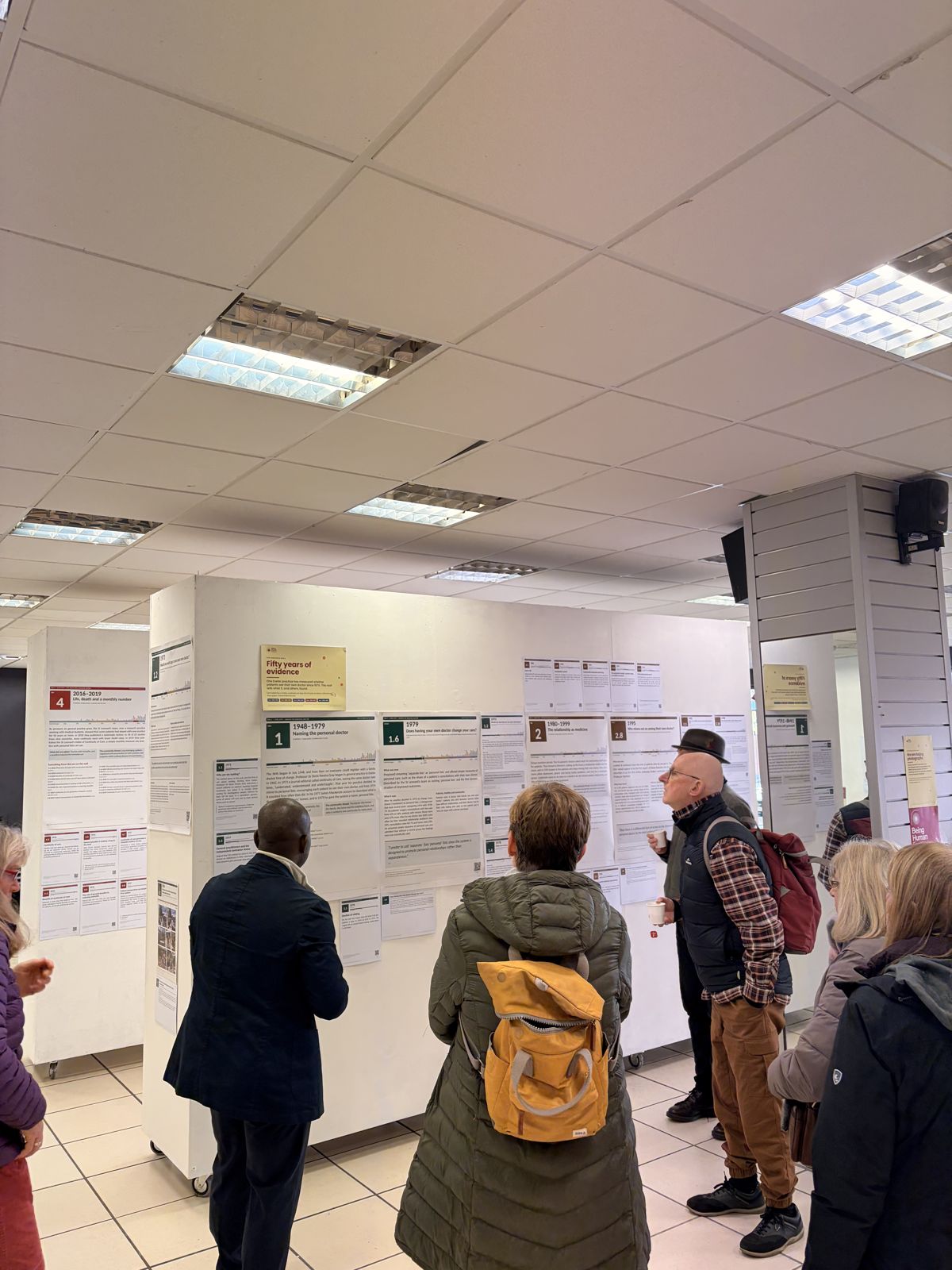

The walls were on wheels. On Tuesday evening and Friday afternoon they moved to make room for the Long Tables.
Fifty years of research on seeing the same doctor, from St Leonard’s Practice in Exeter: 84 exhibits in five eras, each poster with a plain-English label beneath it in the museum style. Walk the research wall.
Four books to pick up and read, from A Fortunate Man (1967) to Why Can’t I See My GP? (2024); Dr Emma Ladds’s five ages of general practice; original papers and booklets lent by St Leonard’s Practice; and three landmark studies from the United States and Norway. See the books, the archive and the landmarks from abroad.
Research from the Waiting Times project on what waiting does to us, what we do while we wait, and why some kinds of waiting are a form of care. Read the waiting wall.
Stories, zines, prescriptions and short recordings gathered at College Surgery, Bradninch, and Mount Pleasant Health Centre the weekend before: memories of the doctor who came to the house, of waiting rooms and of being known; hopes and complaints about today. Nobody was named. About the pop-up surgeries.
Objects from the consulting room, among them Lloyd George record envelopes, a doctor’s visiting bag and a dictaphone, stood among the walls. Together they told the story of the medical record: from one-line notes in an envelope, to the computer on the desk, to software that listens in.
At a virtual reality station, visitors could watch a 360-degree film of a GP consultation, with headsets and films lent by Revolve Labs.
If you were designing general practice from scratch, what would you want it to deliver? Visitors took chips, blue for patients and members of the public, green for people who work in health or care, and dropped them in the boxes closest to what they would choose. See how visitors had their say.
In a corner by the exit, visitors could answer a question on camera, record their voice or write on a card, and write a prescription for general practice: one thing it must keep, and one thing it must change.
Guided visits were arranged for the patient groups of the partner practices and for first-year students at the University of Exeter, and two Long Table conversations took place in the room during the week. About the Long Tables.