
The Science
Understanding tropical soil carbon in a changing climate
Our research addresses the “mechanistic gap” in current carbon and land-use models. Tropical soils behave differently from temperate soils. We focus on four critical aspects of fire and land-use impacts on tropical soil organic carbon.
Four critical aspects
Mineralogical protection & texture
We assess how soil mineralogy governs a soil’s capacity to protect carbon from decomposition.
A changing climate
Rising temperatures and shifting rainfall will alter carbon cycling. We study soil-carbon × climate interactions across the Amazon Basin.
The fire legacy: pyrogenic carbon
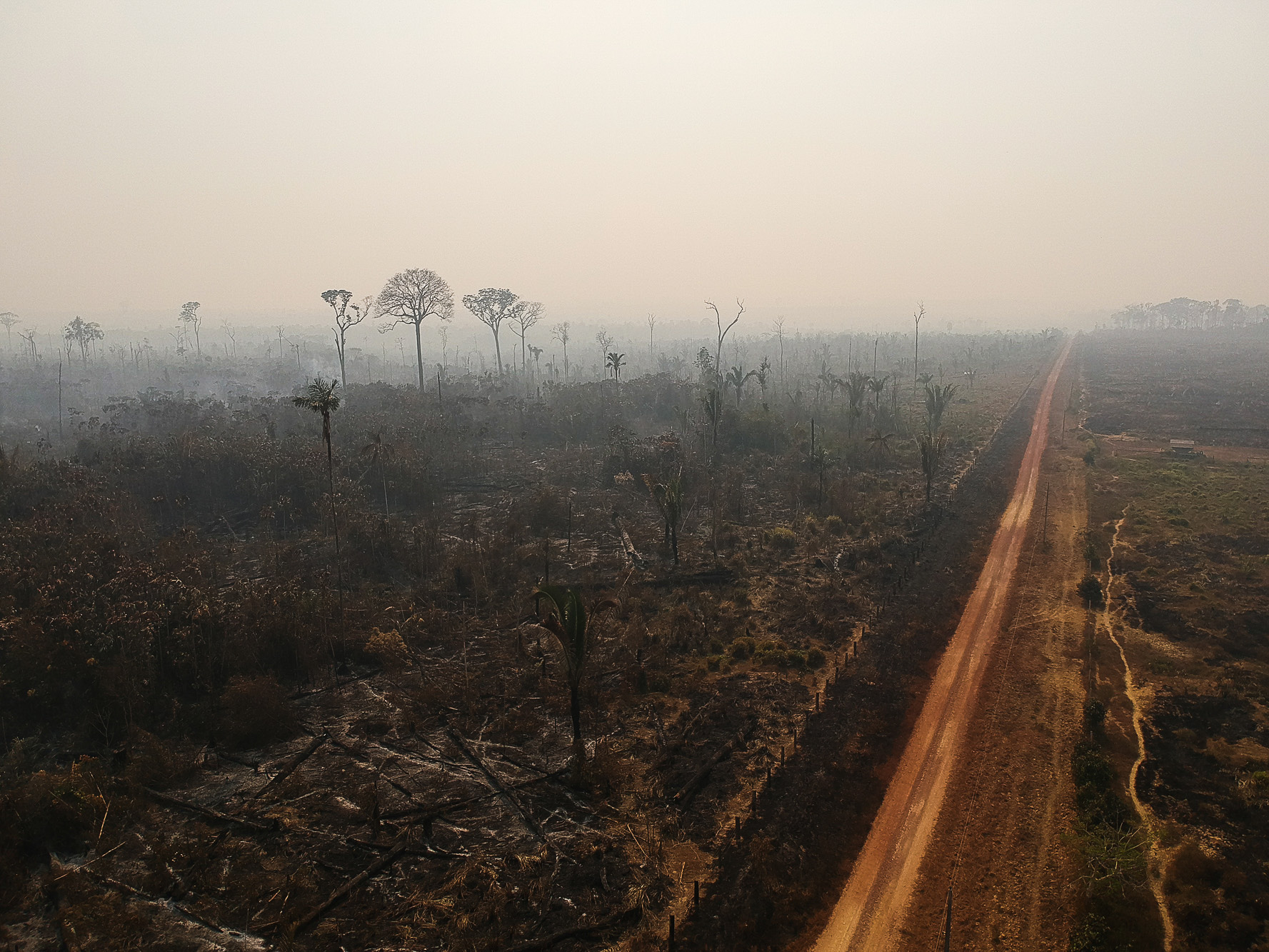
Slash-and-burn deforestation leaves behind charcoal (PyC). We are the first to assess its long-term contribution to regional carbon budgets, testing whether this recalcitrant carbon offsets some losses from burning.
From mechanisms to models
We enhance the JULES land-surface model with multi-pool PyC fractions and agricultural management data (no-till, silvopasture) to sharpen global carbon projections.
From forest to field: comparing land uses
Once forest is cleared, land is converted to a range of uses. We compare soil carbon stocks and composition under three common post-forest land uses against two baselines (intact forest and fire-degraded forest) using a chronosequence spanning more than 40 years since clearing.
Intact forest
Baseline: no recent disturbance
Degraded forest
Fire-affected, standing forest
Compared against three post-forest land uses:
Annual agriculture
Soy and maize, often grown in intensive double-crop rotations. Tillage, fertilisation and liming alter soil chemistry and expose previously-protected carbon to decomposition. Our pilot work found annual cropping depleted soil carbon stocks by nearly 40% relative to intact forest.
Pasture
Cattle grazing land with little or no tree cover. Continuous soil cover and deep-rooting grasses, combined with lower chemical inputs than cropland, can help maintain or even increase soil carbon stocks, though outcomes vary with stocking density and management.
Silvopasture
Pasture grasses combined with more than 15% tree cover. The added litter inputs and rooting diversity can further stabilise soil carbon relative to treeless pasture, making silvopasture a promising land-use option for carbon retention.
Header image credit: Amazônia Real / Bruno Kelly, CC BY 2.0, via Wikimedia Commons
.jpg)