
Exeter Collaboration for Academic Primary Care (APEx) Blog
Exeter Collaboration for Academic Primary Care (APEx) Blog
Posted by ma403
29 July 2026
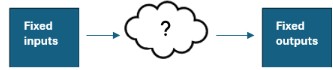
NTs bring health, social care, the voluntary sector, and community services together to provide more joined-up support for people living in a local area. In a recent conversation with an ICB director, they described the implementation of such initiatives as ‘Tight-Lose-Tight’ in that while the financial inputs and expected outcomes of Integrated Neighbourhood’s are clearly defined, implementation is largely up to local teams.
When A+B = C
The ‘Tight-Lose-Tight’ implementation strategy
As an experienced clinician, I am used to making high impact decisions based on heuristics, tacit knowledge, and pattern recognition. For example, during home visits, a problem solving approach enables me to identify sepsis through the presence of symptoms A and B, and I can be confident that A+B = sepsis (C). This is referred to a ‘recognition-primed’ decision-making. In addition, I frequently utilise ‘naturalistic decision-making’ processes where decision-makers operate within uncertainty and time pressure to come to a workable arrangement. Useful in ‘here and now’ make safe scenarios.
How does someone get from A to C without knowing B?

Bringing a group of professionals together to decide on the contents of the INT black box is logical, but through our own experiences of A+B = C, clinicians may not always be best placed to identify or articulate theory that we assume is in there somewhere. When we apply pattern recognition and rapid decision making processes to complex system problems, we may fail to recognise, consider, or understand the evidence base and how or why a change is expected to occur. We are far more likely to go straight to a wish list of resources without first really understanding the upstream issue or articulating a theory of change or action.
During INT conversations I am seeing increasing reference to a concept in which people are described as living with a deficit, and if we just provided them with additional missing pieces through referrals to services, a person would become whole and their dependence on health and social care will lessen A+B = C. However, research has taught me that A + B does not always equal C, and resource 1 will not automatically lead to outcome 1.
As an early career researcher, with an interest in clinical decision-making approaches, I can see that system transformation may require a different cognitive approach and skill set. I am increasingly thinking, ‘why and how might the addition of this resource enable this outcome to occur within this context?’ If we miss opportunities to look beyond our instinctual reasoning processes to identify the context and mechanisms through which change is expected to occur, INT development teams may go down rabbit-holes over an idea they could have dismissed earlier. Therefore, being able to identify and critique my assumptions regarding what might work for whom, in what context, and why we may see different results in different people, is an important development in my applied knowledge and skill.
What could be in the black box?
Through a clinical lens, the black box of integration might contain an intertwined, messy pile of spaghetti, each representing a different priority, outcome, context, resource, or mechanism. Using this metaphor, we can’t separate INT priorities, with their associated statements of how and why we expect things to change, or the proposed operational plan to achieve such outcomes. It all appears just a bit messy, hope for the best, and vague. My research training has allowed my to recognise that different decisions need different ways of thinking and different information. In response to this I’ve started to look at the idea of system transformation and change as a more fragile and uncertain concept that requires depth of understanding and interrogation over non-empirical assumptions.
In summary
Research has given me the theory and language to work through the concept of change more assuredly with accountability and transparency. While different teams will have different black boxes, mine is likely to contain system maps, mind maps, initial programme theories, and logic models. With that in mind, I’d best get online and order a bigger whiteboard.
Vicky Farrell
Advanced Practice Physiotherapist, Cornwall Foundation NHS Partnership Trust
NIHR predoctoral clinical academic research fellow, University of Exeter.
e-mail v.farrell@exeter.ac.uk
Date: 18.06.2026