
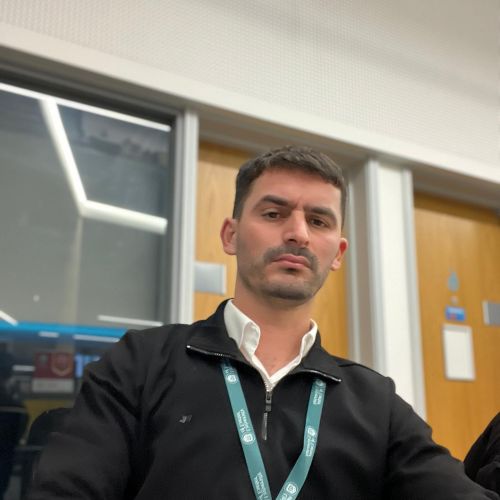
Hasan Ogredik is a PhD candidate in Politics at the University of Exeter, where his research focuses on European Union disaster risk management policy in peace and conflict, with a particular emphasis on integrating a human rights-based approach. His doctoral work examines how EU policies address the complex realities of disasters and conflict, aiming to bring together humanitarian protection, human rights, and peacebuilding in a coherent framework.
When severe floods hit Spain in 2024, the European Union Civil Protection Mechanism (UCPM) was activated. Beyond the immediate response, this case offers something equally important and valuable: a real-world test of EU disaster policy in peacetime.
In my new article, published in European Security (SSCI Q1), I explore how this system operates in practice — and what it tells us about coordination across different levels of governance during major emergencies.
The experience of the Spanish floods shows that EU disaster response in peacetime works around three key ideas:
- Commitment to collective support
The EU supports the affected country quickly and helps coordinate assistance from across Europe. - Decentralised responsibility
Primary responsibility lies with national and local authorities, who lead the response, while the EU supports and strengthens both prevention and response. - A non-military approach
The response is led by civilian actors and kept within a civilian framework, without involving the military.
This framework helps explain how EU disaster policy operates as a form of peacetime crisis management.
At the same time, the Spanish experience shows that outcomes are shaped by domestic political and institutional conditions. Governance structures, coordination practices, and political dynamics all influence how and when EU support is activated and implemented.
The case offers constructive insights. If EU disaster policy is to become more effective, greater attention is needed on:
- preventive measure coordination
- long-term capacity building
- and reducing the impact of domestic political constraints
Ultimately, reinforcing the balance between local responsiveness and EU-level coordination will be key to building a more coherent and resilient system for managing crises in peacetime.
🔗 Full article: https://doi.org/10.1080/09662839.2026.2655157