
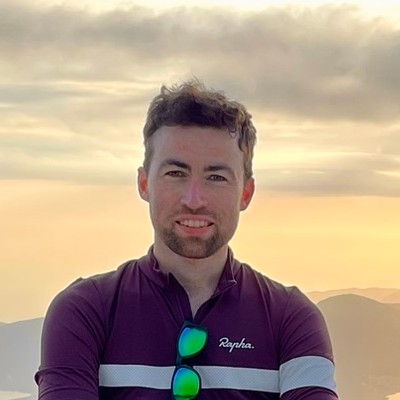
Daniel Williams is a postdoctoral researcher of Aviation Climate Impacts in the Department of Mathematics and Statistics at the University of Exeter. His research investigates the impacts of aviation contrails on Earth’s climate. Contrails are long, white clouds produced behind aircraft in cold environments when water originating from fuel burning freezes. While completely harmless to us, they are known to warm the planet under certain atmospheric conditions. He is exploring ways to minimise the formation of contrails through the intelligent rerouting of flights informed by meterological data. Beyond research, he enjoys travelling and making the most of Devon’s landscapes whether by bike, on foot, or capturing it on camera.
In an era where research—particularly in climate and environmental science—is increasingly scrutinised, misrepresented, or dismissed, the ability to communicate effectively is more critical than ever. Certain areas of research are unfortunately fraught with controversy and prejudices, both within and outside academia. My own research area of contrails is frequently hijacked by ‘chemtrail’ conspiracy theorists, purporting them to have adverse effects on human health when in fact they are no different from many types of natural clouds. Likewise, colleagues investigating the impacts of geoengineering are frequently targeted by misinformation as another contentious area of scientific research. I felt that communicating these areas of research well requires additional skills beyond the little training that I (or I imagine most early-career researchers) received as undergraduates. How do we take control of our scientific narrative? I didn’t have the answer, but I thought it would be a great opportunity to learn from someone who does. From this came my idea for a workshop on “Communicating Contentious Topics in Science”.
To run some training, I brought in Prof Jon Copley from SciConnect, a Professor of ocean exploration and science communication. Jon is a marine biologist who has vast experience of science communication in all its guises: print journalism (The Guardian, Daily Mail, New Scientist etc.); TV journalism (Sky News, BBC etc.); social media and also media consultancy (for Blue Planet II and the upcoming Blue Planet III!). Together with Jon, we worked together to plan a day-long workshop that would cover various aspects of communicating science, with a specific focus on dealing with potentially contentious topics in both academic (seminars and conferences) and public (face-to-face and media) settings.
20 PGRs and ECRs from the Mathematics and Geography departments attended the workshop at the start of June. We started with Jon emphasising how effective communication requires understanding your audience. Who are they? What knowledge do they bring? Why should they care about your work? You might think these are obvious questions at first glance, but most researchers tend to rinse and repeat the same communication techniques they copied from senior colleagues without ever questioning if they are any good! We learned that a journal article structure, whilst great for publications, fails to translate across to short talks especially. Audiences should be kept interested with a clear leading hook that might provide a summary of your results, or something that resonates with their values or interests, whist avoiding jargon or confusing language. From this we developed an ‘hourglass’ structure for giving presentations and each had the opportunity to develop (and get feedback on) a plan for a talk based on our own research area and target audience.
We also tackled the challenges of countering misinformation, and how simply presenting facts is often ineffective or even polarising. We learned that sometimes acknowledging a person’s existing misconceptions is a great way of involving them in your communication. With the knowledge learned throughout the day, we considered how we could use our new communication toolkit in the context of media interactions and tools for direct engagement with the public. We covered the roles of reporters, columnists and editors, and how each has a different role that influences how they might seek to present your work. We also covered how to pitch our work effectively to different outlets who might have vastly different viewpoints.
I’m incredibly glad to have attended the workshop—for which I am incredibly grateful for an RLI grant to fund this event—and I feel like I’ve gained some really useful knowledge going forward. It made me reflect on how I’ve attempted to communicate my work previously, but also that I now feel more confident should I be asked to give a talk at an outreach event for example. Feedback for the event from participants was very positive. I hope therefore that the attendees feel empowered to more confidently communicate their work; I look forward to seeing some exciting seminars from researchers in my group in the near future!