
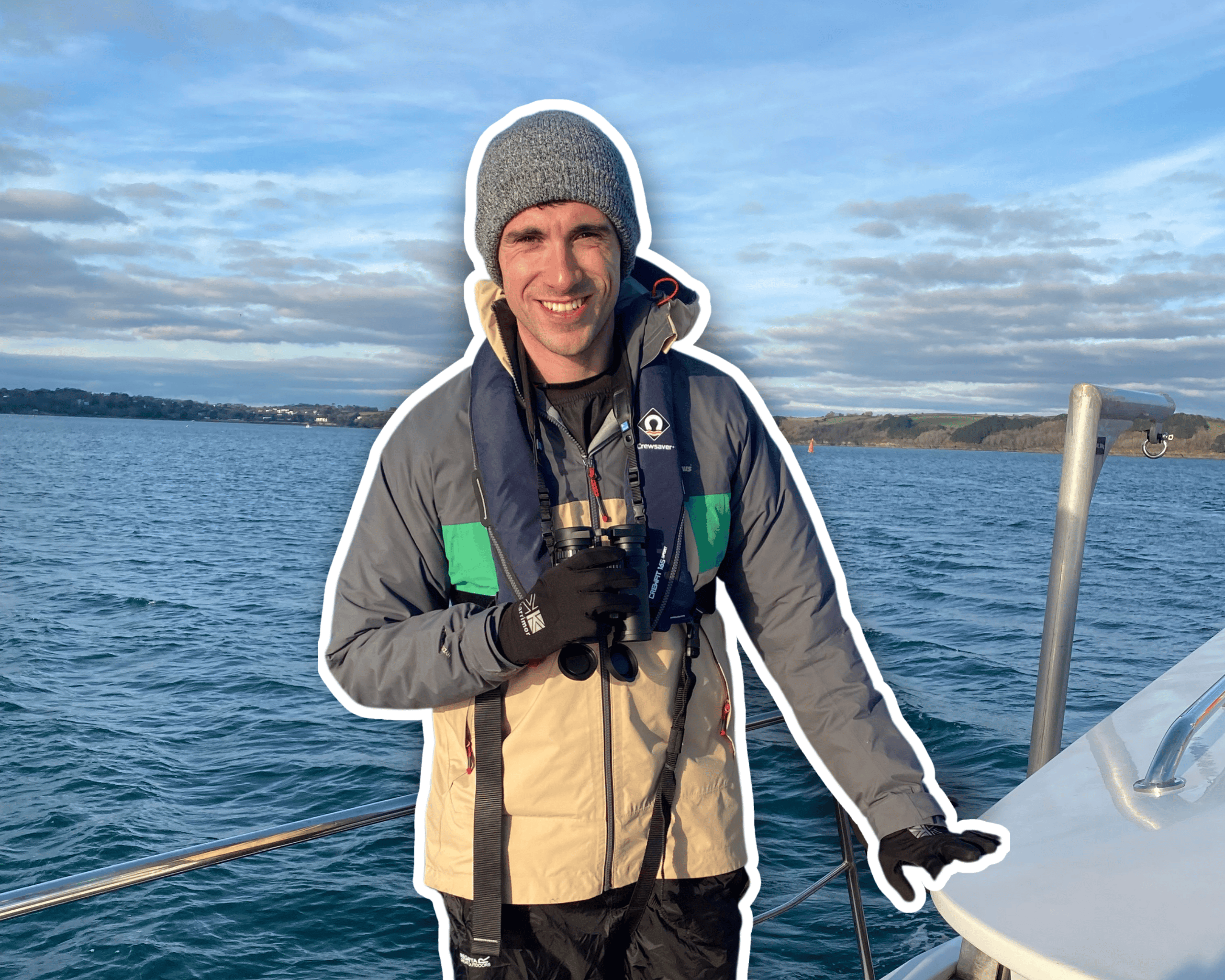
Ben Haden, MSc Marine Vertebrate Ecology and Conservation (2023)
Animal Care Specialist with the Cornish Seal Sanctuary
I loved studying BSc Biological Sciences at the University of Exeter’s Streatham Campus. I then wanted to tailor my knowledge to marine studies and specifically marine vertebrates, The Marine Vertebrate Ecology and Conservation (MVEC) masters delved deeper into my interests. It was the course offering BDMLR (British Divers Marine Life Rescue) and MMO (Marine Mammal Observer) training that persuaded me to continue studying at Exeter on their Penryn Campus.
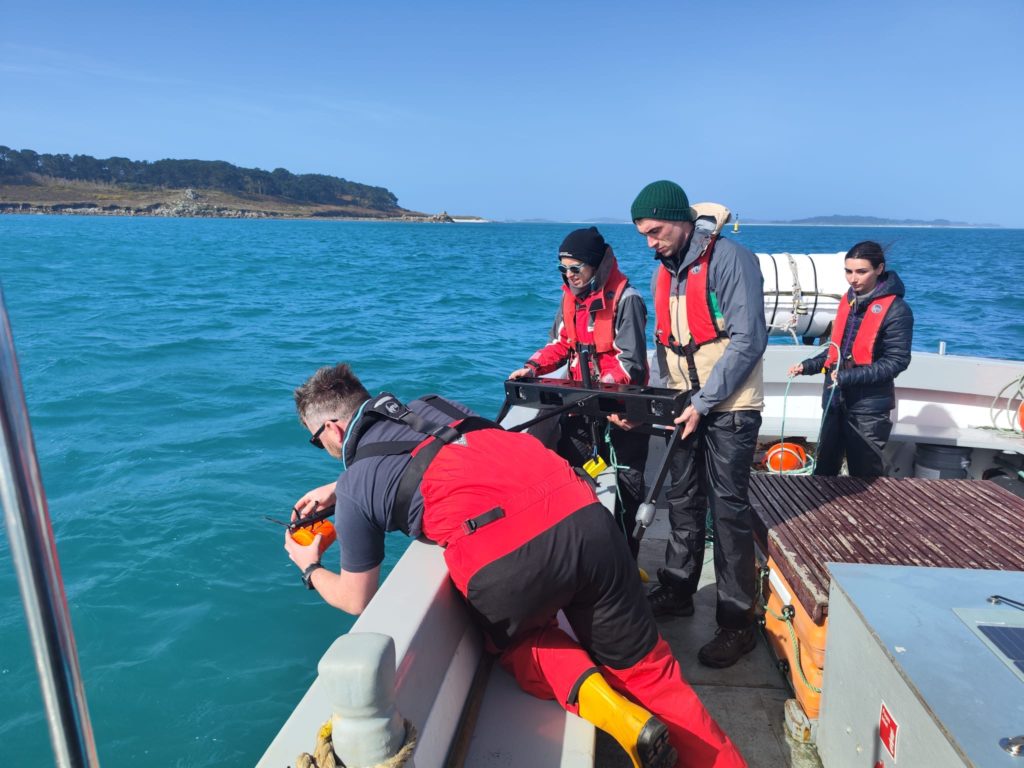
Growing up in the midlands, my access to the sea was limited, but from a young age I always wished to be close to the beach. I visited the University’s Penryn Campus on an open day and enjoyed the sense of community and the smaller campus, which seemed rare from other universities I’d visited. My favourite things about my master’s have to be the Isles of Scilly field course and the chance to surfing before 9am lectures – something I always heard that people did, but never thought going surfing before work would be a possibility for myself!
During my master’s I used my BDMLR marine mammal medic training and went on a ‘seal rescue’ only to end up rescuing a fox that had fallen down a cliff face. This led me to meeting Dan Jarvis and volunteers at the seal sanctuary who told me about an internship with their animal care team. Since finishing my masters, I got accepted as the 3-month intern at the Cornish Seal Sanctuary and I never left. It’s a job I love. After my internship I started a job as a trainee and got promoted to Animal Care Specialist. I am the primary carer for the sanctuaries largest resident seal, Yulelogs (or logs), who is 36 years old and about 6ft10 in length, weighing 250kg. I’ve been involved in the rescue, rehabilitation and release of around 130 seal pups and I’m the sabbatical cover for the research coordinator position, where I help undergraduate, masters and PhD students in conducting their research. I also work closely with the social media and conservation teams in presenting the sanctuary’s research to groups such as the Marine Strandings Network and Seal Group Research Trust.
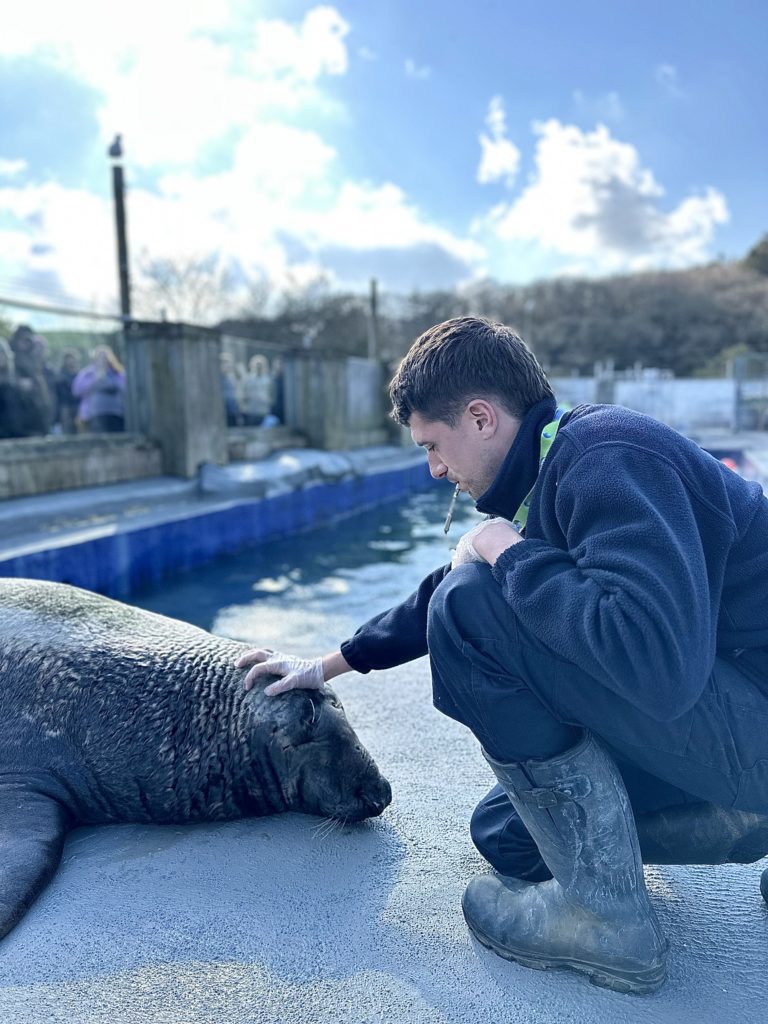
I enjoy working with such incredible animals and an amazing team who all have the same goal – to rescue, rehabilitate and release injured seal pups and provide life-long specialist care to the sanctuary’s residents. I chose this career as I always knew I wanted a hands-on job in conservation to work outside and be involved in undoing some of the wrongs humans have done to our planet. A lot of our seal pup rescues are due to public disturbance, malnourishment and entanglement, all of which are not natural and likely influenced by human activity.
As part of the MVEC course we were required to work independently and cohesively within a team, converse with a wide range of academics and guest speakers. These skills helped me to build confidence and to get a real understanding of the varying options within the marine and conservation sector. The MVEC course focused a lot on marine vertebrates native to the Cornish coast, and the threats they face. This background and understanding helps me greatly in my day-to-day work, educating the public of these threats. I also do a lot of presenting and media work on behalf of the sanctuary, during my course we were required to present different research studies, as well as our own projects. This increased my confidence in public speaking, prioritising digestible information, limiting jargon to present to audiences of varying scientific backgrounds.
For anyone contemplating studying Marine Vertebrate Ecology and Conservation, I’d say that if you’re even slightly tempted – go for it! This programme will open many doors, and you’ll meet so many like-minded people. The University’s staff are willing to help you in any capacity they can, and even though Cornwall might seem far away, once you start exploring you won’t regret it. My advice would be don’t worry about what everyone else is doing. I spent far too much time at university worrying id I was doing the right thing and then a month in to my master’s (as cliché as it sounds) I realised that we’re all on our different paths to achieve different things, and that’s okay. I think that is what makes marine conservation so appealing and powerful.
Ben Haden, MSc Marine Vertebrate Ecology and Conservation
Ben studied within the University of Exeter’s Graduate School of Environment and Sustainability, which brings together experts from across the spectrum of earth and life sciences, engineering, humanities, social sciences and business. Our programmes are all designed with a focus on developing solutions to global challenges and creating a better future for our planet and its people.
Follow us! 👇