

Posted by ccld201
9 June 2026Fifty years after the Carnation Revolution, Portugal offers an important constitutional lesson: democracy cannot survive on elections alone. Free elections are indispensable, but democratic endurance depends equally on a wider ecosystem of rights that enable people to speak, organise, participate, and live with dignity. Portugal’s democratic success since 1976 owes much to the protection of freedom of expression, freedom of association, and social rights, which helped transform a post-authoritarian society into a resilient constitutional democracy.
A Republic based on Popular Sovereignty and the Dignity of the Human Person
The Portuguese case is particularly instructive in that Portugal did not gradually awaken to democracy through a process of political liberalisation. Rather, democracy emerged from the abrupt collapse of a dictatorship that had lasted for almost five decades.[1] The Carnation Revolution (Revolução dos Cravos) of 1974 created an opportunity for democratic transformation, but it did not guarantee democratic success.[2] As constitutional scholars have long observed, democratic transitions and democratic consolidation are not the same thing.[3] A constitution may be adopted, elections may be held, and democratic institutions may formally exist, yet democracy may still remain fragile. There are no shortcuts or fast-track lanes towards democracy.[4] Undemocratic wounds take time to heal.[5]
This distinction is important, as constitutional texts often receive more attention than the conditions that allow constitutional orders to endure. The Portuguese experience suggests that fundamental rights matter not insofar as they guarantee democracy, but insofar as they help construct the environment in which democratic institutions, practices, and expectations can survive periods of uncertainty, conflict, and change.
The post-dictatorship Portuguese constitutional project is also anchored in a broader normative commitment to human dignity. Article 1 of the Constitution defines Portugal as a Republic based both on popular sovereignty and on the dignity of the human person. By placing human dignity at the foundation of the constitutional order, the Constitution goes beyond a purely procedural understanding of democracy.[6] The Portuguese Constitution therefore does not present democracy solely as a mechanism for expressing popular sovereignty. Instead, it combines popular sovereignty with a commitment to the dignity of the human person, thereby suggesting that democratic legitimacy depends not only on electoral participation but also on respect for the equal worth of all individuals. In this sense, human dignity functions as an overarching constitutional principle that informs the interpretation of fundamental rights and helps give coherence to the broader constitutional project.[7]
Rights as Preconditions for Democratic Participation
One such condition is the protection of freedom of expression, granted in Article 37 of the Portuguese Constitution. Under the Estado Novo regime, censorship was not merely a restriction on individual liberty.[8] It was a mechanism for limiting political contestation and controlling public discourse.[9] The transition to democracy required more than the disappearance of censorship; it required the emergence of a constitutional culture capable of accommodating dissent, pluralism, and political contestation.
The same observation applies to freedom of association and assembly (Articles 45 and 46 of the Constitution). Democracies are sustained not only through formal institutions but also through civil society. Political parties, trade unions, professional associations, and civic organisations provide channels through which people organise collectively and participate in public life. In Portugal, these freedoms proved particularly significant, helping transform a society emerging from authoritarian rule into one capable of sustaining democratic participation beyond election day.
Social Rights and Substantive Citizenship
Another defining feature of Portugal’s constitutional development concerns the place of social rights within the democratic order. The Constitution of 1976 grants a long list of social rights as fundamental rights, such as education, healthcare, social security, and housing.[10] Underlying this constitutional embrace of social rights is a particular understanding of human dignity. Portuguese constitutional thought has often understood dignity not merely as a guarantee of individual autonomy, but also as requiring the material conditions necessary for a dignified existence. From this perspective, rights to education, healthcare, housing, and social security are not external additions to the democratic project; they are part of the constitutional framework through which the equal dignity of all persons is realised in practice. The constitutionalisation of social rights has nevertheless generated enduring debates concerning their legal status, enforceability, and relationship with democratic decision-making.[11] These tensions became particularly visible during periods of economic and financial crisis (2011-2014), when constitutional commitments to social protection came into conflict with fiscal constraints and austerity measures.[12] Yet, these tensions also reveal a defining characteristic of constitutional democracy: social rights provide a normative framework within which political disagreement takes place, while preserving the constitutional commitment to human dignity and the values of the social state.
The Portuguese experience demonstrates that social rights are not merely political aspirations or programmatic objectives. On the contrary, they form an integral component of the constitutional project, closely connected to human dignity and substantive citizenship—that is, citizenship understood not only as a formal legal status but also as the effective capacity to participate in social, political, and economic life and to enjoy the material conditions necessary for such participation. More fundamentally, social rights help ensure that democratic participation is meaningful rather than merely formal. People who lack access to education, healthcare, or basic social security may possess political rights, yet face significant obstacles to exercising them effectively.
Constitutional Self-Defense and Democratic Resilience
A final feature of Portugal’s constitutional development deserves attention. The Constitution was drafted by a Constituent Assembly acutely aware of democratic fragility. Having emerged from authoritarianism, the members of the Constituent Assembly sought not only to establish democratic institutions but also to paternalistically protect them.[13] The Constitution itself bears the imprint of these apprehensions through several militant-democratic features, including the prohibition of fascist organisations (Article 46(4)) and the extensive list of eternity clauses (Article 288), which shield from constitutional amendment fundamental rights and freedoms, political pluralism, judicial independence, and key social and economic principles, including workers’ rights and the coexistence of public, private, and cooperative forms of ownership.[14] Such mechanisms raise legitimate questions about constitutional rigidity and the extent to which one generation should be able to constrain future democratic choices.[15]
Yet they also reflect an anxiety that has regained relevance in recent years: democratic regimes may be gradually hollowed out from within through formally legal and electorally sanctioned processes. Seen from this perspective, the eternity clauses of Article 288 can be understood as an attempt to place certain foundational commitments beyond the reach of transient political majorities, including fundamental rights and freedoms, political pluralism, judicial independence, and the democratic structure of the state itself.[16] Significantly, many of the constitutional principles protected against revision can themselves be understood as institutional expressions of the constitutional commitment to human dignity established in Article 1. Whether such entrenchment is normatively desirable remains contested.[17] However, in an era marked by democratic backsliding, the Portuguese constitutional commitment to protecting these core elements of constitutional democracy appears less exceptional than it may once have seemed. [18]
Viewed from a comparative perspective, Portugal offers an illuminating case study of democratic resilience. It presents a distinctive example of a post-authoritarian democracy that has combined constitutional endurance with democratic stability. What makes it valuable is precisely this combination. Portugal’s constitutional experience demonstrates that democratic consolidation is rarely the result of perfect constitutional design. Rather, it is the product of interactions between institutions, political actors, and constitutional culture. The significance of rights lies in their capacity to sustain this process over time. They create spaces for disagreement, participation, inclusion, and accountability. But they cannot substitute democratic commitment itself.
Portuguese Democracy: A Continuous and Unfinished Project
Fifty years after the democratic transition, Portugal’s most important lesson may therefore be neither the superiority of a particular constitutional model nor the success of a specific catalogue of rights. It is, above all, the recognition that democracy remains a continuous and unfinished project. Constitutions can support it, rights can strengthen it, and institutions can protect it. The Portuguese experience suggests that constitutional safeguards—including the protection of fundamental and social rights and the entrenchment of certain core constitutional principles through eternity clauses—cannot guarantee democratic endurance, but they can help cultivate and preserve the conditions under which democratic commitment can flourish. The point was particularly evident during the austerity crisis, when constitutional guarantees provided a framework for contesting the social costs of economic adjustment through legal and democratic channels without rejecting the constitutional order itself. In an era marked by democratic backsliding and growing scepticism towards democratic institutions, Portugal’s experience illustrates how constitutional commitments to human dignity, participation, and social inclusion can contribute to democratic resilience. Ultimately, no constitutional design can secure democracy on its own. Democratic endurance rests on a continuing act of collective commitment: the willingness of citizens and political actors alike to preserve, contest, and renew the constitutional order they inherit.
Catarina Santos Botelho is Professor of Law and Chair of Constitutional Law at the Porto Faculty of Law of the Universidade Católica Portuguesa and Director of the Master’s Programme in Constitutionalism, Democracy, and Human Rights. She is a member of the Management Board of the European Union Agency for Fundamental Rights (FRA) and co-editor of the Hart Publishing series on Constitutionalism in Latin America and the Caribbean. Her research focuses on constitutional theory, democracy, fundamental rights, constitutional courts, social rights, political parties, and comparative constitutional studies.
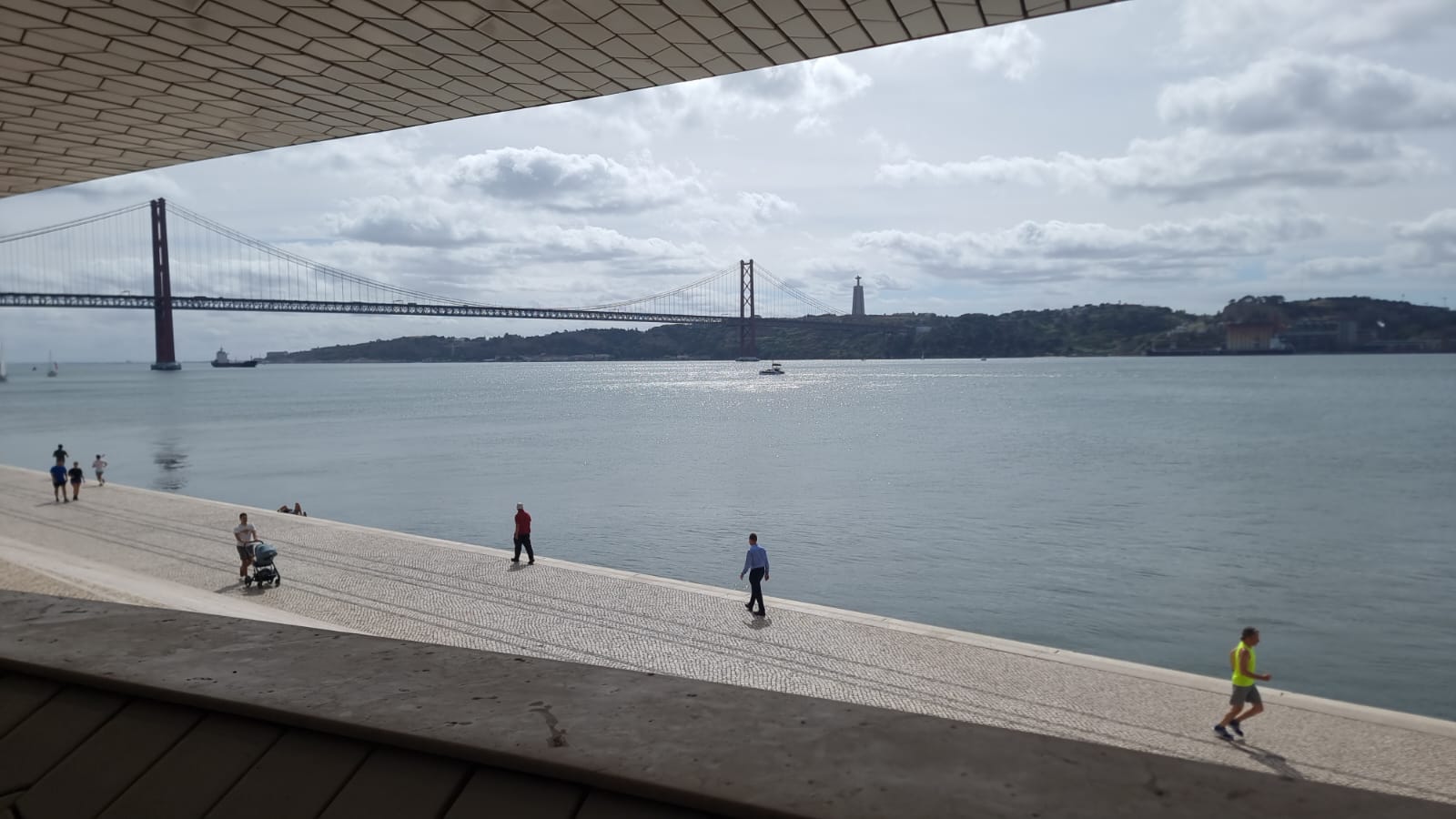
Illustration: Author’s photograph
[1] António Costa Pinto and André Paris (2023) ‘Democratization and its legacies’, in Jorge M. Fernandes, Pedro C. Magalhães & António Costa Pinto (eds) The Oxford Handbook of Portuguese Politics, Oxford University Press, Oxford, 2023, 18-37.
[2] Catarina Santos Botelho (2026) ‘Portugal’s Journey to Democracy after 1974: The Story of a Perfectly Imperfect Constitution’ in Conference Proceedings on the 50th Anniversary of the 1975 Greek Constitution, Sakkoulas Publications, Athens, 39-48.
[3] Joel Colon-Rios and Allan C. Hutchinson (2012) ‘Democracy and Revolution: An Enduring Relationship’, Denver Law Review, 89 (3), Special Issue – Constitutionalism and Revolutions, 593-610, at 607.
[4] Catarina Santos Botelho (2026) ‘Portugal’s Journey to Democracy after 1974: The Story of a Perfectly Imperfect Constitution’ cit., at 41.
[5] Catarina Santos Botelho (2021) Book Review on Francesco Biagi’s European Constitutional Courts and Transitions to Democracy, The American Journal of Comparative Law, Vol. 69 (4), 885-889.
[6] Ruling No. 16/84, par. 7.2.2. and Ruling No. 43/86, par. 4.3., of the Portuguese Constitutional Court.
[7] Catarina Santos Botelho (2026) ‘50 Anos da Constituição Portuguesa: A Dignidade da Pessoa Humana como Fundamento e Horizonte do Projeto Constitucional’, in Nuno Estêvão Figueiredo Miranda Ferreira (ed) 50 anos da Constituição da República Portuguesa (1976-206), Comissão Comemorativa 50 Anos 25 Abril, Edições 70, 274-277.
[8] As António Costa Pinto (2008) explains, “Salazarism was close to Linz’s ideal-type of authoritarian regime: it was a regime that survived the ‘fascist era’, and was not too dissimilar in nature from the final phase of neighboring Spain’s Franco regime, despite its single party being weaker, and its ‘limited pluralism’ greater. In 1968, Salazar was replaced by Marcelo Caetano, who initiated a limited and timid regime of ‘liberalization’ that was swiftly halted by the worsening colonial war. The inability of Salazar’s successor to resolve some of the dilemmas caused by the war provoked the outbreak of a coup d’état in April 1974. This was a ‘non-hierarchical’ military coup, which had a political programme that promoted democratization and decolonization.” (‘Political Purges and State Crisis in Portugal’s Transition to Democracy, 1975–76’, Journal of Contemporary History, 43 (2), 305-322, at 307).
[9] António Costa Pinto (2010) ‘Coping with the Double Legacy of Authoritarianism and Revolution in
Portuguese Democracy’, South European Society and Politics, 15 (3), 395-412 at 399.
[10] Articles 58 to 79 of the Portuguese Constitution.
[11] Mónica Brito Vieira and Filipe Carreira da Silva (2013) ‘Getting rights right: Explaining social rights constitutionalization in revolutionary Portugal’, International Journal of Constitutional Law, 11 (4), 898–922.
[12] Teresa Violante and Patrícia André (2019) ‘The Constitutional Performance of Austerity in Portugal’, in Tom Ginsburg, Mark D. Rosen & Georg Vanberg (eds) Constitutions in Times of Financial Crisis, Cambridge University Press, 229-260.
[13] Catarina Santos Botelho (2019) ‘Constitutional narcissism on the couch of psychoanalysis: Constitutional unamendability in Portugal and Spain’, 21 (3) European Journal of Law Reform, 346-376.
[14] On militant democracy, see Catarina Santos Botelho and Nuno Garoupa (2023) ‘Regulating Parties by Constitutional Rules in Liberal Democracies’, German Law Journal, 24 (9) 1648-1676, at 1651.
[15] See generally José A. Tavares, Miguel Poiares Maduro, Nuno Garoupa & Pedro Magalhães (2011) (eds) A Constituição Revista, FFMS, and Jorge Pereira da Silva & Gonçalo Almeida Ribeiro (2017) (eds) Justiça entre Gerações – Perspetivas Interdisciplinares, Universidade Católica Portuguesa Editora.
[16] Nuno Garoupa and Catarina Santos Botelho (2021) ‘Measuring Procedural and Substantial Amendment Rules: An Empirical Exploration‘, German Law Journal, 22(2), 216-237, at 219, and Ulrich K. Preuss (2011) ‘The Implications of “Eternity Clauses”: The German Experience’, Israel Law Review, 44(3), 429-448.
[17] See generally Silvia Suteu (2021) Eternity Clauses in Democratic Constitutionalism, Oxford University Press.
[18]Benjamin A. Schupmann (2020), ‘Constraining political extremism and legal revolution’, Philosophy & Social Criticism 46 (3), 249-273, at 256-259, and Marta Vicente & Catarina Santos Botelho (2025) ‘Populism and the Transformations in the Global Economic Constitution’, in Martin Belov (ed) Constitutional Polycrisis and Emergency Constitutionalism, Palgrave Macmillan, 307-339.