

Posted by ccld201
2 June 2026Since 1996, conflict in the Democratic Republic of the Congo (DRC) has been marked by widespread sexual violence used deliberately as a weapon of war, including rape, sexual slavery, and forced pregnancy.[1] Once dismissed as an inevitable by-product of conflict, such acts are now increasingly recognised as serious violations of international law. Against this backdrop, the DRC offers an important example of how justice can be delivered in fragile settings. This post explores the crucial role played by mobile courts in restoring dignity to women affected by war crimes, reinforcing the point that armed conflict does not place individuals beyond the reach of the law.
Sexual Violence as a Weapon of War
The scale of sexual violence in the DRC is staggering. At the height of the conflict, an estimated 1,150 women were raped each day, 48 women raped every hour, and 4 women raped every 5 minutes. Victims also report extreme brutality, including assailants burning victims’ legs if they resisted or refused,[2] highlighting both the severity of the crisis and the systematic use of violence to terrify communities. For decades, sexual violence during conflict was often minimised within legal and social frameworks, often viewed as an incidental by-product of war, not meriting prosecution until the late 20th century.[3] This perception was reinforced by deeply entrenched notions of masculinity and with war traditionally being considered the business of men, sexual violence became ‘the act of a conqueror’, further normalising violence against women.[4]
However, as conflicts ended and peace efforts intensified, legal developments in the late twentieth and early twenty-first centuries began to challenge this narrative. The International Criminal Tribunals for the Former Yugoslavia (ICTY) and Rwanda (ICTR) played historic roles in the prosecution of sexual and gender-based crimes as they were the first international tribunals to define the crime against humanity and war crime of rape under international criminal law in 1998.[5] This marked a significant step in acknowledging the specific harms experienced by women during conflict, advancing accountability while restoring dignity through legal recognition.
Mobile Courts: Bringing Justice to Remote Communities
Despite these advances on the international plane, access to justice in the DRC remained deeply uneven. Many communities affected by the conflict were located in remote or conflict-affected regions where formal courts are inaccessible. In this context, mobile courts emerged as an innovative and pragmatic solution. They were first introduced into the Congolese legal system in 1979 but this was widely implemented with support from the international community only from 2004.[6] Mobile courts are not separate institutions, but rather they are civilian and military Congolese courts that travel to remote or conflict-affected areas to hear cases locally.[7] This means that the courts are composed of professional Congolese judges, with military courts also including locally recruited civilian assessors, and lawyers appointed by the Bar Association who represent the parties during proceedings.[8] These courts travel to rural areas, allowing victims to participate in legal proceedings without the prohibitive barriers of distance and cost, restoring their dignity to women while also contributing to broader efforts toward peace.[9]
The impact of mobile courts is evident in recent data. Between January 2023 and November 2024, the United Nations Joint Human Rights Office in the DRC supported 13 joint investigation teams and 19 mobile courts, leading to the prosecution of 1,010 individuals accused of serious violations of international humanitarian and human rights law.[10] Of these, 777 resulted in convictions. While these figures demonstrate that accountability is achievable even in unstable environments, their significance extends beyond conviction rates. Sexual violence has long represented a profound violation of women’s dignity, yet it was only relatively recently that courts began to recognise such harms as violations of human rights and dignity. In S.W. v the UK (1995),the European Court of Human Rights held that immunity against marital rape violated ‘the very essence’ of human dignity [11]. Three years later, the ICTR recognised in Akayesu (1998) that rape constitutes ‘a violation of personal dignity’.[12] Building on these developments, mobile courts in DRC have been able to address such violations in practice. By allowing victims to be heard and perpetrators to be punished, mobile courts give practical effect to these principles, affirming victims’ dignity through recognition, accountability, and access to justice.
A Landmark Case: Recognising Forced Pregnancy
A particularly significant example is the case of Munyololo Mbawo, a former leader of the Raïa Mutomboki armed group. In June 2024, Mbawo was sentenced to life imprisonment following a mobile court hearing in Mwenga and was ordered to provide compensation to 123 victims of crimes including rape, murder, sexual slavery, rape and forced pregnancy.[13] The case marked a historic precedent, as it was the first time a national court recognised forced pregnancy as an international crime.[14] This recognition remains deeply significant; by naming and prosecuting the crime, the court affirmed the gravity of the harm and acknowledged the inherent dignity of victims in a way that had long been denied in the DRC.
This development reflects broader progress in international criminal law. Forced pregnancy was first codified as a crime/war crime in the Rome Statute[15] and later prosecuted in cases such as The Prosecutor v. Dominic Ongwen, where the International Criminal Court clarified its legal definition in 2021.[16] By applying these standards domestically, courts in the DRC demonstrate that international legal standards can be meaningfully enforced in local contexts, ensuring victims’ dignity are protected and not excluded from justice.
Limitations and Ongoing Challenges
Nevertheless, mobile courts are not without limitations. Concerns remain regarding how progress is tracked, as the lack of standardised reporting and a centralised database makes monitoring outcomes difficult.[17] There are also ongoing issues with victim protection and limited access to reparations, while the challenges of gathering reliable evidence in conflict zones can weaken prosecutions.[18] However, these shortcomings must be understood in context. Mobile courts were never intended to be a perfect solution, but rather a practical response to the barriers that prevent access to justice in conflict-affected regions. What mobile courts make possible is for justice to be administered more immediately and satisfying to victims than a trial conducted by an international tribunal which are often costly, slow and geographically distant from the communities they serve.[19] In this sense, mobile courts should be understood not as a perfect solution, but as a necessary and context-sensitive response to the realities of conflict in the DRC. They provide a means of delivering justice where traditional systems have failed.
Conclusion
Ultimately, the experience of the Democratic Republic of the Congo demonstrates that justice is possible even in the most challenging circumstances. Mobile courts play a vital role in restoring dignity to women affected by war crimes and crimes against humanity by allowing victims to be heard within their own communities, formally acknowledging their suffering, and holding perpetrators accountable through punishment and compensation. In bringing justice closer to women, mobile courts empower them to claim their dignity back. Mobile courts demonstrate that even in times of warfare, the rule of law endures and that accountability is central to the protection and recognition of human dignity.
Suchita Tamang is a paralegal at a human rights and mental health law firm, with prior background in the Prison and Probation Service. She holds an LLB and a LLM in International Law and Human Rights, graduating with distinction from the University of Exeter. Her interests lie in human rights, human dignity, and international justice. In 2023, inspired by the Human Rights and Human Dignity module led by Catherine Dupre, she undertook an internship at the Human Rights and Democracy Forum and contributed to the creation of this Blog.
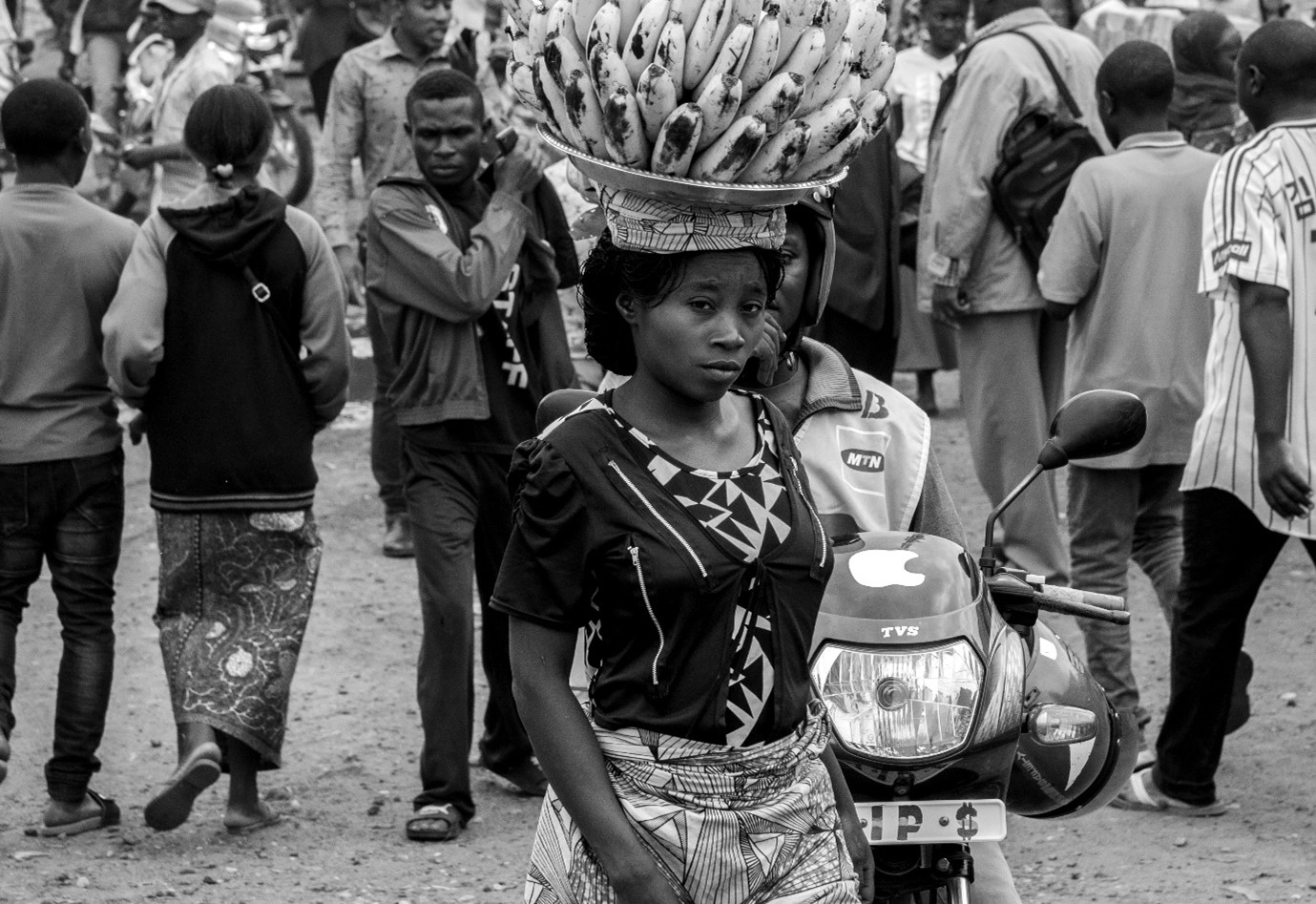
Photograph by Maxime Niyomwungeri via Unsplash.
[1] Chidi Anselm Odinkalu, ‘Back to the Future of Imperative of Prioritizing for the Protection of Human Rights in Africa’ (2003) 47 J Afr L 1.
[2] Cour Militaire du Sud Kivu/ Tribunal Militaire de Garnison d’Uvira, Case RPA No 0751/023 (Judgment, 15 May 2023) accessed 22 April 2026 via the National Jurisprudence Database on Core International Crimes.
[3] Laurel Baig et al., ‘Contextualizing Sexual Violence: Selection of Crimes’ in B Brammertz and M Jarvis (eds), Prosecuting Conflict-Related Sexual Violence at the ICTY (Oxford University Press 2016), 172.
[4] A. Smeulers and F. Grünfeld, International Crimes and other Gross Human Rights Violations – A Multi- and Interdisciplinary Textbook (Martinus Nijhoff Publishers 2011), 62.
[5] Valerie Oosterveld, ‘The Legacy of the ICTY and ICTR on Sexual and Gender-Based Violence’ in M Sterio and M Scharf (eds) The Legacy of Ad Hoc Tribunals in International Criminal Law (Cambridge University Press 2019), p 197; Prosecutor v. Akayesu, Case No. ICTR-96–4-T, Judgment, para. 688 (Sept. 2, 1998) (hereinafter Akayesu Trial Judgment); The Prosecutor v. Furundžija (Trial Judgement) IT-95-17/1-T (10 December 1998).
[6] https://erc.undp.org/evaluation/documents/download/8260, page 9
[7] Ibid (n 10), page 9
[8] Ibid (n 10), page 9
[9] https://www.ohchr.org/en/stories/2025/01/drc-mobile-courts-fight-impunity-and-bring-dignity-victims; Cour Militaire du Sud Kivu/ Tribunal Militaire de Garnison d’Uvira, Case RPA No 0751/023 (Judgment, 15 May 2023) accessed 22 April 2026 via the National Jurisprudence Database on Core International Crimes <https://www.eurojust.europa.eu/national-jurisprudence-database-core-international-crimes?id=1073>.
[10] https://www.ohchr.org/en/stories/2025/01/drc-mobile-courts-fight-impunity-and-bring-dignity-victims.
[11] S.W. v. The United Kingdom App no 20166/92 (ECHR, 22 November 1995) para 44.
[12] The Prosecutor v Jean-Paul Akayesu (Trial Judgement) ICTR-96-4-T (2 September 1998).
[13] Cour Militaire du Sud Kivu/ Tribunal Militaire de Garnison d’Uvira, Case RPA No 0751/023 (Judgment, 15 May 2023) accessed 22 April 2026 < https://www.legal-tools.org/doc/zxqvbrqr/pdf/> page 49.
[14] Ibid (n 9).
[15] Rome Statute of the International Criminal Court (17 July 1998, entered into force 1 July 2002) (Rome Statute), Article 7(g).
[16] The Prosecutor v. Ongwen (Trial Judgement) ICC-02/04-01/15 (4 February 2021).
[17] https://erc.undp.org/evaluation/documents/download/8260
[18] Ibid (n 14).
[19] Michael Maya, ‘Mobile Courts in the Democratic Republic of Congo: Complementarity in Action?’ in J C Botero, R Janse, S Muller, C Pratt (eds), Innovations in Rule of Law – A Compilation of Concise Essays (HiiL and The World Justice Project 2012).