
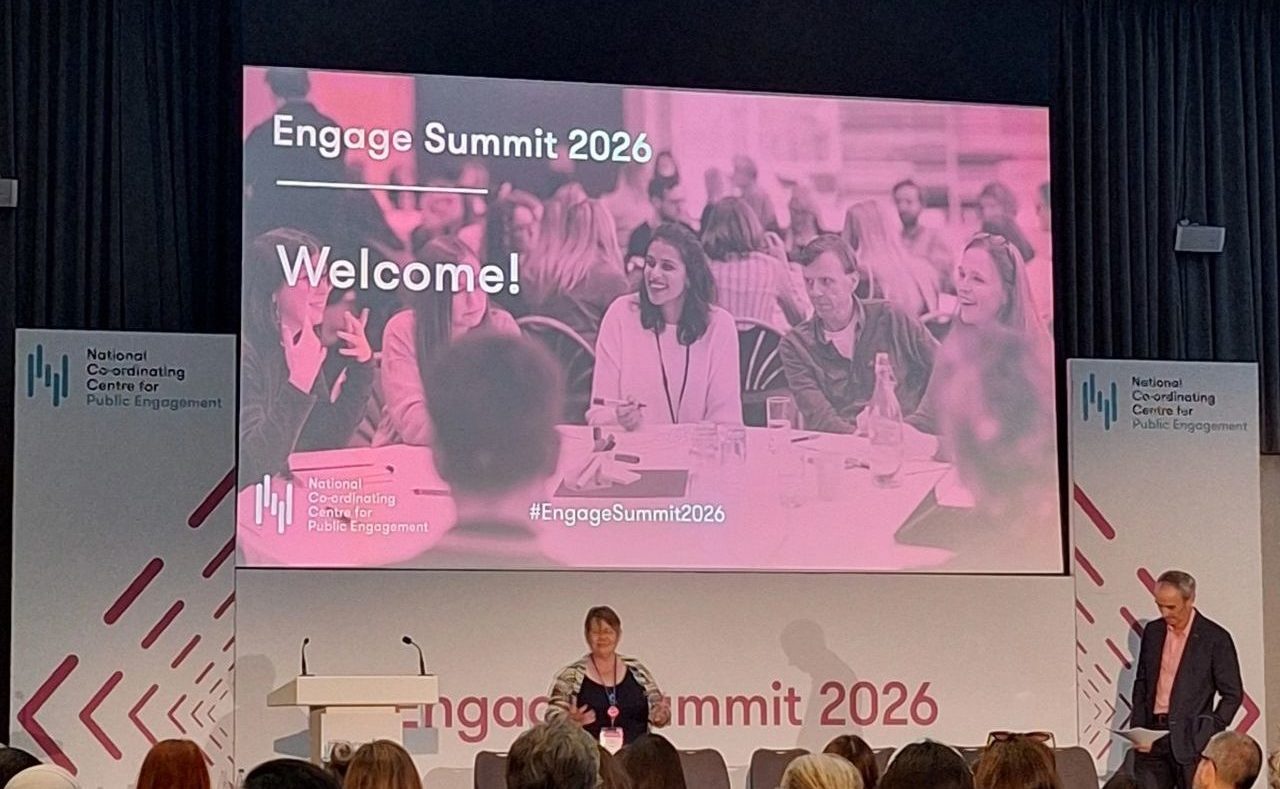
Engage is the biannual conference hosted by the National Co-ordinating Centre for Public Engagement. This year, the conference was attended by our Engaged Research Manager, Dr Dreolin Fleischer, and Catherine Hurcombe, Regional Engagement Assistant, to explore the changing landscape of engaged research, and how now more than ever, co-production and engagement with new audiences is vital.
The National Co-ordinating Centre for Public Engagement (NCCPE) provide strategic support and training for those looking to generate impactful research informed by public involvement. As well as highlighting the NCCPE’s own projects, such as their successful Engaged Futures scheme, and Watermark awards, the two-day event invited specialists from the Community and Higher Education sectors to share their insights on what the future holds for collaborative research.
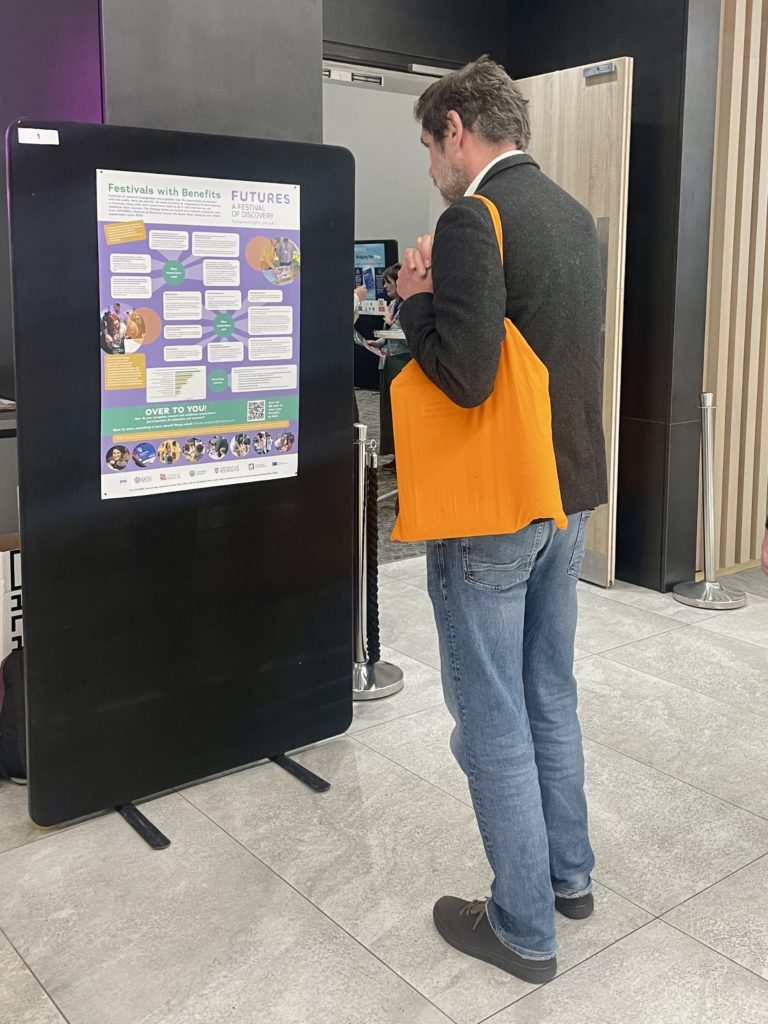
Plenary talks and small-group discussions demonstrated a feeling of uncertainty and precarity in the field of public engagement, with many organisations looking to the future and imagining the role of engaged research in the wake of the pressures in Higher Education. Yet there was a clear sense of hope. Case studies showcased work from the UK and beyond, such as University spin-outs, the development of strategies for community-based learning, reports, toolkits, and funding schemes. There were opportunities for attendees to brainstorm their own innovative engagement activity, map the future of engaged research, and explore how to become an engaged leader. These projects highlighted the power of collaboration for ensuring research reaches and responds to new audiences, exemplifying the value of engaged research, even when it cannot easily be quantified.
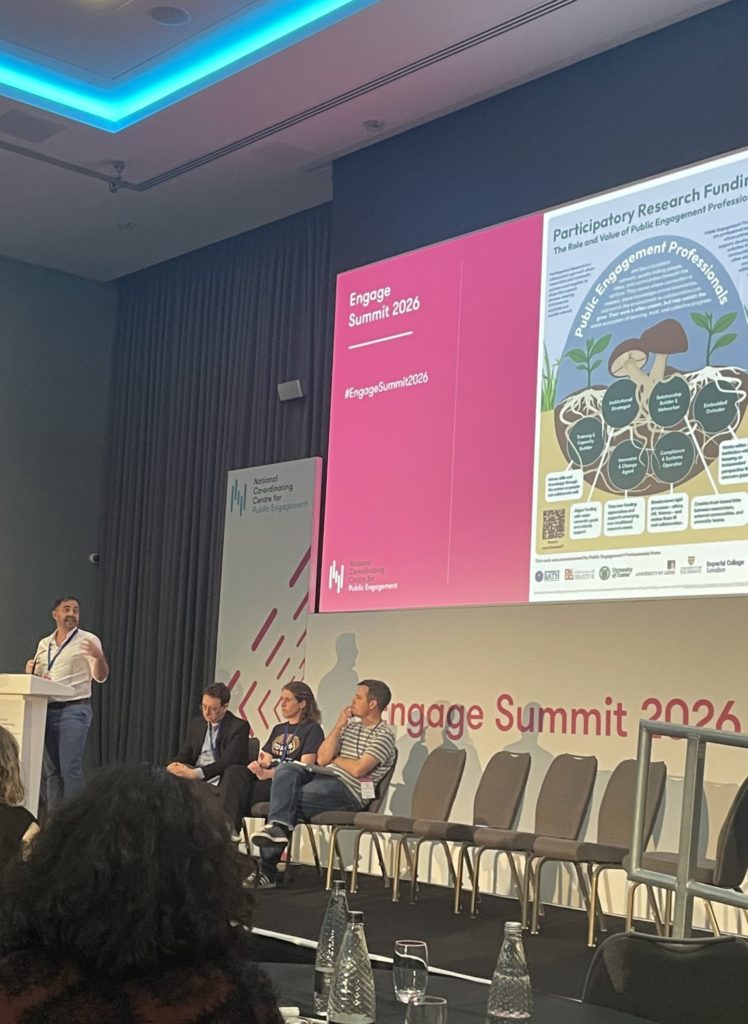
The conference provided a showcase to highlight the culmination of a project commissioned by the University of Exeter alongside six other Higher Education Institutes (HEIs). Public Engagement Professionals (PEPs) from the Universities of Bath, Bristol, Exeter, Leeds and Plymouth, Imperial College London, and King’s College London meet regularly to share how they manage their respective Participatory Research Fund allocations from Research England. The network commissioned Dom Galliano to conduct evidence gathering and synthesis to examine the importance of PEPs in managing funds like these. Dom was able to highlight the project during a five-minute ‘lightning talk’, effectively signposting people to the full report and accompanying infographic hosted on Exeter’s PER website.
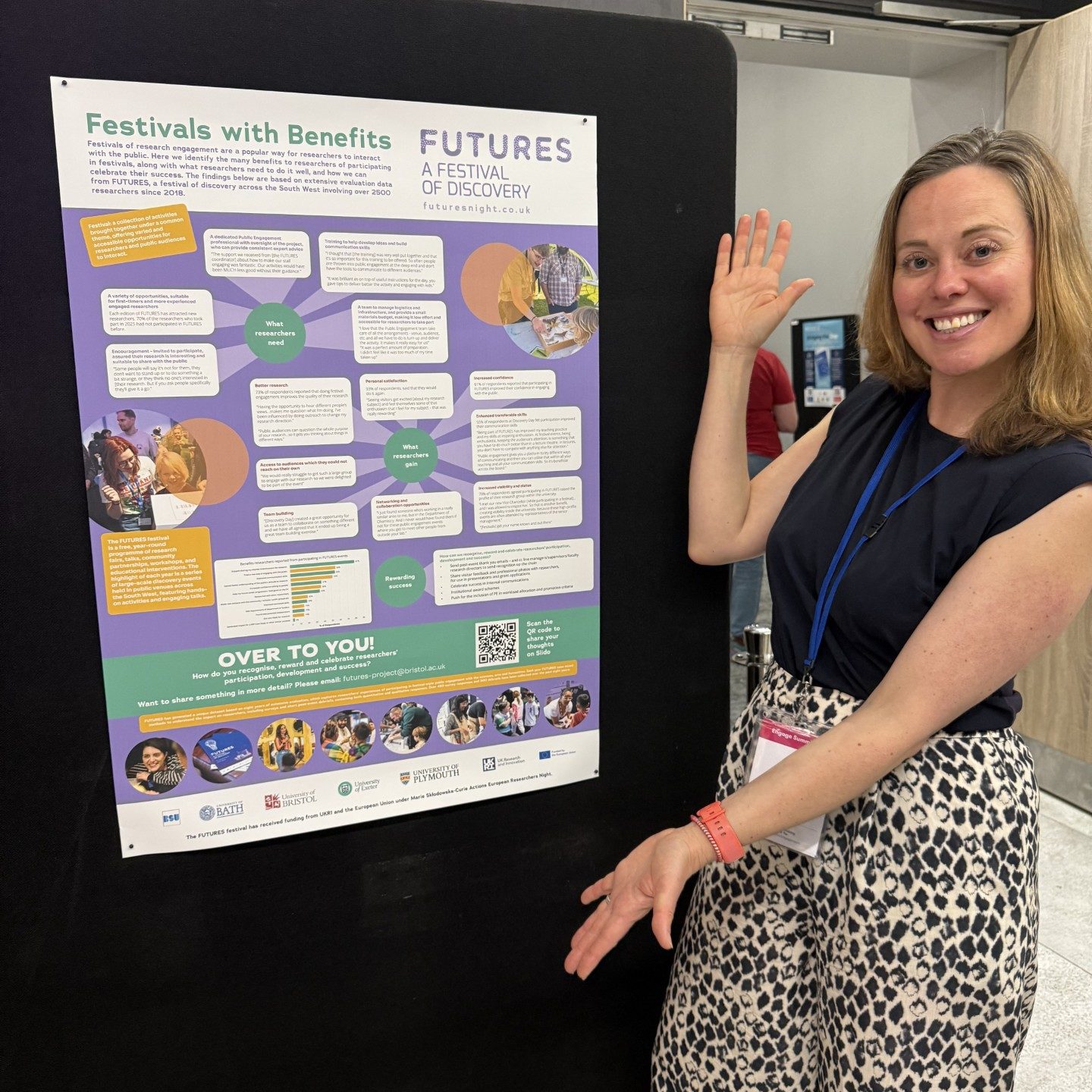
Meanwhile, the second day of the conference showcased the work of the FUTURES consortium, encompassing the Universities of Bristol, Bath, Exeter, Plymouth, and Bath Spa University. Their poster reflected on the FUTURES Festival of Discovery, a scheme that for several years, offered a hub of creative public engagement activity in sites across the South West.
Overall, the 2026 Engage Summit presented a cautiously optimistic view of the future: one where public engagement looks towards innovation and creativity to move forward, and space is created for inclusive and meaningful research.