
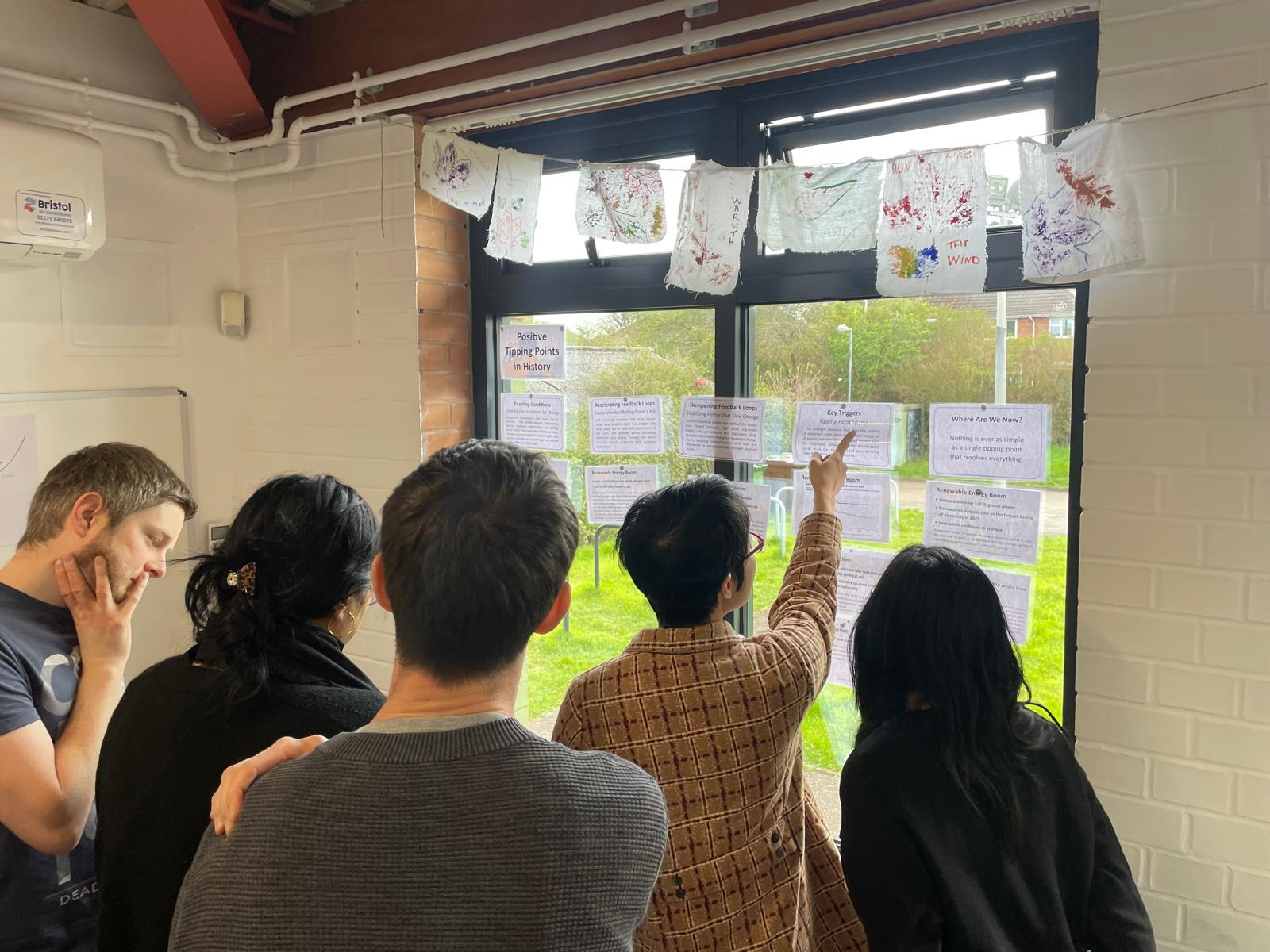
Peter Lefort of the University’s Green Futures Network offers the latest updates on the Positive Tipping Points Toolkit. Working with partners Shalyn Wilkins and Jo Crocker (Winchester Action on Climate Change), this project used Engaged and Participatory Research Funding to engage new and underrepresented communities with pivotal climate research.
Amount of award – £5025
This project brought the co-produced Positive Tipping Points Toolkit to new audiences, focusing on underrepresented and marginalised groups, and parish-level climate action groups. In particular, we explored how these communities engage with the University of Exeter’s research into systems change, and their own roles in driving positive social transformation in the context of climate change.
Co-creators of the Positive Tipping Points Toolkit delivered six public workshops. This allowed us to build on our existing infrastructure for participant engagement with positive tipping points, which has gained momentum and created significant global interest since July 2025. The workshops supported by Engaged and Participatory Research funding used two different approaches to generate diverse feedback:
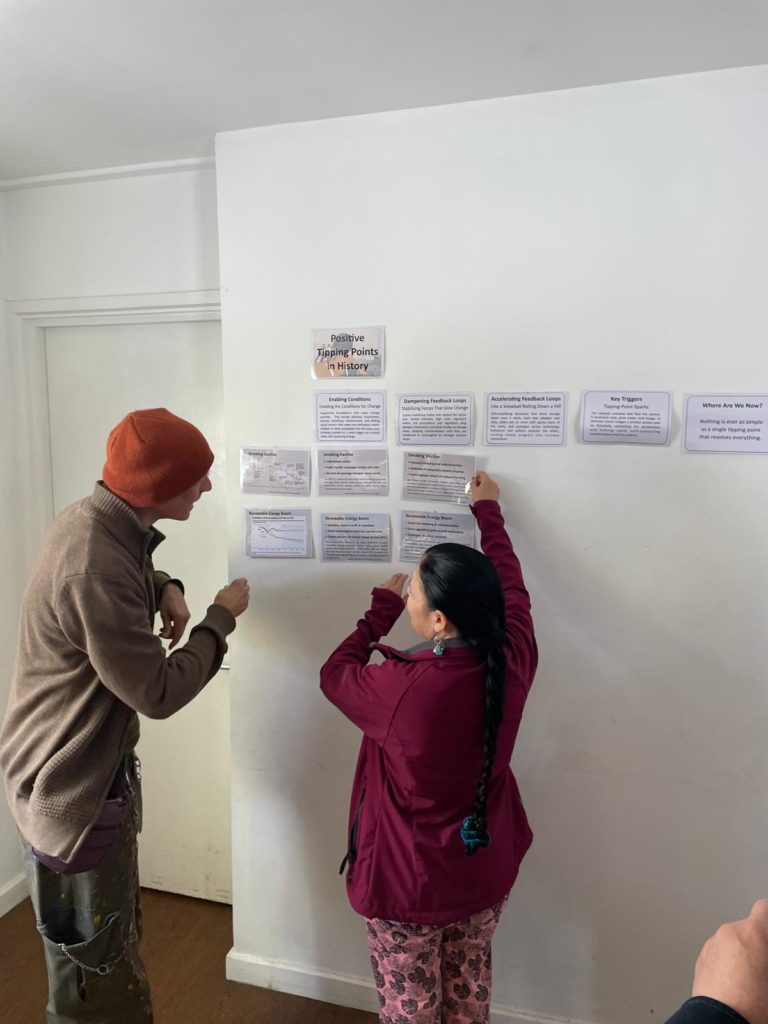
- The application of the Positive Tipping Points framework for existing grassroots climate action in Winchester
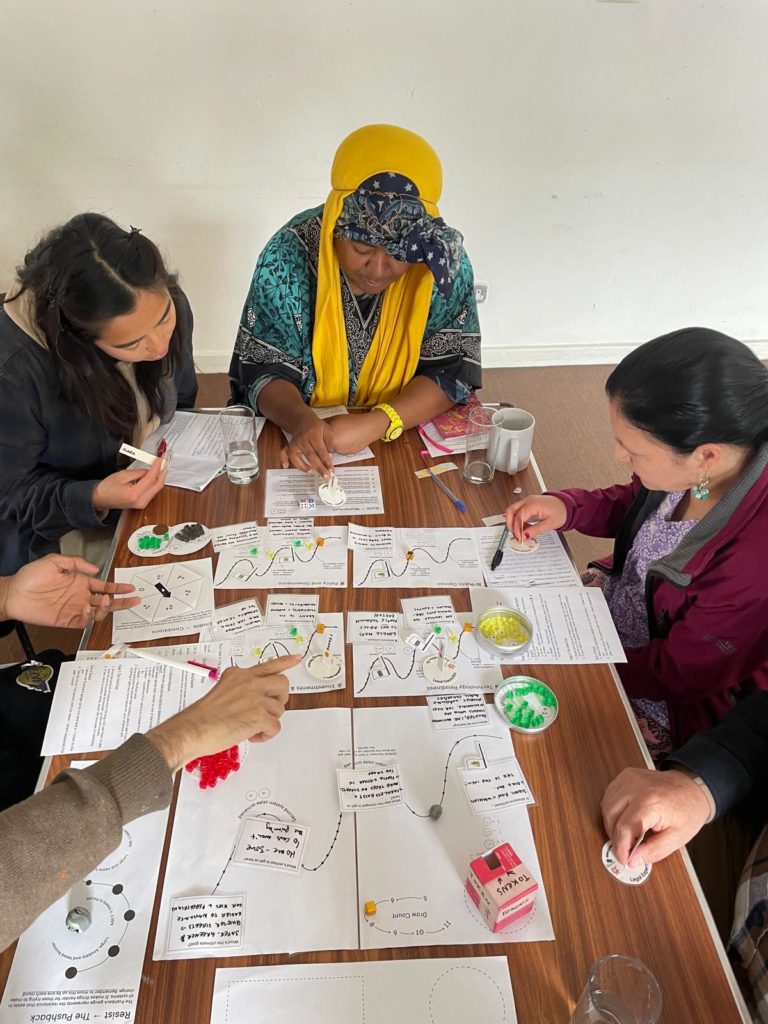
- The development of a game engaging communities unfamiliar with the framework, through community centres across Bristol
Through the workshops we learned more about which aspects of the Toolkit resonated with different audiences. Participants considered our roles as individuals, and as part of a community, and how systems affect each other. The game development component of the workshop also invited people to explore the role of play in learning, and the value of role play or the embodiment of different roles.
*
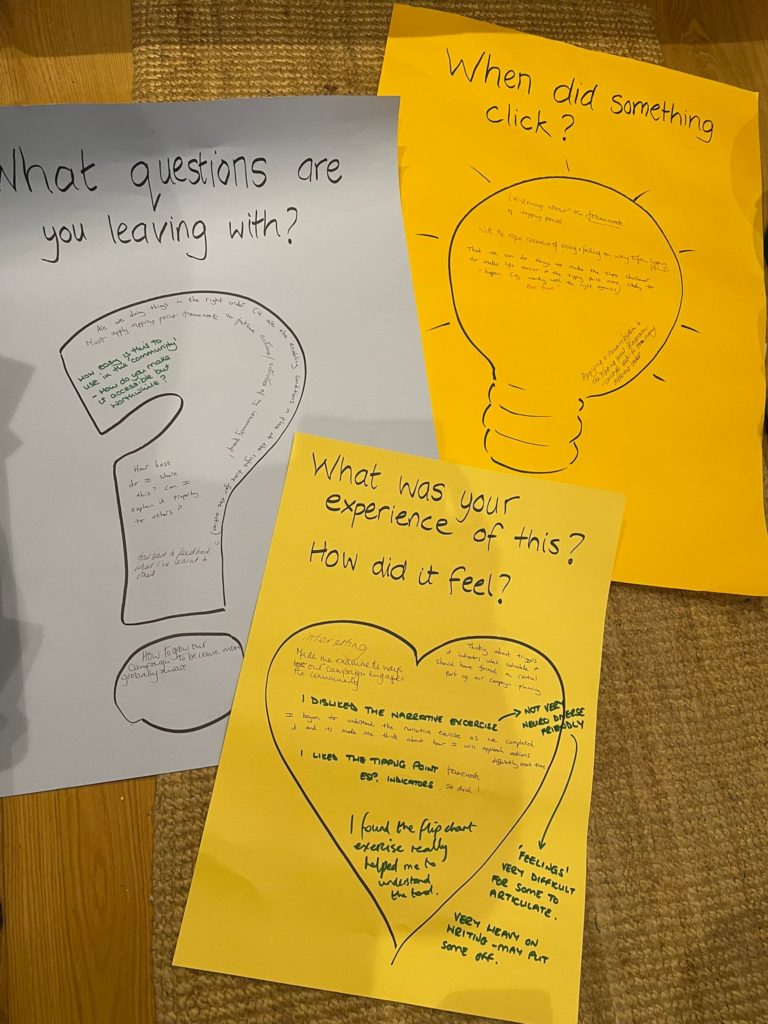
‘It is a refreshing and poignant reminder for me to let go of the pressure that I put on myself to do all the work to bring about change and seek out support.’ – Workshop attendee
*
In the climate groups, participants shared that the tools had helped reframe how they want to work towards their goals: ‘Thinking about triggers and indicators was valuable and should have formed a central part of our campaign planning.’
The new and adapted resources are now being made available to the wider Positive Tipping Points community, and the university’s new and existing global partners, who are exploring how to apply the research in practice.
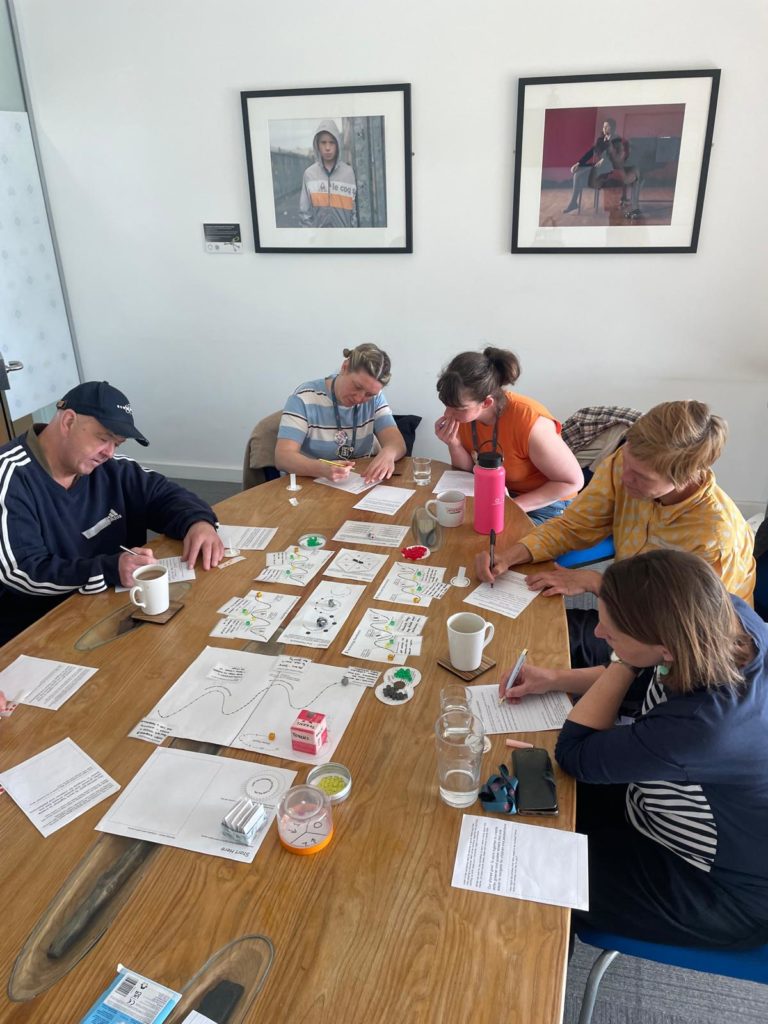
Unsurprisingly, the biggest challenge was finding and engaging people who had no previous relationship with the university or the research. This required significant relationship building with existing community leaders, and a demonstrably non-extractive process centring the positive experience of the participants. We are aware, however, that this is not an exhaustive process, and we are unable to know what the barriers were for people who did not attend the workshops.
Having a well-developed collection of tools to draw from was critical, as some workshops included people for whom English was their second language, and some who had never played a board game before.
The Positive Tipping Points Community of Practice is made up of global practitioners contributing to a collective exploration of these tools and frameworks. The group will continue to offer free, accessible support for people and communities interested in using the framework, and will also provide a home for the completed game, which is now being finalised following the feedback from this project. This work is key in supporting the global appetite for this ongoing research, and its application in social, political, and technological systems. At the same time, this can help create new entry points for those working at all scales to combat the climate crisis.