
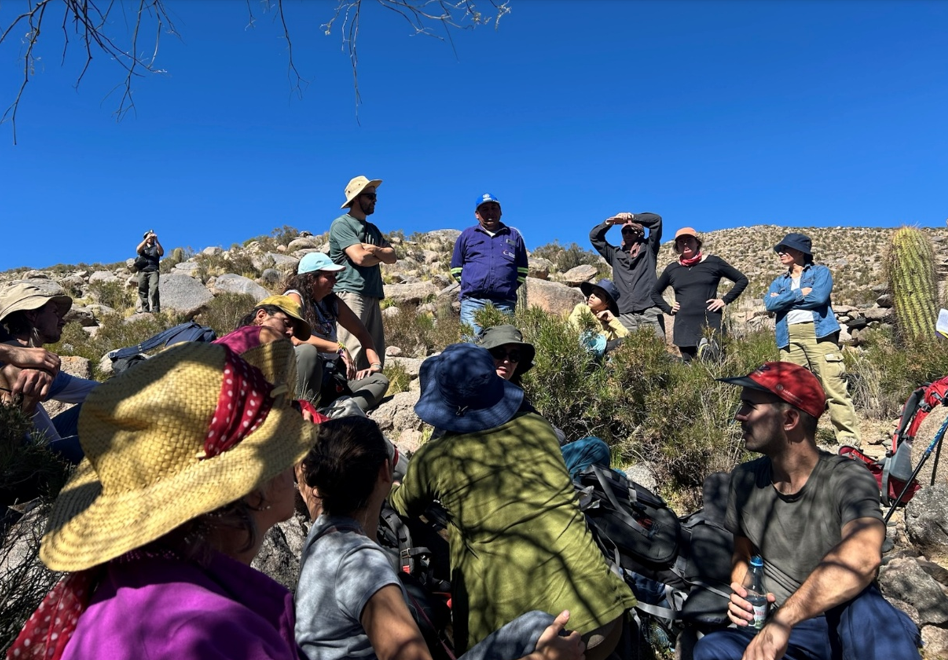
Professors Marisa Lazzari and Ioana Oltean from the Department of Archaeology and History share insights into their longstanding collaboration with Fundación Tiempos, an Argentinian organisation dedicated to sustainable and future-focussed heritage preservation. With support from our Engaged and Participatory Research Fund, this project helped support inclusive approaches to heritage in northwestern Argentina.
Amount of award: £9925
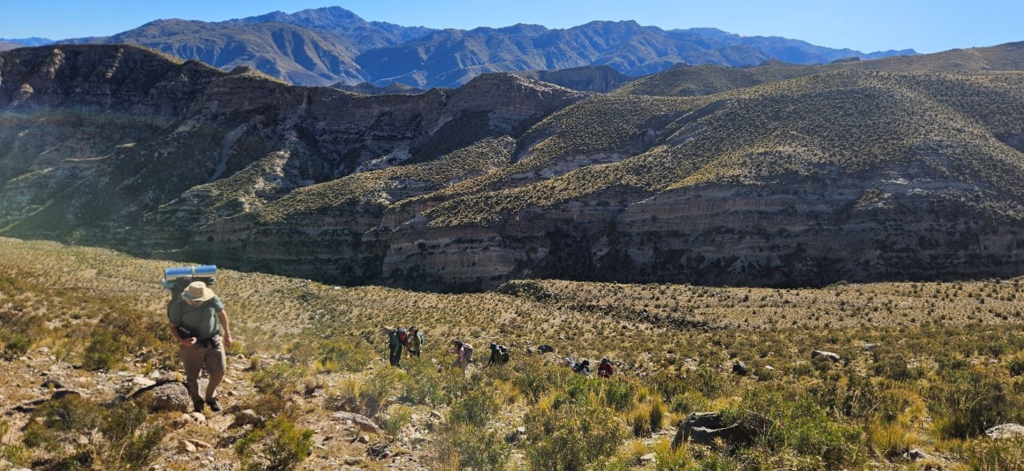
Biocultural heritage focuses on the relationships between people and their environments, recognising how Indigenous and rural communities sustain interconnected landscapes, knowledge and biodiversity. This project brought together the University of Exeter and Fundación Tiempos to co-create sustainable biocultural heritage strategies, working with rural and Indigenous communities in the high-altitude valleys of Catamarca Province, northwestern Argentina. Building on a long-standing partnership, the project combined archaeological, heritage and community-based approaches to document local knowledge and support more inclusive heritage policies.
This work drew upon on the mature, trust-based partnership between the parties, and responded to the needs of local communities of the high valleys area of Catamarca province, Argentina, which had been identified during previous work. Working closely with these local communities, the project delivered four interconnected work packages:
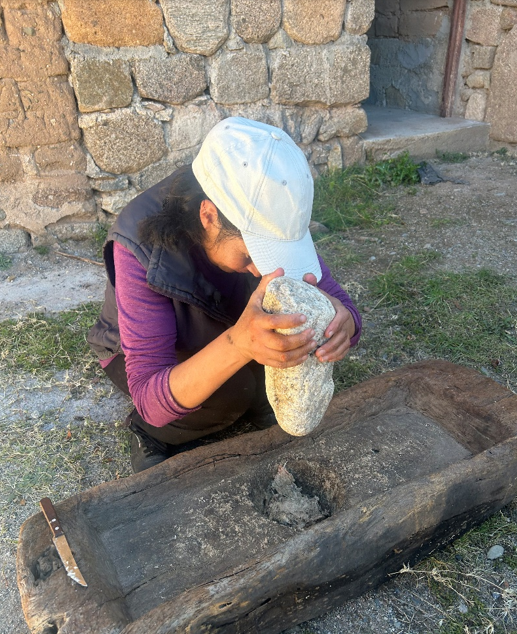
- Documentation of women’s foodways and everyday lifeways through interviews, workshops and audiovisual recording.
- Development of participatory biocultural mapping methods using digital tools and community-led approaches.
- Production of bilingual audio-visual materials capturing local knowledge, cultural practices and landscape connections.
- Co-development of policy recommendations grounded in community knowledge and priorities.
Activities included traditional cooking workshops, collaborative mapping exercises, field-walking seminars, cultural heritage documentation, sensory landscape recording, and explorations of traditional music and drum-making practices.
Through these activities, collaboration between researchers, heritage practitioners and community members was strengthened. This project generated new insights into the relationships between food, mobility, music, storytelling and landscape knowledge, and deepened understanding of how biocultural heritage is experienced and maintained within local communities.
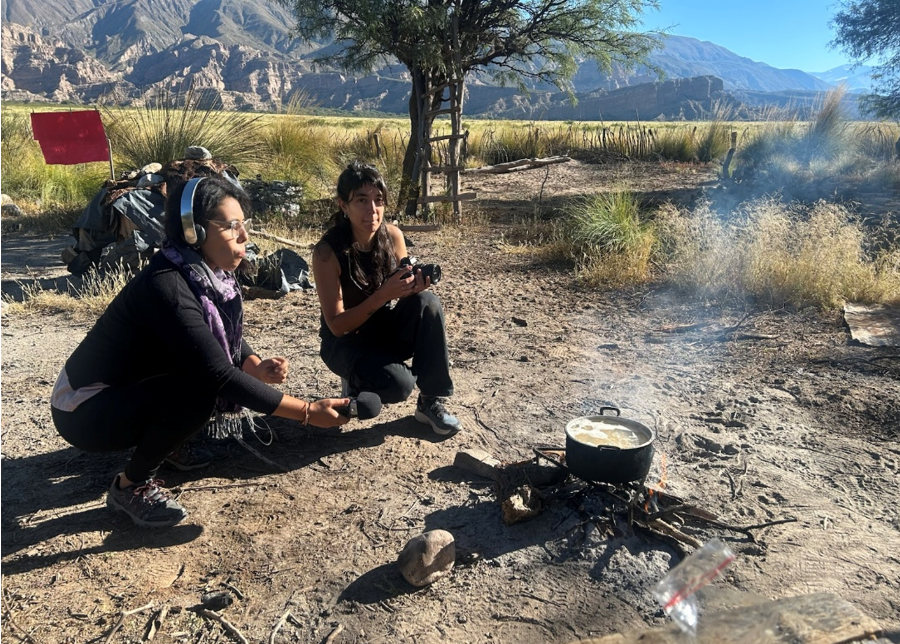
For Fundación Tiempos, the project enhanced their capacity for using digital heritage methods and conducting participatory mapping and collaborative research. Community participants actively shaped project activities and outputs, identifying culturally significant places and supporting intergenerational knowledge exchange in contribution to an audiovisual archive.
More broadly, the project strengthened the role of the local Rural Community Museum and Eco-Lab at Barranca Larga, Catamarca province, as centres for heritage stewardship, citizen science and intercultural dialogue. It also helped to foster connections between community members, researchers, media practitioners and policymakers.
Delivering a genuinely collaborative international project within a six-month funding period was difficult, particularly while balancing different institutional and seasonal calendars. However, regular communication, flexibility and shared decision-making, went a long way in overcoming this.
We found that this open and adaptable project design produces stronger results than rigid planning. Many of the most valuable outcomes emerged directly from participant-led proposals, such as replacing large workshops with smaller community-based activities and a multi-day field seminar. The project also highlighted the importance of face-to-face engagement for building trust and sustaining equitable international partnerships.
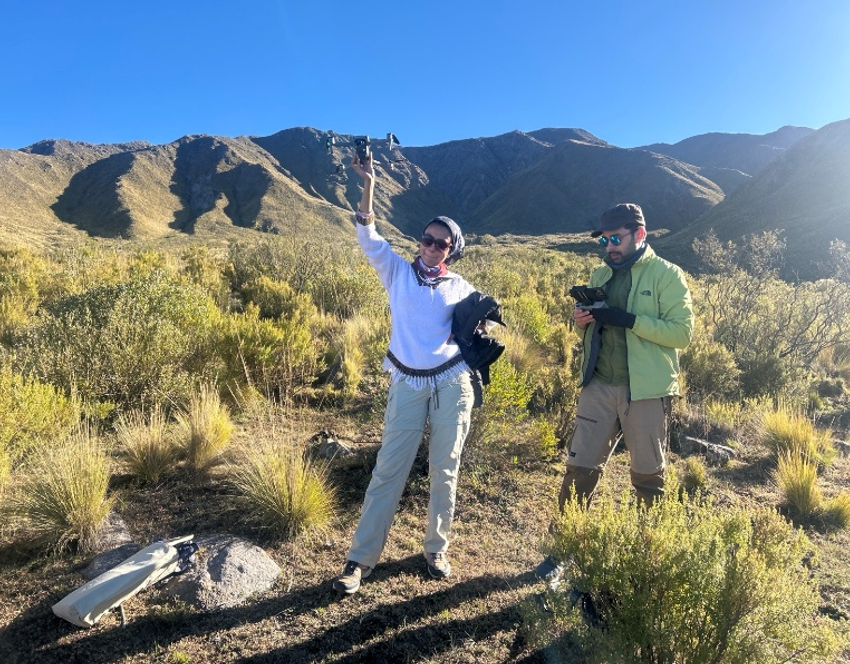
Going forward, the partnership will build on this work through the completion and dissemination of a documentary film, an ArcGIS StoryMap and a policy brief. Future plans include expanding participatory mapping activities and developing the audiovisual archive. We are keen to support community-led heritage initiatives developed through the local community museum, as well as local capacity building via training provided through the Eco-Lab. Through this project, we have created a strong foundation for future interdisciplinary research, policy engagement and sustainable community-led heritage management.
All image credits belong to the Interdisciplinary and Intercultural Collective of the High Valleys of Catamarca (CIIVAC).