
Saving Halberton's Ancient Roman Environment
Saving Halberton's Ancient Roman Environment
The remains of an important Roman villa lie beneath farmland between the villages of Halberton and Sampford Peverell in north Devon. The villa, a rare type of site in Devon, is badly damaged and is under threat from further ploughing. There is a narrow window of opportunity to conduct rescue excavations on this site with the aim of uncovering important information about this building and its surrounding complex of Roman remains. The SHARE project is a multi-stage research, learning and community project, involving both university students and volunteers, in the excavation of this important Roman site.
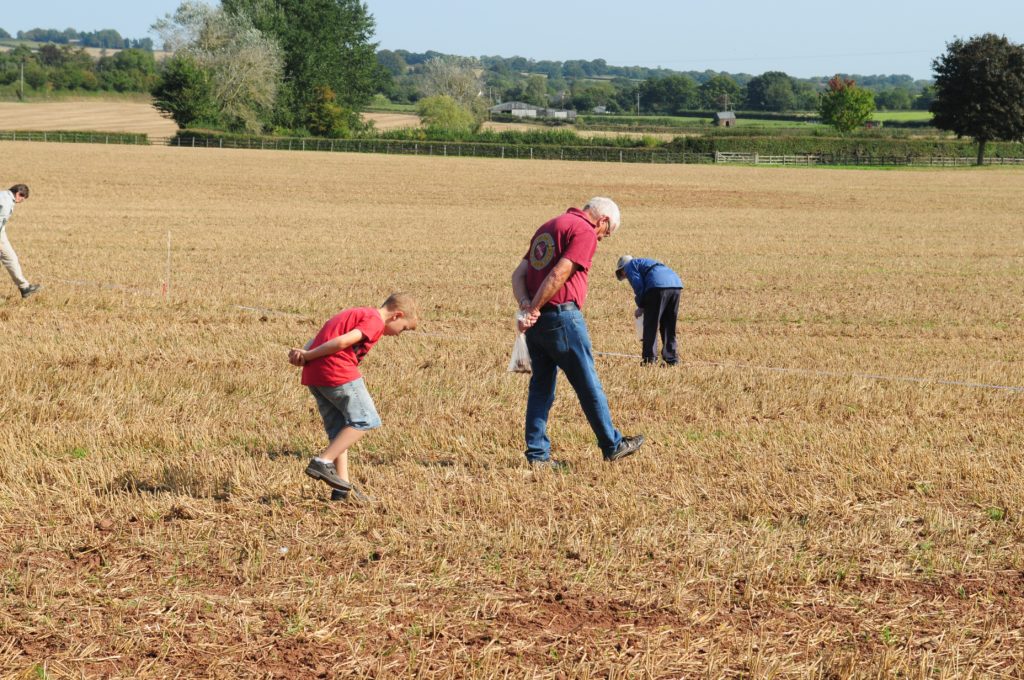
The site was originally identified in 2004, when a local metal detectorist started to find coins and other objects dating from the Roman period. Tiverton Archaeological Group (TAG) and the Sampford Peverell Society, with the support of the County Archaeologist, explored the area further, by collecting further surface finds (field-walking) including tesserae (small cubes used in mosaics), pottery, roofing slates, and tiles. A geophysical survey was conducted to map underground features, which revealed the foundations of a range of buildings as well as other features suggesting an extensive villa complex.
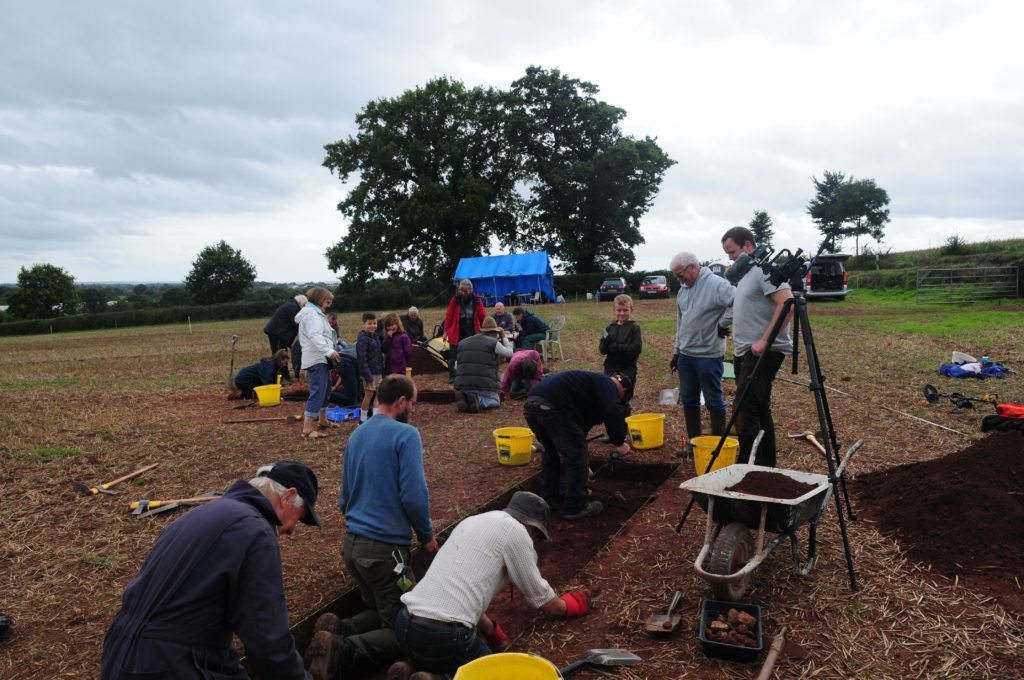
Two small trenches were excavated at the site in 2019 by volunteers from TAG, which revealed a partial mosaic floor. In 2021, a further 13 trenches were excavated by a local archaeology company, AC Archaeology, commissioning by the county archaeologist, to evaluate the survival and extent of the remains. These revealed the remains of a range of buildings including mosaics.
Whilst Roman villas are to be found at many sites in the south of England, they are rare in Devon. Devon Archaeological Society’s Committee consider that ‘the Roman villa is a very significant site and there is high risk of loss due to ongoing agricultural activity’. Only two others have been confirmed by excavation, with a small number of other ‘possibles’. An additional feature of this one is that, in a field nearby, iron-making took place (as evidenced by large quantities of iron slag), in the late Roman-British period which may provide important evidence for industrial continuity at the end of the Roman period.
The two local societies collaborated with a larger partner, University of Exeter, to apply to the National Lottery Heritage Fund, to save Halberton Roman villa. Thanks to funding from the National Lottery, we are now able to proceed with a full excavation of the villa buildings and a multi-year community research project (2025–2030).
The project (as the acronym SHARE implies) aims to share progress and results with the local community through open days, community events, a website and social media. We want to encourage people to volunteer who would not normally take part in such projects, through partnering with a local mental health charity, and encouraging engagement from communities in Cullompton and Tiverton.
Schools will be encouraged to visit the site, and workshops will be run where archaeologists visit schools with the finds and report on their discoveries. We plan to work with an education specialist to create a self-led school workshop pack including Roman-style games, an object handling collection and resources, which will be held at Tiverton Museum of Mid-Devon Life.
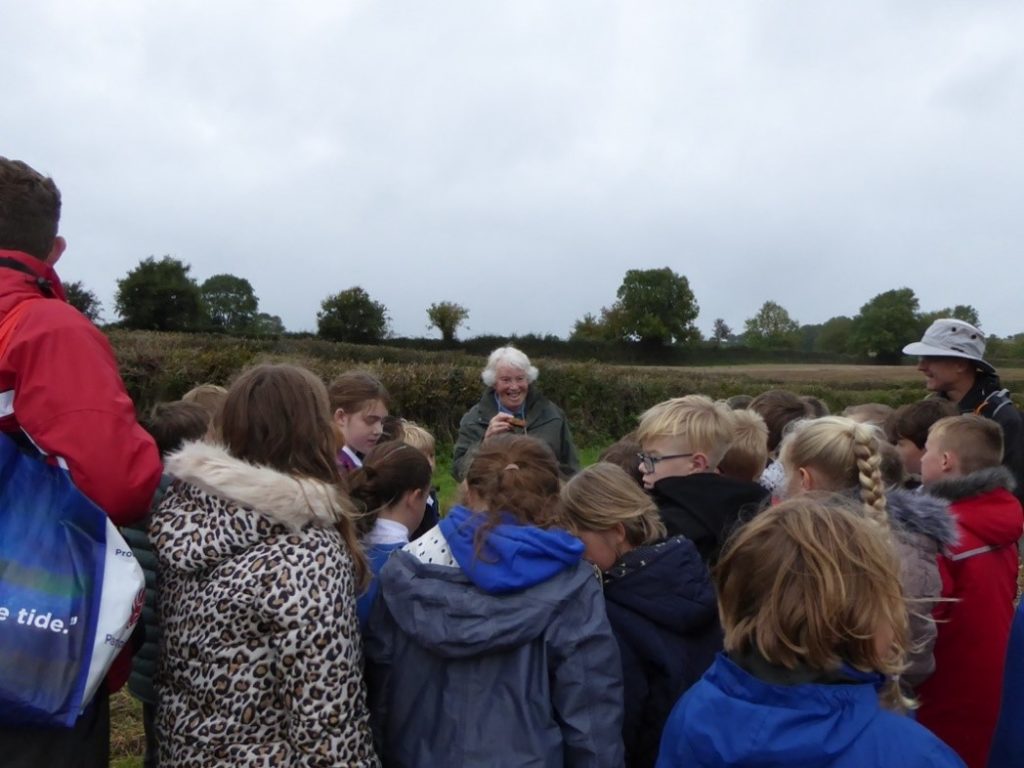
The site will be open to visitors every day during the main field seasons, with students or volunteers on hand to talk to visitors and show finds. As the site is not easy accessible (it is a 1.5km walk along lanes from the centre of Sampford Peverell village, and parking is not possible on site for large numbers of visitors), we plan to hold a Roman-themed fun day in the village hall on a weekend during each field season. We also plan to take a handling pack of finds from the site out to local care homes and community groups.
All the finds from the site, and the lifted mosaics, will be donated to Tiverton Museum of Mid-Devon Life, where some will be put on display in future. We also plan to install a new interpretation panel along the nearby Grand Western Canal towpath, which overlooks the site.