
By Dr Lance Peng (Cornwall-based researcher)
Every summer, Newquay becomes something slightly different.
For a few days, the town becomes a meeting point for music, surfing, nightlife, tourism and thousands of young people arriving from elsewhere. Boardmasters puts Newquay on a much bigger cultural map and brings enormous stages, artists and audiences to Cornwall.
But there is another music story happening here too. It is quieter, smaller and perhaps easier to overlook.
It happens in a studio in Newquay, where young people learn to DJ. And I think there is something important here about what it means to sustain a cultural scene.
When we talk about sustainable festivals, we often think about environmental impact, infrastructure or the longevity of events. But there is another question we might ask: what does it take to sustain the cultural life around an event?
For me, this is where social sustainability becomes important.
What does it take for a local cultural scene to keep creating opportunities for the people who actually live here, including those who have historically had fewer opportunities to participate?
And what does it mean to sustain events as well as participation, relationships, confidence and the possibility of belonging to a culture, and not simply consuming it?
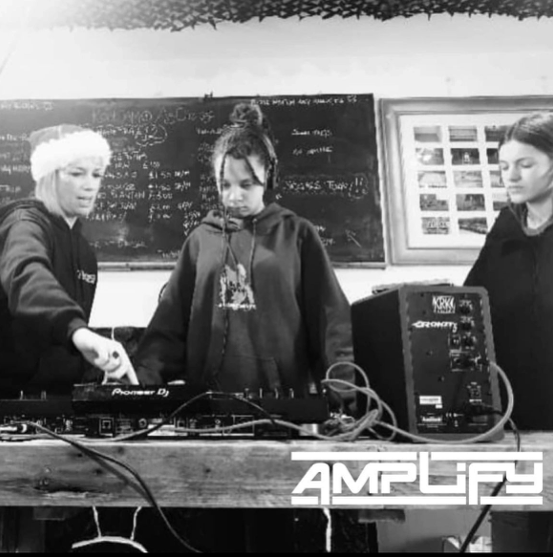
This is where Amplify SW interests me.
Amplify is a Community Interest Company running free DJ and electronic music education for young people aged 11–18, including through alternative provision, youth clubs and community settings. It works with young people who have not always found mainstream educational or cultural spaces easy to access, including neurodivergent young people and those with additional needs.
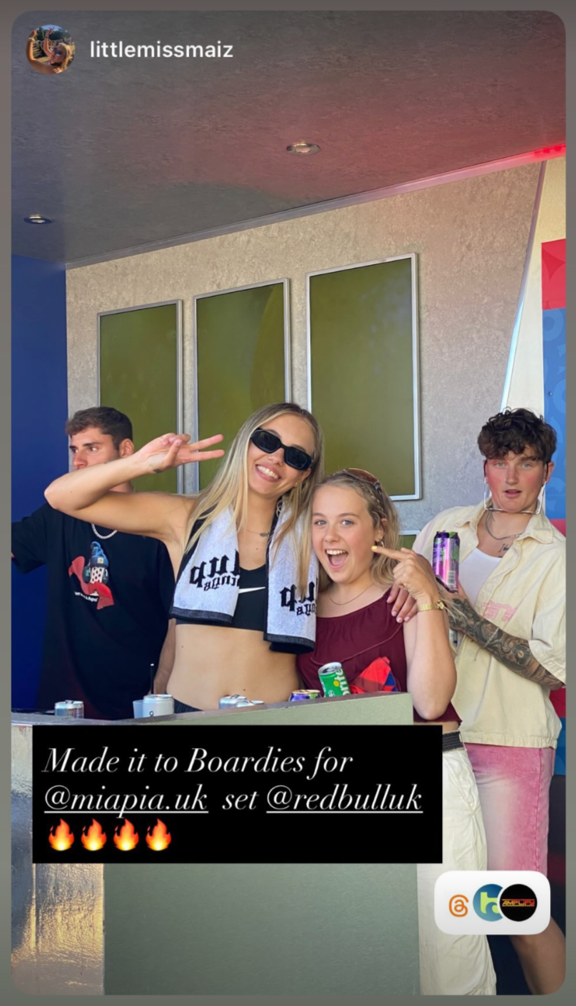
And this summer, eight young people from the Newquay DJ school took their music to one of the biggest stages imaginable locally: Boardmasters 2026.
There is something really powerful about that journey.
A young person learning to mix tracks in a small local studio can eventually find themselves performing to thousands of people. The distance between those two moments is technical training, mentoring and confidence. But it is also access: access to equipment, to expertise, to networks, to a platform and, perhaps most importantly, to the possibility of seeing yourself as someone who can contribute to culture.
It is being given the opportunity to imagine yourself differently – as someone who can participate in culture and as someone who can help shape it.
I have spent much of my academic life thinking about young people who are positioned at the margins of institutions. In my research with young girls in out-of-home placements and youth justice, I became interested in what happens when young people are repeatedly understood through categories of risk, vulnerability, exclusion or intervention.
There is a tendency, especially around marginalised young people, to ask what is wrong.
What happened to them?
What support do they need?
What risks do they present?
Why aren’t they engaging?
These are sometimes necessary questions. But perhaps they are not the only questions we can ask.
We can also ask: What might they become if a space was built around what they can do and not what they have supposedly failed to do? And what might our cultural spaces become if we designed them with that question in mind?
That shift matters.
A DJ school might look, from the outside, like a relatively simple music education project. Learn the decks. Learn to beatmatch. Put together a set. Perform.
But for a young person who has never felt particularly at home in mainstream education, the significance can extend far beyond music education.
Here, expertise can be discovered and not assumed. Creativity can become a form of communication. A young person can become the person who knows how to do something. Someone else might ask them for advice. They might perform in front of people. They might begin to see themselves as someone with something to contribute. And that contribution matters to the individual as well as to the cultural life of the place they live in.
This makes me think differently about the word sustainability.
We often talk about sustaining organisations in terms of money, buildings and equipment. Amplify’s current fundraising campaign makes this particularly tangible. The organisation already has the equipment, experienced tutors and, crucially, young people who want to be there. What is uncertain is whether there will be enough funding to keep the programme running.
The campaign is seeking £30,000 to secure another year of free sessions after National Lottery funding came to an end. The programme currently provides 44 weeks of free DJ sessions and more than 440 free session places each year.
So what exactly are we sustaining when we fund something like this? And what is our responsibility (as cultural institutions, funders and communities) to sustain the conditions that make participation possible?
A DJ school, certainly.
But also a relationship.
A routine.
A room where someone knows your name.
A place where a young person can make friends without having to first prove that they belong.
A pathway into music and the creative industries.
A sense of confidence that might travel far beyond the decks. These small things collectively become something larger: infrastructure for participation in local culture.
And potentially, a local music culture that is consumed by young people as well as made by them.
This is why I think there is an interesting tension between Boardmasters and Amplify.
Boardmasters is spectacular. It is visible. It attracts huge audiences and internationally recognised artists. Amplify’s work is much less spectacular most of the time. It happens week after week, in a relatively small space, with young people learning something together.
Yet perhaps these things are not opposites.
A festival can provide the stage.
A community organisation can help make sure there are people who are ready to step onto it. More than that, it can help build the local capacity to participate in culture long after the stage has disappeared.
And that distinction matters for the future of Cornwall’s music culture.
If we want vibrant cultural communities, we cannot only invest in the moments when culture becomes highly visible. We also need to invest in the quieter infrastructures that allow people to participate in culture in the first place.
This is especially important for young people who have historically been excluded from, or found it difficult to access, cultural, educational and social spaces.
Inclusion can simply be about inviting someone into an existing room but sometimes it is also about building a different room altogether.
A room where the rules of participation are different. Where creativity is valued. Where young people can experiment without immediately being judged. Where someone who has struggled to fit elsewhere can discover that there are other ways of belonging.
And when those spaces become part of a community’s cultural infrastructure, inclusion can become more than an individual intervention. It can begin to change who gets to participate in culture, who gets to produce it, ultimately who gets to shape its future.
That, to me, is social sustainability, and it means creating cultural systems in which participation is not reserved for those who already know how to enter the room.
It is about asking whether the communities we celebrate today are creating meaningful possibilities for the people who will inhabit them tomorrow.
And perhaps this is one of the most interesting things happening alongside Boardmasters this year. While thousands of people experience Newquay as a temporary festival destination, eight young people from the town have been given the opportunity to participate in and begin to shape its music culture themselves.
The festival will eventually end.
The stages will come down.
The crowds will leave.
But hopefully the confidence, skills, relationships and sense of possibility created through spaces like Amplify will continue to shape what happens next.
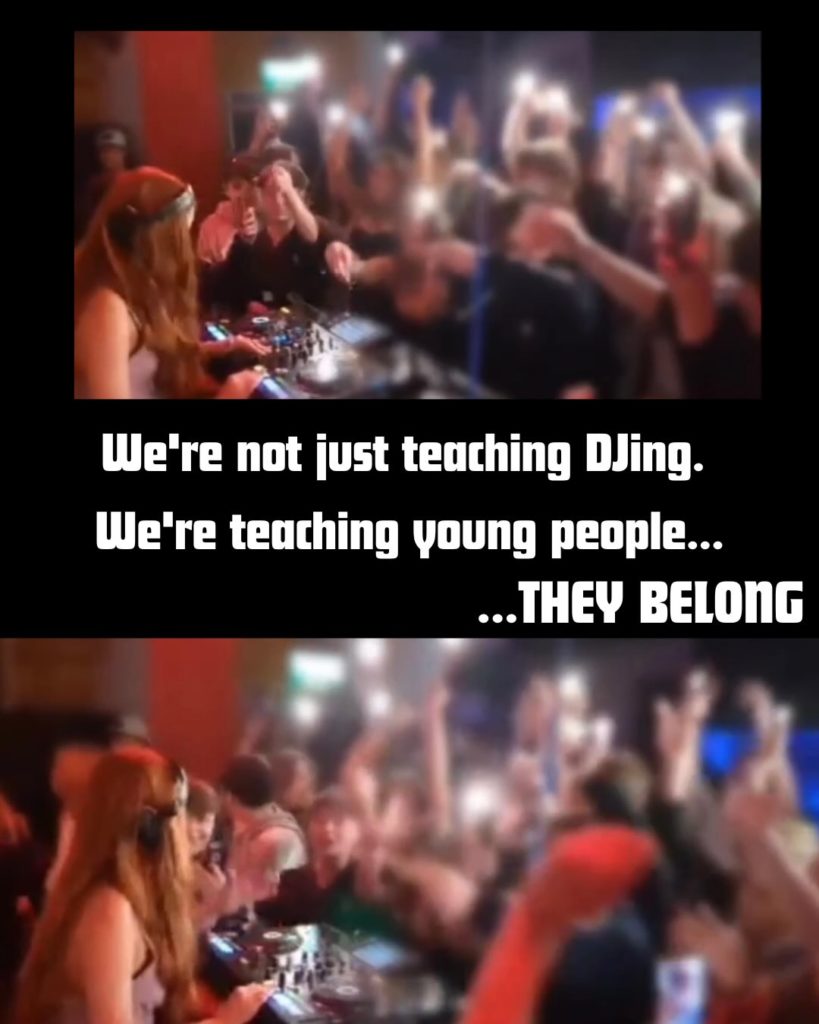
Because sustainable culture is about making sure the show can go on. And it is about making sure more people get to be part of the show and perhaps also about making sure more people have the opportunity to help decide what the show becomes.
And if we are serious about building sustainable futures for young people in Cornwall, perhaps we should pay a little more attention to the small rooms where those futures are already being rehearsed.