
Nuclear Societies Research Group
Nuclear Societies Research Group
Posted by Sebastian Koa
2 July 2026Registration is now open!
Date: 15-16 September 2026, with an optional walking tour on 14 Sep 2026
Location: Room 1.H020, Arts Complex, University of Bristol
For any queries, please email nuclearsocietiesresearchgroup@gmail.com.
Please visit our Eventbrite page to register:
https://www.eventbrite.co.uk/e/telling-other-energy-stories-tickets-1992120477976
We live in a time when energy crackles on the skin of our collective social being. From the ongoing, if uneven, patterns of energy transitions across the world, to entrenched projects of neocolonial extraction for ‘green’ energy technologies, and to the oil shock facing the world amidst geopolitical conflict in the Strait of Hormuz, contemporary life appears bound up in endless conflicts of energy. The field of the energy humanities seems well-positioned to reflect on this moment. Over the past decade, the energy humanities have proceeded on the foundational principle that energy issues – far from being purely technical problems – are problems of ‘ethics, habits, values, institutions, beliefs and power’ (Boyer and Szeman, 2014: 40). By foregrounding the human, energy humanities scholars connect everyday experiences of the energetic world to profound questions of the world we want to inhabit and the values that structure that world.
Yet, more than ten years on, it might be timely to ask if the energy humanities – so wrought – continues to be fit for purpose. Interventions in recent scholarship on the Anthropocene have challenged the figure of the human, exposing what often passes for the universal ‘human’ as instead a specific class inhabiting a particular constellation of privileges (Malm and Hornborg, 2014; Todd, 2015). Such provocations extend to the energy humanities. One such provocation in the humanities and geosciences has highlighted the coloniality of practices informing energy regimes, including extraction, which racialise energy itself and make people into inhuman resources. Calls for an ‘insurgent geophysics’ (Yusoff, 2024: 41) demand accounting with the violent placement of Black, Brown and Indigenous subjects in past and present energy systems.
In this context, this symposium asks: what other energy stories ought to be told? Whose tales are brought to the fore in light of these interventions? And how are the energy humanities fit for this purpose? The event brings together scholars working on energy issues from across the disciplines (the humanities, social sciences, and STEM) to collectively take stock of the field, whilst casting an eye forward to reflect on what other stories the energy humanities ought to be telling.
For the finalised programme, please download here: Finalised Programme.
14 Sep 2026
1600 (Optional) Pre-Symposium Walking Tour of Bristol
1830 (Optional) Pre-Symposium Dinner for early arrivals
15 Sep 2026
0930 Registration and Coffee
1000 Opening Keynote by Dr Marianna Dudley
1100 Paper Session 1
1200 Lunch
1300 Paper Session 2
1400 Panel with Dr Linda Ross, Dr Ewan Gibbs, and Dr Mattin Biglari
1500 Coffee Break
1530 Paper Session 3
1700 End of Day 1
1730 (Optional) Free Tour of the SS Great Britain
1900 Symposium Dinner at Root Bristol
16 Sep 2026
0900 Registration and Coffee
0930 Keynote by Dr Petra Tjitske Kalshoven
1030 Paper Session 4
1200 Lunch
1300 Keynote by Dr Jonathon Turnbull
1400 Paper Session 5
1500 Coffee Break
1530 Paper Session 6
1700 End of Symposium

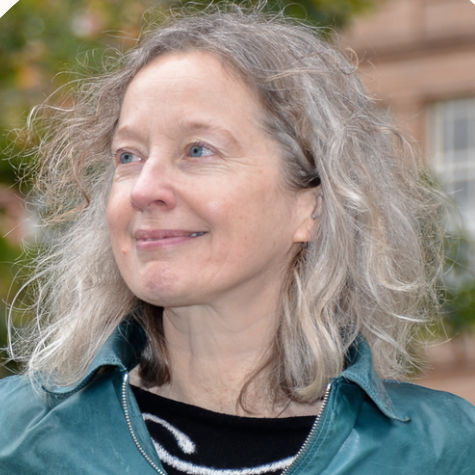
Opening Keynote: Dr. Marianna Dudley
Marianna Dudley is an environmental historian of modern Britain based at the University of Bristol. Her work explores environmental change and its impacts on communities, places, and politics. Her book Electric Wind: An Energy History of Modern Britain, published by Manchester University Press in 2025, is the first academic history of British wind power. It argues that the history of wind energy goes back much further than the modern wind farm and is more diverse than you might expect. The book shows how attention to energy history can enliven discussions of energy transitions, complicating top-down technocratic accounts and offering thoughtful histories from below. Dr. Dudley will welcome us to the symposium and offer some reflections and provocations on energy humanities as it looks today, roughly twelve years on from the field’s emergence.
Keynote: Dr. Petra Tjitske Kalshoven
Petra Tjitske Kalshoven is a Senior Lecturer in Social Anthropology in the School of Social Sciences at The University of Manchester, with a background in Classical Languages and Cultures (Leiden University) and Cultural Anthropology (McGill University). Her research explores simulation, play, rhetoric, and mimesis as key dynamics of knowledge production, focusing on how humans use skilled practices of repetition and modelling to rehearse possible realities. Her current ESRC-funded project Mimesis in Action investigates nuclear decommissioning as a multisited arena for ecological and societal futuring, examining how models and metaphors shape long-term imaginaries of human and more-than-human worlds.
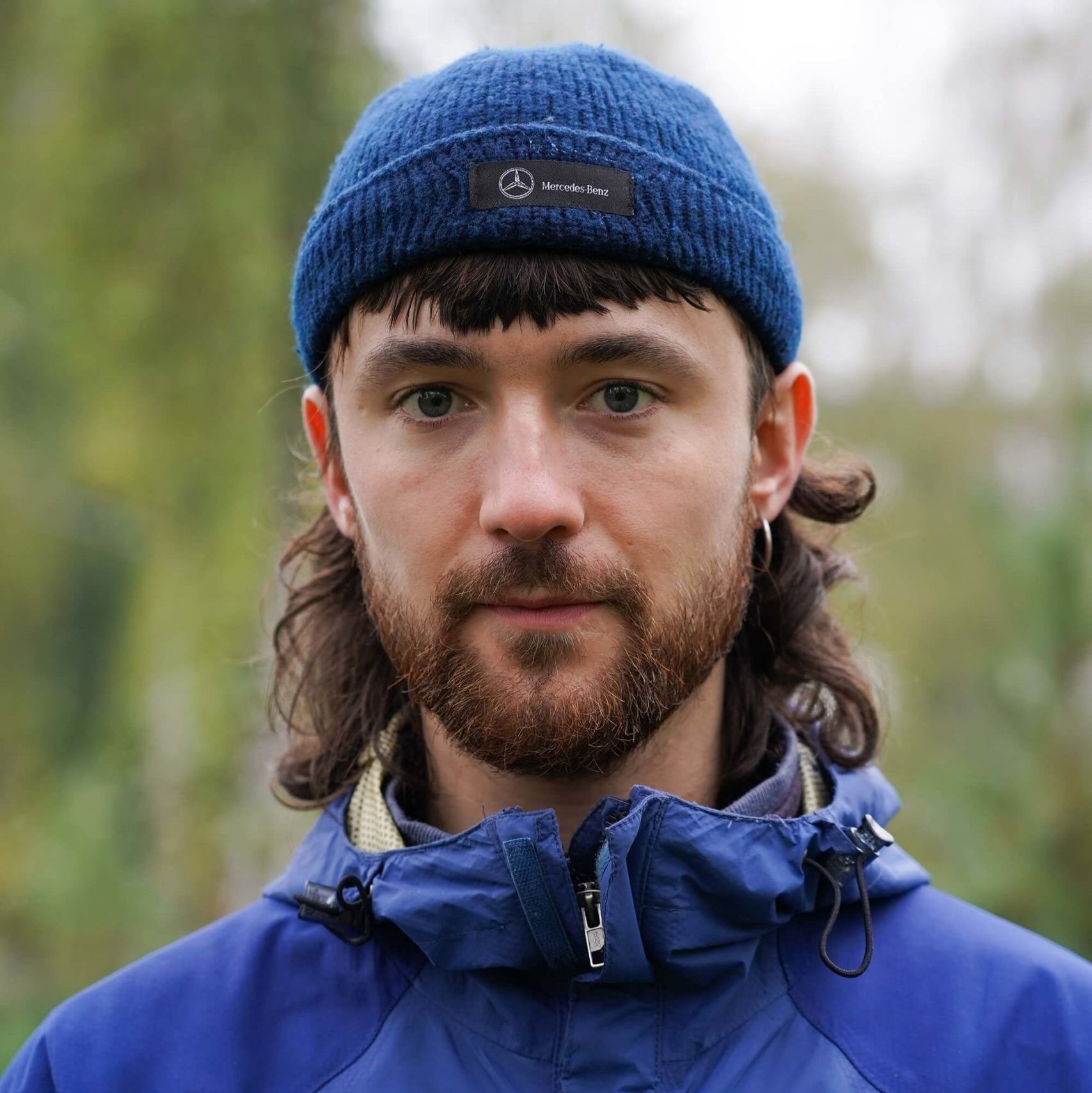
Keynote: Dr Jonathon Turnbull
Jonathon is a more-than-human geographer from Newcastle upon Tyne with a broad interest in the geographies of nature. He is an Assistant Professor of Human Geography at Durham University and a British Academy Postdoctoral Fellow. He lives between Newcastle in the UK and Vinnytsia in Ukraine. Jonny’s research examines how environmental knowledges are produced and contested across diverse geographical contexts from the Chornobyl Exclusion Zone in Ukraine to the rumen of livestock cattle in Europe and India. His PhD explored the ‘return of nature’ to the Chornobyl Exclusion Zone in Ukraine, the site of the world’s worst nuclear catastrophe of 1986. This work is currently being prepared for publication as a monograph, provisionally titled Radioactive Resurgence, which explores how the Zone has come to be understood simultaneously as a post-apocalyptic wasteland and a thriving nuclear nature reserve. Over three years of multispecies ethnographic fieldwork, Jonny accompanied scientists studying the Zone’s ecologies—from wolves to “radiotrophic” fungi—and participated in NGO campaigns to care for the dogs of Chornobyl. He employed a range of experimental and participatory visual methods, including photovoice and filmmaking. With a Ukrainian film crew, Jonny is producing a film on the dogs living in the Zone called Собаки Що Вижили (The Dogs That Survived).