Saving Halberton's Ancient Roman Environment
Saving Halberton's Ancient Roman Environment
Posted by Susan Greaney
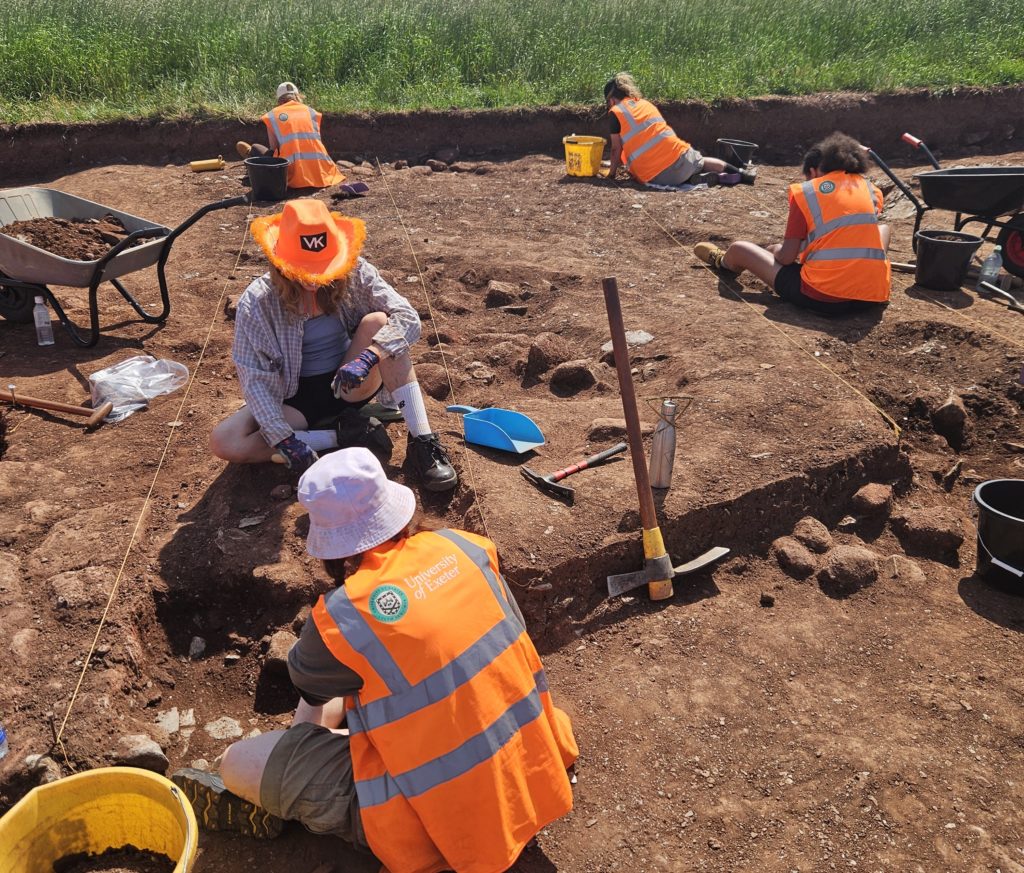
24 June 2026Now that the University of Exeter fieldschool has ended, we can update you on some of the key discoveries and finds so far.
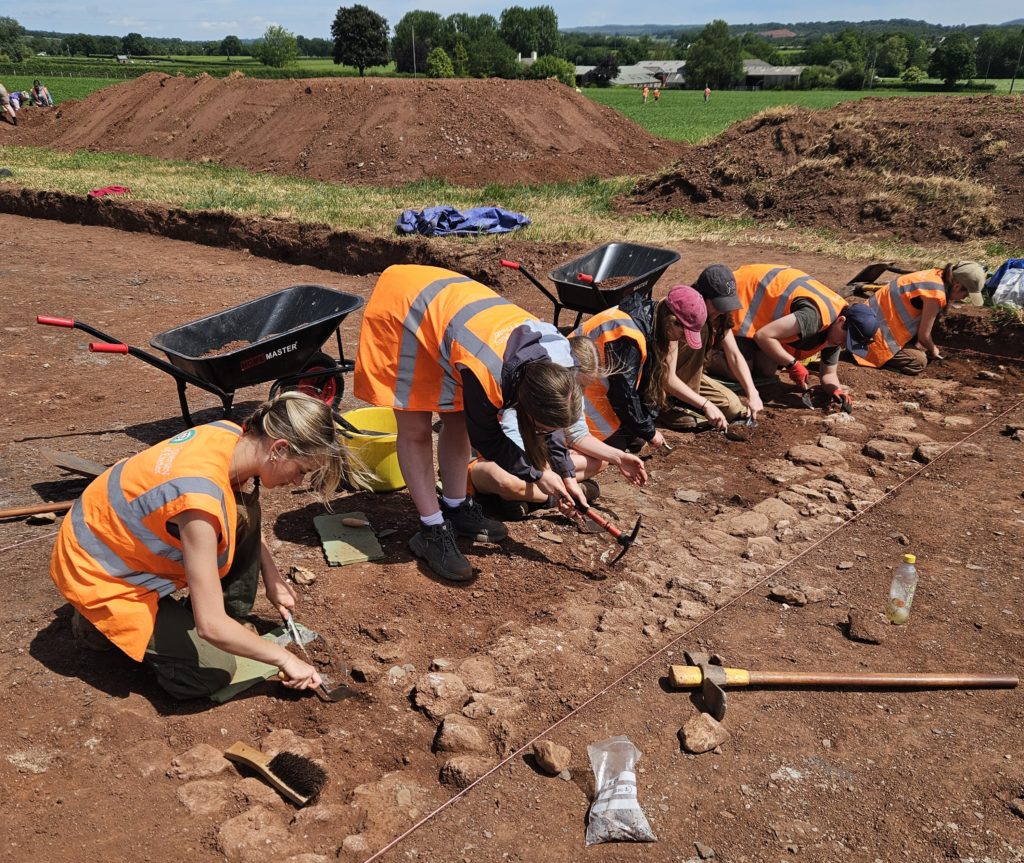
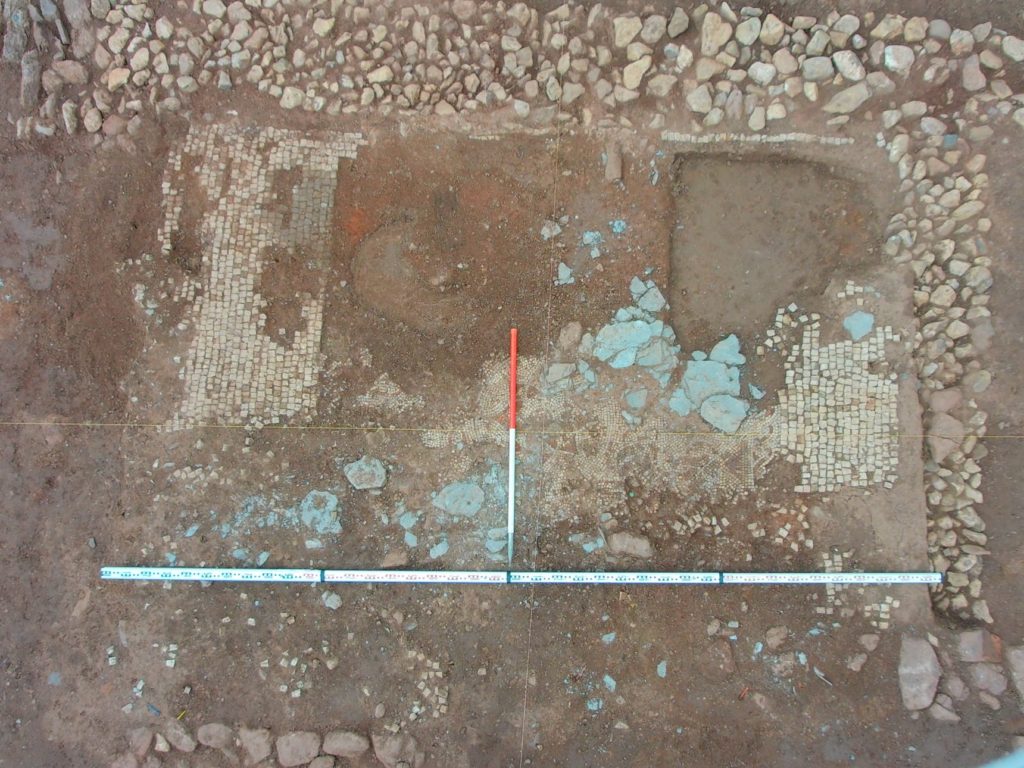
Despite the challenging weather, the students have worked hard to uncover the full layout of the villa building. We now understanding that the first villa was a modest rectangular structure with projecting wings at each end, but that over time it was extended several times – adding additional rooms to both the north and south ends, filling in the front portion, and building an entrance porch. At the rear of the building are some projecting walls and a deep gully probably to catch rainwater from a lean-to roof, perhaps covering storage areas.
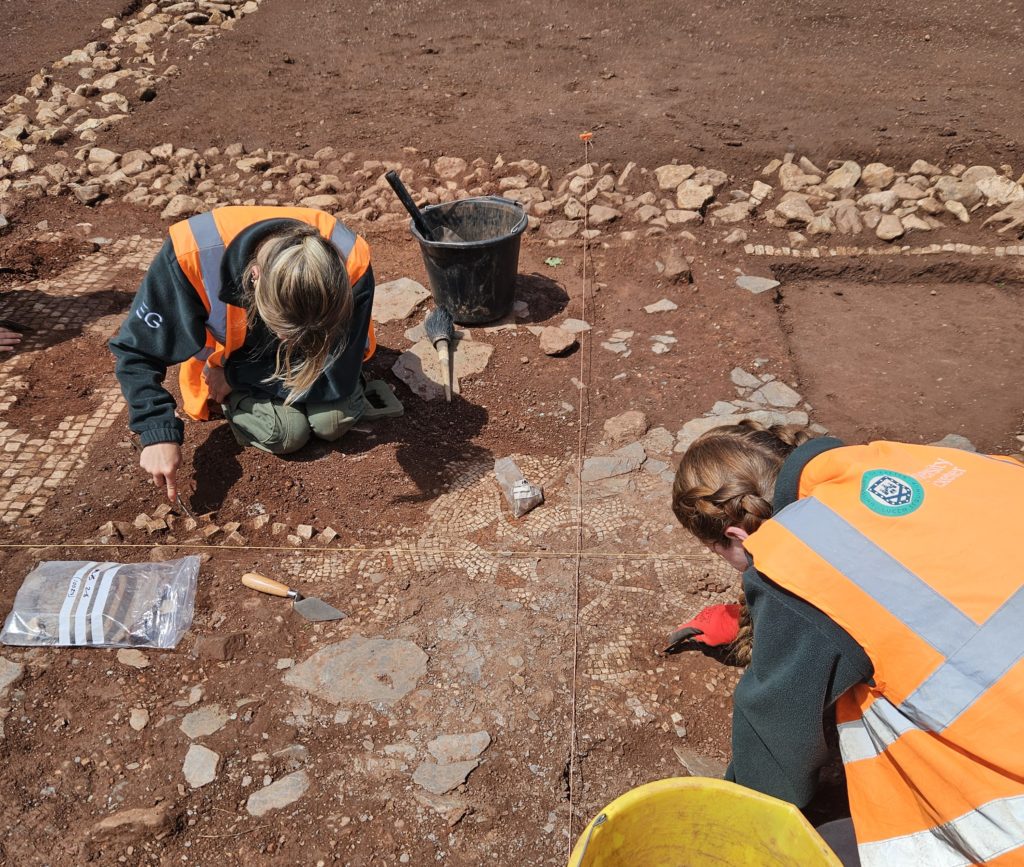
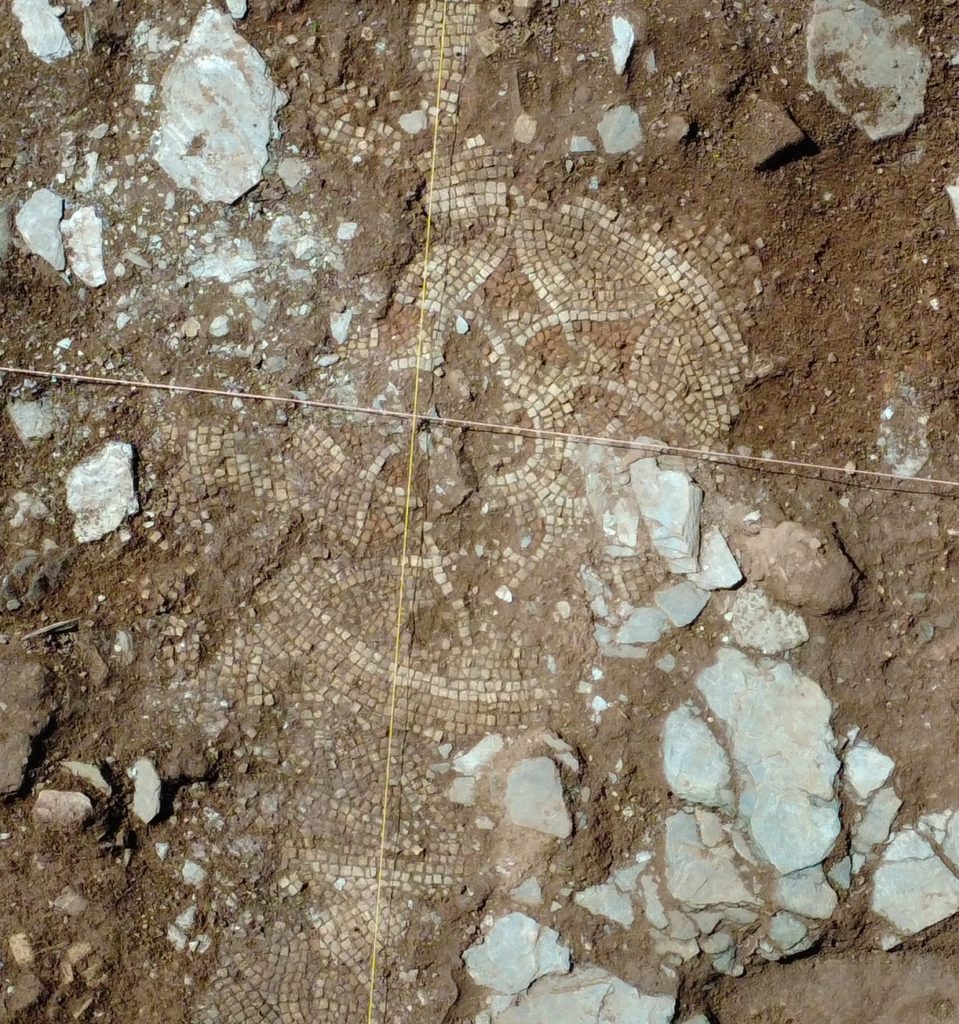
Some of the students were lucky to spend time uncovering more of our mosaic, which covered the floor of a small room, probably a dining room. This has revealed a well-preserved central roundel with a flower motif. The rest of the mosaic will be uncovered during the first week of the community excavations, and we’re currently planning for how to lift the mosaic to preserve it. The mosaic seems to be set into a layer of soil (perhaps any plaster or mortar has degraded) lying above the original floor surface.
To one side of the villa enclosure stood two further buildings. One of these contains a large water tank which was partly uncovered during the April excavations. We can now see that this was a rectangular tank but originally was square – at some point in the past the occupants had remodelled the walls to extend and narrow the tank. We think this is probably a plunge bath, although whether or not this building can be termed a ‘bath-house’ is yet to be determined. One of the big questions for the community phase is the full extent and form of this building.
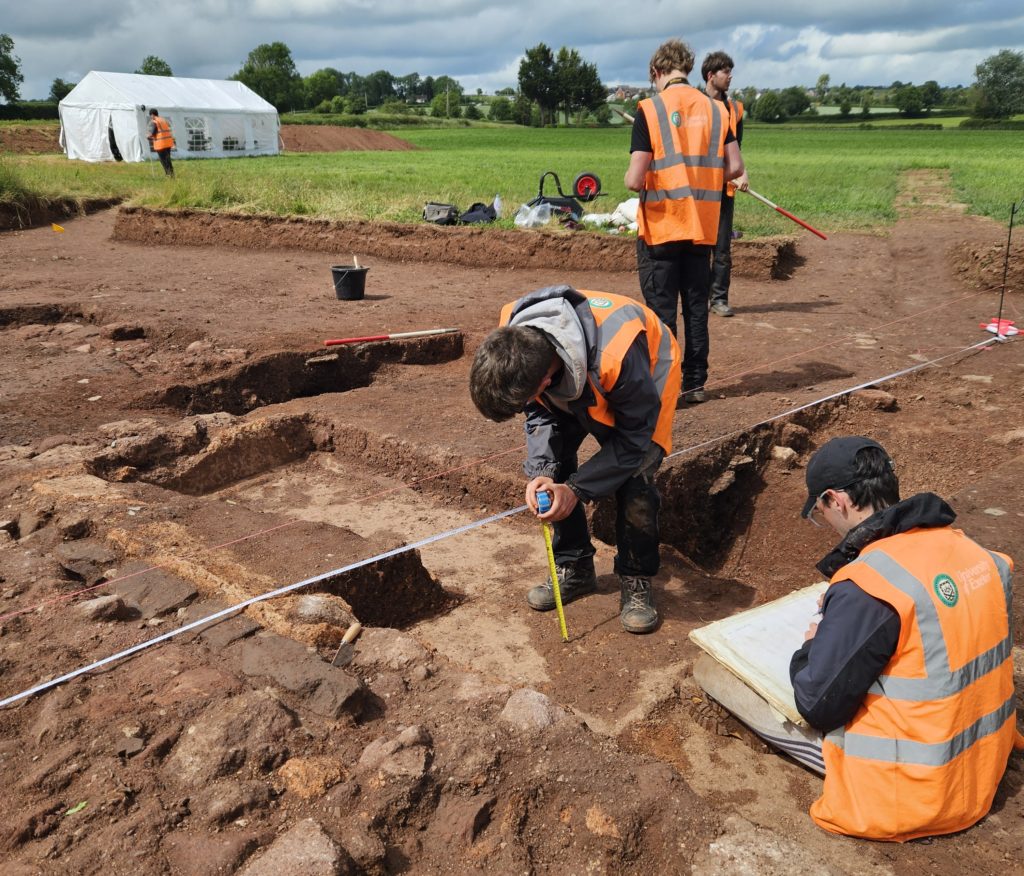
The other building in Area 2 is a long stone structure, which goes beyond the edges of our trench. This might be an agricultural or storage building of some kind. There seems to be a small additional structure added to this at the front, possibly in the post-Roman period, associated with a cobbled floor surface. In this area, the students have been finding a lot of animal bone, and antler, with signs of antler working, so perhaps this was a craft or butchery area.