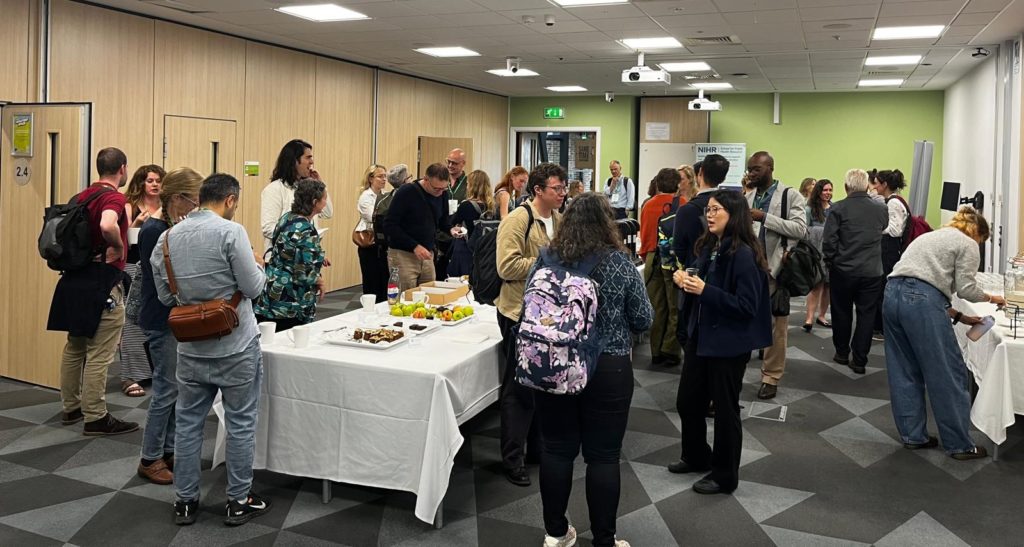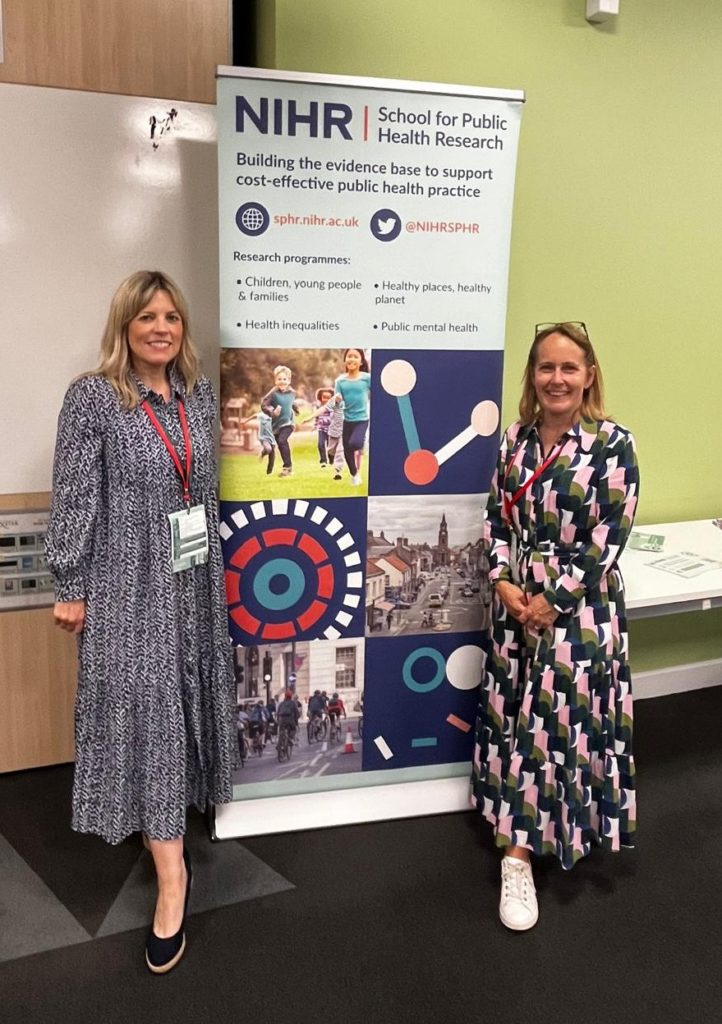
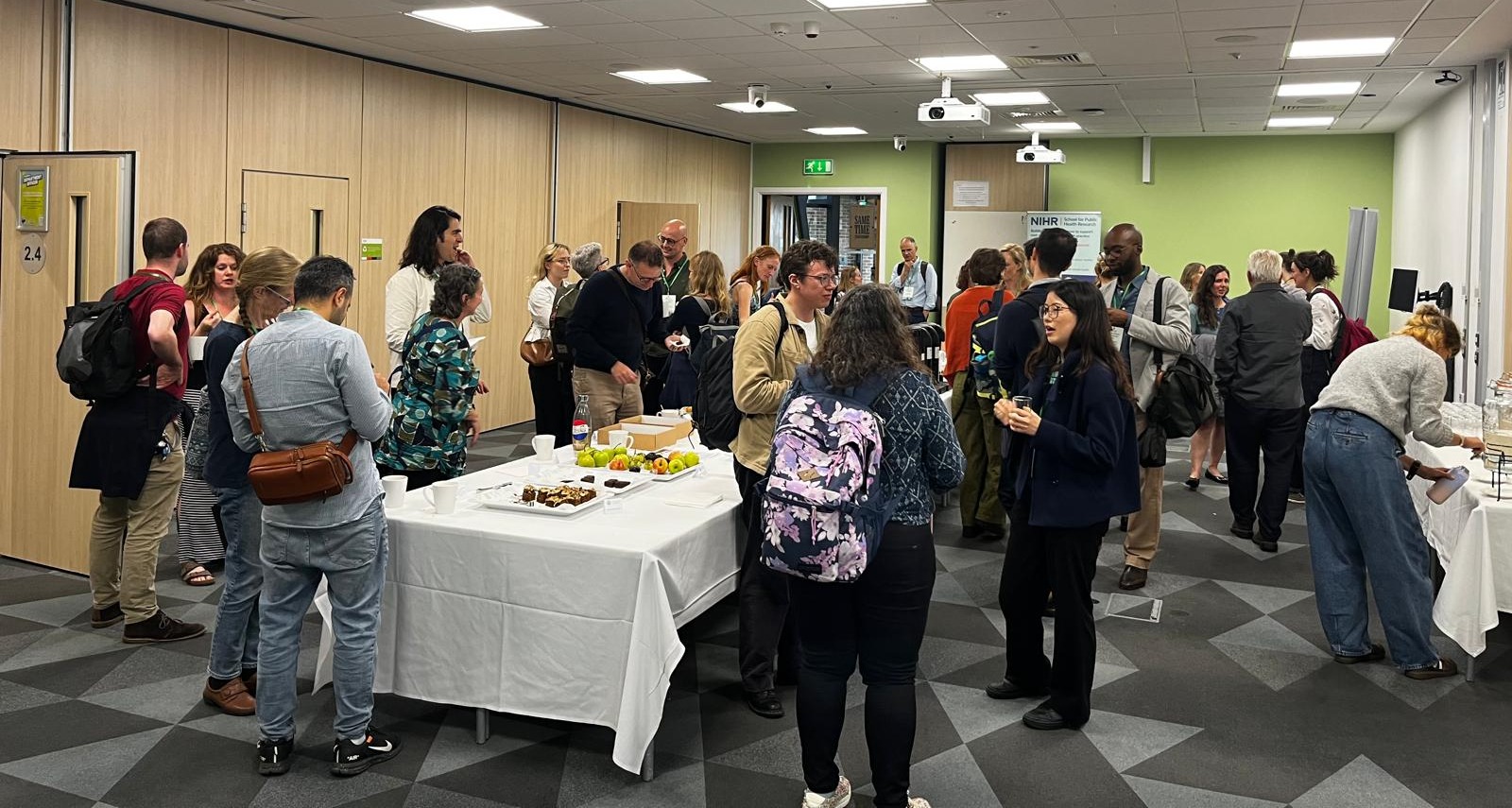
The 2026 SPHERE Annual Summer Conference marked an important moment for the SPHERE Team as we entered our fifth year as part of the NIHR School for Public Health Research (SPHR).
This event, in a change to previous years, was held on the University’s Streatham Campus at the Peter Chalk Centre. The success of last year’s conference meant we needed to find a larger venue than Exeter’s St James Park – which had kindly hosted us for the past few years, but which we have outgrown – and one that was also a little cooler!
As usual our Director, Professor GJ Melendez-Torres, welcomed attendees to the morning CPD sessions which kicked off with con-current workshops aimed specifically at third‑sector attendees. Workshop 1, ‘Quantitative Evaluation Methods’, led by Professor Obi Ukoumunne, offered an accessible introduction to how researchers use data to understand what works, for whom, and by how much, while Workshop 2, ‘Systems Mapping’, facilitated by Daniel Mutanda, guided participants through tools for visualising the complex systems that shape public health issues.
Following a delicious buffet lunch (networking optional!), University of Exeter academic colleagues joined for the afternoon conference which commenced with guest speaker, Dr Nicole Thomas, providing a clear overview of how the NIHR Research Delivery Network (RDN) supports researchers and communities across England. She explained that the RDN is made up of 12 Regional Research Delivery Networks working together as one, offering practical help at every stage of the research process.
Dr Abby Russell shared findings from the 4S Project, showing that self‑harm and suicide are major public health issues for young people and that schools and youth organisations often struggle with limited resources, stigma, and unclear roles when responding to these concerns. She highlighted what young people say they need most—trust, privacy, compassionate listening, and flexible support—and outlined emerging principles to help schools strengthen prevention and provide safer, more coordinated care.
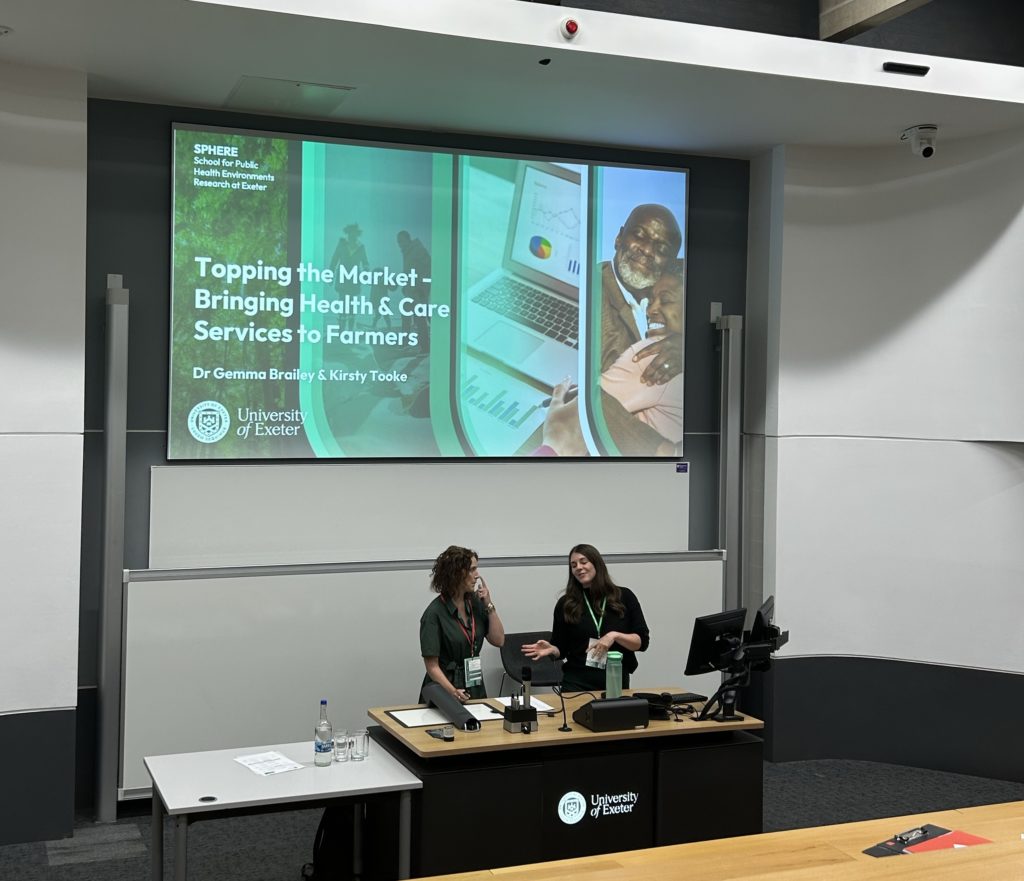
Dr Gemma Brailey and Kirsty Tooke presented ‘Topping the Market’, a programme bringing preventive health and wellbeing services directly to farmers by embedding a nurse‑led health hub within the Holsworthy Livestock Market, a trusted and central gathering place for the farming community. Their work shows how place‑based care, community partnerships, and local advocates can overcome major access barriers—reaching nearly 700 farmers to date and delivering life‑saving support in a sector facing high physical, mental health, and suicide risks.
Dr Sean Harrison outlined how AI is currently used in public health, showing that while AI tools are being explored across areas such as health improvement, evidence synthesis, and disease forecasting, there is very little reliable evidence that they are effective. He emphasised that future adoption must be cautious, as AI carries significant risks—including bias, inequity, misinformation, and loss of public trust—highlighting the need for stronger evaluation, regulation, and meaningful community involvement.
Our other guest speaker Justin Wen, who travelled all the way from Newcastle, presented a scoping review examining how public health resource allocation decisions are made within England’s Integrated Care Systems, highlighting that despite major structural changes and significant funding cuts, there is limited evidence on how data, tools, and evidence are actually used in these decisions. His findings show that decision‑making is shaped by financial, political, organisational, and relational factors, and he emphasised the need for further research on ICS processes, disinvestment, and improving the adaptability of evidence and tools to local contexts.
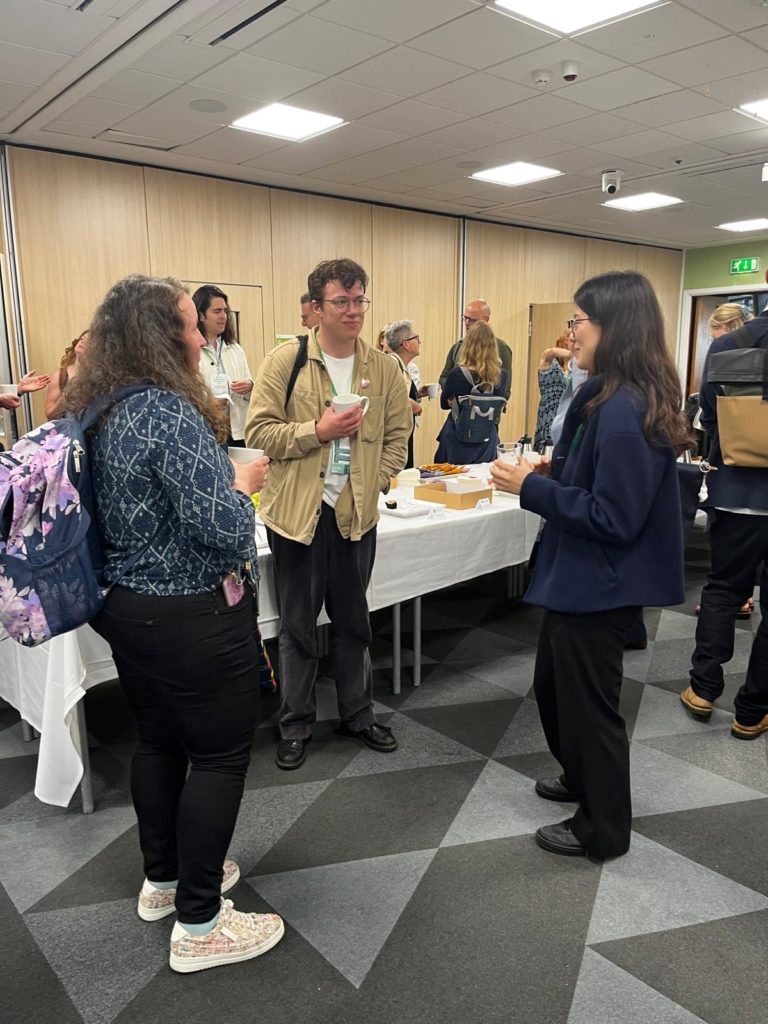
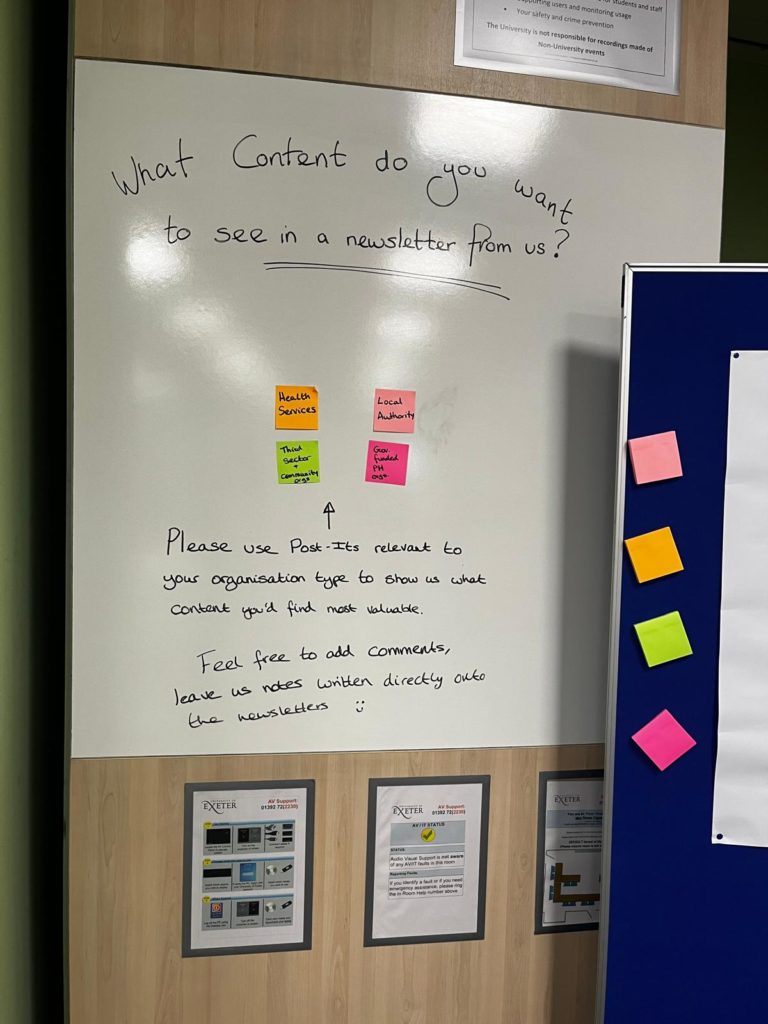
Following closing remarks by GJ, the conference drew to a close for another year with the SPHERE Team confident that it succeeded in its aim to bring together colleagues from local authorities, service providers, third sector organisations, community groups, and academic teams for a day focused on shared learning, collaboration, and practical skill‑building.
Welcome & SPHERE update
Professor GJ Melendez-Torres
Workshop 1: Quantitative Evaluation Methods
Professor Obi Ukoumunne
Workshop 2: Systems Mapping
Daniel Mutanda
What the RDN can do for researchers and communities
Dr Nicole Thomas
Support for self-harm and suicide in schools and youth organisations: findings and principles of practice
Dr Abby Russell
Topping the market: bringing health and care services to farmers
Dr Gemma Brailey and Kirsty Tooke
Understanding what works: evaluating voluntary sector action on health inequalities
Kath Wilkinson and Daniel Mutanda
AI in public health reviews
Dr Sean Harrison