
Landing in the UK as an international student can feel like stepping into a moving train. The accent is different, the weather has opinions and suddenly people keep asking “You alright?” (a normal British greeting), when you are very much not alright . But beneath the confusion, there is also excitement to grow into a new version of yourself.
Hi all! I am Anugrahaa from India, pursuing my Masters in Clinical Psychology at the University of Exeter. As an international student, adapting to the UK has meant juggling many small and big changes at once. From moving from teacher-led classrooms to independent learning, swapping my dosas for meal deals and late-night pasta, getting used to long, dark winters and figuring out how to build a social life from scratch was all really challenging. This blog is a reflection of what it really felt like to navigate teaching styles, culture, food, climate, exams and friendships while slowly creating a sense of home far away from home. Let’s walk through what adapting to university in the UK really looks like.
From chalkboards to critical thinking
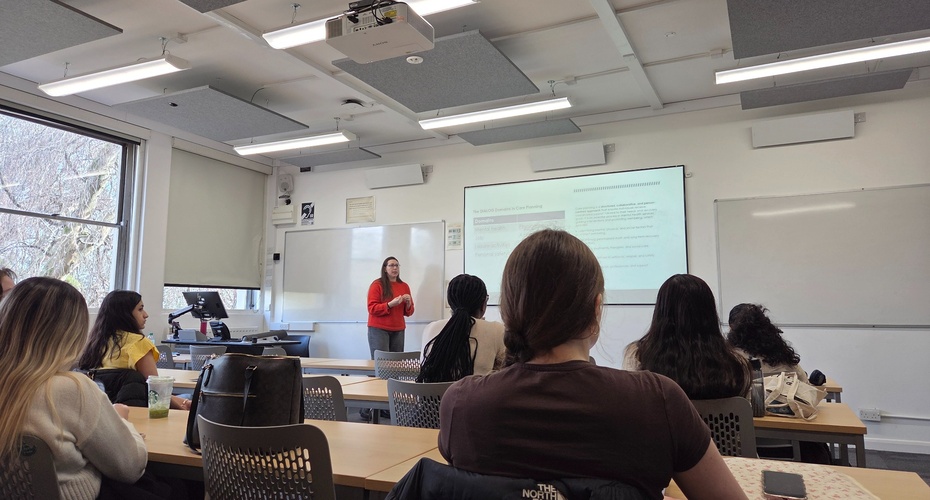
Back home, I was used to a more structured, teacher-led way of learning. Lecturers would explain a concept in detail, we took notes and exams tested how accurately we could recall and apply what we had been taught. They expected to have most of what is called “bookish knowledge” more than practical understanding. Whereas in Exeter, the academic culture felt very different yet eye-opening. The biggest shock was about the lecture hours as the timetable sometimes had only lectures for two hours a day. Back in India, be it at undergraduate or postgraduate level, students have a packed timetable that starts at 8 am in the morning and goes till 4 pm in the evening which was definitely draining. But here, since we had classes only for 2 hours or maximum of 4 hours a day, it gave us the breathing space to plan our day without much of a hassle. You aren’t drained after lectures and have a really good amount of time to come back home and do some assignment work.
Furthermore, the first time I saw a reading list that was given to be prepared for the class the next day, my immediate reaction was “Do they actually expect me to read all of this?” because for the first time, instead of being given exactly what to memorise, I was given resources and expected to make my own choices as to what to focus on, how deeply to read and how to connect it all. It made me realise that lectures often give you only an overview, not the full story. The real learning happens in your time reading articles, making notes, reflecting and then coming to lectures ready to discuss. The word “independent learning” is not just a fancy term, it is the core of how the education system here works.
As an international student, this shift took time to settle in. I had to unlearn and learn a lot of things that have been a part of my education journey. For example, I had to unlearn that my silence meant I was being “good” in class. In seminars, sitting quietly and just listening started to feel like I was half-present. So, I slowly pushed myself to ask simple questions, share my understanding of a topic if I wasn’t fully confident and admit when I didn’t understand something. What helped the most was realising that in the UK, lecturers often expect you to question them. You are not being disrespectful by disagreeing rather you are showing that you are engaging critically. It felt strange at first, coming from a context where the teacher’s word holds absolute weight but overtime it became freeing.
Culture shocks: the small things no one warns you about
People often talk about “culture shock” like it is one big moment, but in reality it’s a series of small everyday puzzles. One of the first things I noticed was how indirect people could be. Back home, someone might just outrightly say “Please close the window, it’s cold”. Here, it might be, “It’s a bit chilly in here, isn’t it?”. At first, I missed the hint completely. Only over time did I realise that this kind of polite, indirect way of speaking is very common here.
There were other small cultural adjustments too, for example, the classic “You alright?” doesn’t always mean “Are you okay?”, but also can mean “Hi, how are you?”; the importance of queuing and how seriously people take it; and the way humour often involves sarcasm or sometimes self-deprecation. Coming from the south of India, where conversations are often more direct and expressive, this felt subtle and confusing. I was worried about saying the wrong thing or not understanding a joke. But watching, listening and asking when I was confused helped more than trying to pretend I understood everything. Over time, I have learned to see these differences not as “right” or “wrong”, but simply as different culture codes. Once you start decoding them, things feel a bit less intimidating.

Food: between homesickness and new taste
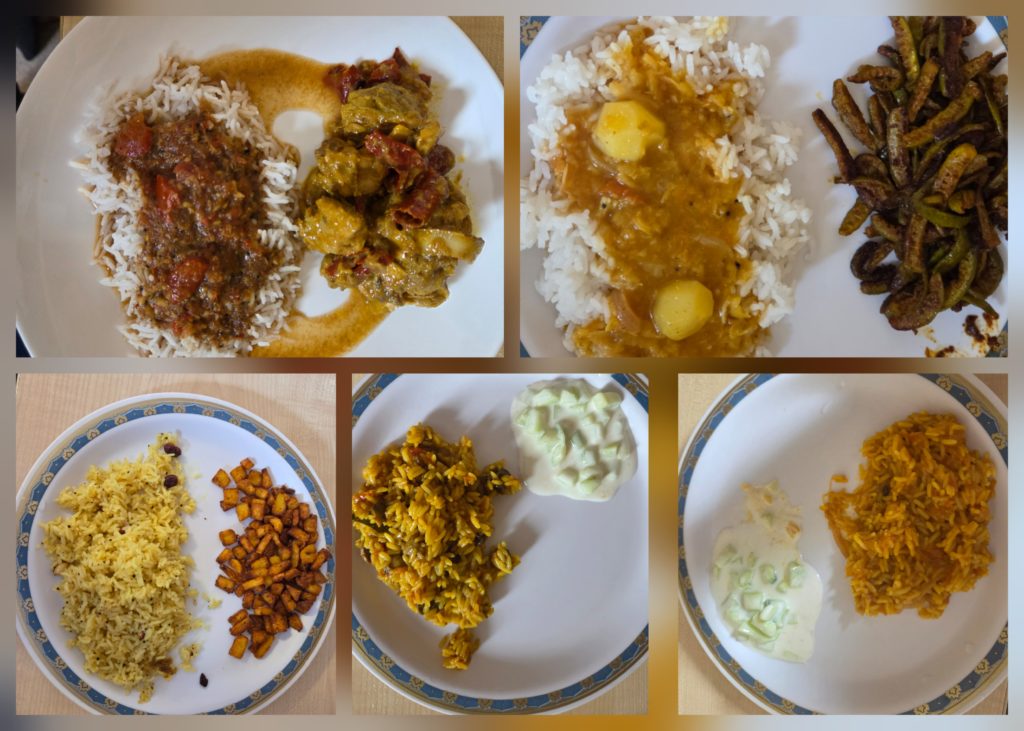
Food was one of the quickest ways I felt the distance from home. Back home, my days were anchored by the smell of filter coffee, dosas and a bowl of sambar and rice, a staple in Tamil Nadu. Suddenly in the UK, I was surrounded by sandwiches, wraps, pizza, pasta and oven food, which was quick and convenient but not exactly comforting.
At first, I underestimated how much I’d miss home food. But it hit me the day I returned from University to a cupboard that had only cereal, biscuits and a jar of pasta sauce. That was when I realised, if I wanted the taste of home, I’d have to recreate it myself. Since then, I have been mostly cooking Indian and to be honest it is one of the simplest and easiest to cook, especially when you have early lectures. The best part is you can store them for days and it will still taste amazing. But Indian ingredients were more expensive and harder to find, but I learned to adjust. Most of the ingredients were available in shops located at the city centre like Heera, Mavise, Best One and Mesopotamia. Sometimes, the food I cooked would never taste like my mom’s cooking, but there was something comforting about making myself a familiar meal after a long day.
Food also became a way to connect with people too. Sharing homemade food with friends, explaining what it is and how we eat it back home or what it reminds me of, turned into a bridge between cultures. On some nights, we’d mix up things completely and end up having biryani on one side of the table, pasta on the other and dumplings in between. Of course, there were also days when I survived on instant noodles or supermarket meal deals. Adapting doesn’t always have to look perfect. It’s a mix of improvising, learning, and accepting that some days you will cook and other days you will just do your best.
Climate: when weather becomes a personality test
If you have grown up in India, you are used to heat, humidity and fairly bright days for most of the year. The UK climate, especially in autumn and winter, is a different experience altogether. The first time I saw how early it got dark in winter, I was genuinely startled. By late afternoon, it already felt like late evening. The constant grey skies, the rain that appeared out of nowhere, the cold that somehow felt sharper than the number on the weather app, all of it took a mental and physical adjustment. I noticed that my energy dipped more in the darker months. I felt more tired, less motivated and sometimes a bit low without any obvious reason. That’s when I realised that the weather here doesn’t just change how you dress, but it can also quietly influence how you feel.
Since the weather had no effect on class hours, I had to walk to the university despite the changes in weather. So, I had to build habits around this. Investing in layers rather than one heavy jacket, using warm lighting in my room to make it feel cosy, trying to go out during daylight for a short walk and allowing myself slow, quiet evenings without judging myself for not being productive, all helped in the process of adapting to the weather and the lifestyle changes that came with it. Over time, I stopped seeing the grey as something to fight and started seeing it as a part of the rhythm of the year. Spring suddenly became more precious, the first sunny day after months of cloudy weather felt like a celebration. The climate still isn’t my favourite part of living in the UK, but I have learned to live with it and in some ways live around it.
I also found that having little things to look forward to made the darker months feel easier. Exeter itself gives you plenty of reasons to step outside even when the weather isn’t exactly inviting. During the festive season, walking through the city centre to see the Christmas lights, visiting the Exeter Cathedral Christmas Market or simply stopping somewhere warm for a hot chocolate made winter feel a little less gloomy. The University also has seasonal activities and events through the Students’ Guild, which gave me reasons to leave my room and spend time around other people rather than retreating indoors every evening. Exeter’s winter atmosphere is surprisingly cosy once you stop expecting it to feel like home.

Study techniques: from working hard to working smart
As an international student, I came with a strong habit of working hard that included long study hours, detailed notes and serious focus before exams. But in the UK, I realised that working hard alone wasn’t enough. I had to work differently. The types of assignments I was given here were mostly critical essays, reflective essays, research reports and group projects that demanded more than memorisation. So, I had to learn new habits like reading widely but not drowning in every source, taking notes in my own words rather than copying sentences, building arguments and not just stating information, and connecting theory to real-world examples or cases. One of the biggest changes was learning to plan ahead. With fewer exams and more coursework, deadlines had a way of clustering together. To submit on time, I started:
- Breaking each assignment into smaller tasks, understanding the question, reading, outlining, drafting and editing
- Using a calendar or planner to map out when I should do what
- Starting earlier than I felt “ready”, just to give myself time to think and not panic.
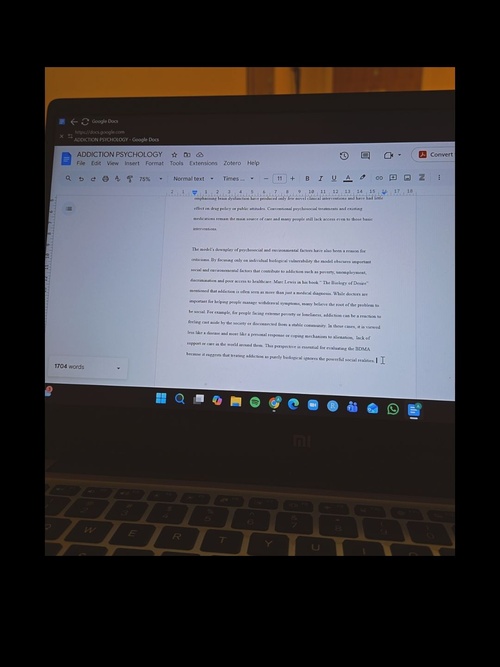
I also learned that revision for exams was less about repeating notes and more about understanding patterns. Knowing what the main concepts are, how they relate or differ and its application was more important than just memorising. Once I shifted my mindset from “I must remember everything” to “I just understand enough to explain, compare and apply”, studying felt more purposeful and less mechanical.
Assessments and feedbacks
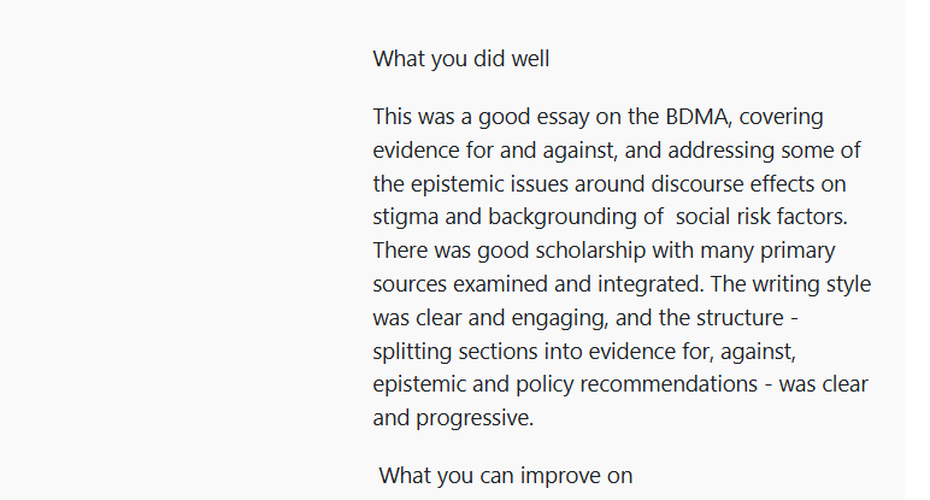
Assessments were another area where I had to adjust. Back in India, marks were considered the sole assessor of how you performed. If you get below 70, it’s considered average or sometimes below average. So most of them just focused on getting good marks rather than on understanding and gaining knowledge. But here in the UK, along with marks I received detailed feedback comments on work I submitted. At first, all I saw was the grade at the top. But over time, I realised the real value was in the lines below it. The strengths, the weaknesses, what can be done better the next time, all proved to be very helpful in understanding where I was going wrong and how I could improve my writing. Understanding the marking criteria helped me understand better what should be included and what should not. With each piece of feedback, I tried to identify patterns. Was I consistently losing marks on structure? On not being critical enough? On weak introductions or conclusions? Treating feedback as information rather than judgment helped me grow more, and also reduced some of the anxiety around grades.
Social life: between comfort and courage
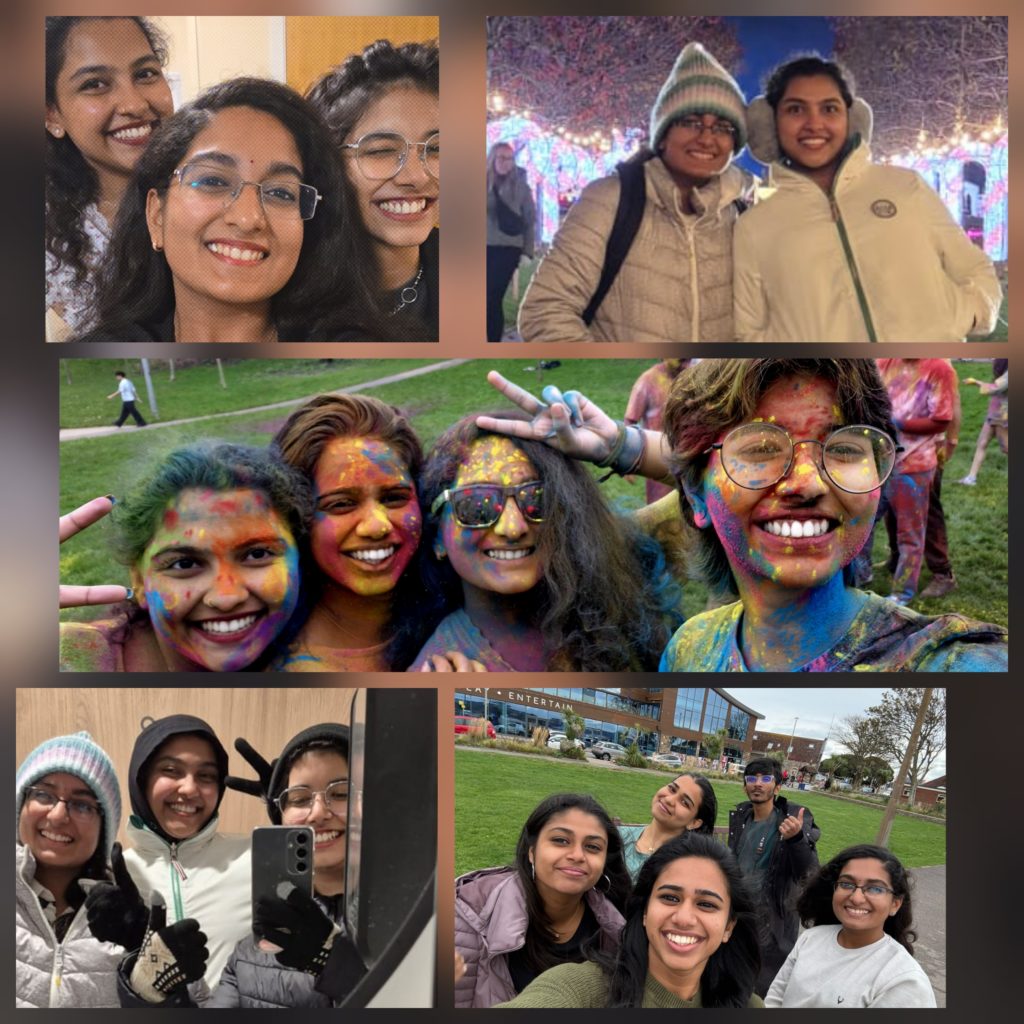
Socialising is one of the areas where the experience of being an international student in the UK can be both comforting and challenging. It’s very natural to gravitate towards people from your own culture or country. There is an ease in speaking your language, sharing jokes that don’t need explanation, complaining about the weather in a familiar way or cooking together. For me, Indian friends became an early anchor. We understood each other’s references, family expectations and academic pressures without needing long explanations.
At the same time, I realised that if I stayed only in that comfort zone, I would miss out on a big part of the international experience. So, I gently pushed myself to talk to classmates after lectures or in groups, join societies that matched my interests not just my nationality, attend events, be honest about my background and ask others about theirs. Some conversations were awkward. Not every “We should grab coffee” turned into an actual meeting. But over time, a few of those quick chats turned into study partners, lunch breaks, or friendships.
Language and accent were their own journey. I sometimes worried about being misunderstood or judged for how I spoke. But the more I interacted, the more I saw how many accents there are on a UK campus – British, European, African, Asian, American, and more. Everyone is navigating their own version of being understood. That realisation took away some of the pressure.
Identity, homesickness, and the quiet in-between
Adapting to university life in the UK isn’t just about learning new systems, it’s also about managing emotions that don’t always have clear names. Homesickness, for example, doesn’t always look like tears. Sometimes it’s a sudden craving for a festival atmosphere, the sound of your mother tongue in the background, or the comfort of being surrounded by people who just “get” you without trying. There were days when I felt completely fine, and others when a simple WhatsApp call from home made my chest tighten.
Over time, I came to accept that missing home was not a sign that I was failing to adapt. It was a sign that I had strong roots. I allowed myself to miss home, and at the same time, allowed myself to grow new routines and relationships in the UK. There’s also a subtle identity shift that happens. You start to feel like you belong to two places at once, and fully to neither. Back home, you may begin to be seen as “the one who’s abroad now.” In the UK, you’re “the international student.” It can be disorienting, but it can also be powerful. You learn to hold multiple perspectives, navigate different cultural spaces, and build a more layered sense of who you are.

Using support: strong doesn’t mean silent
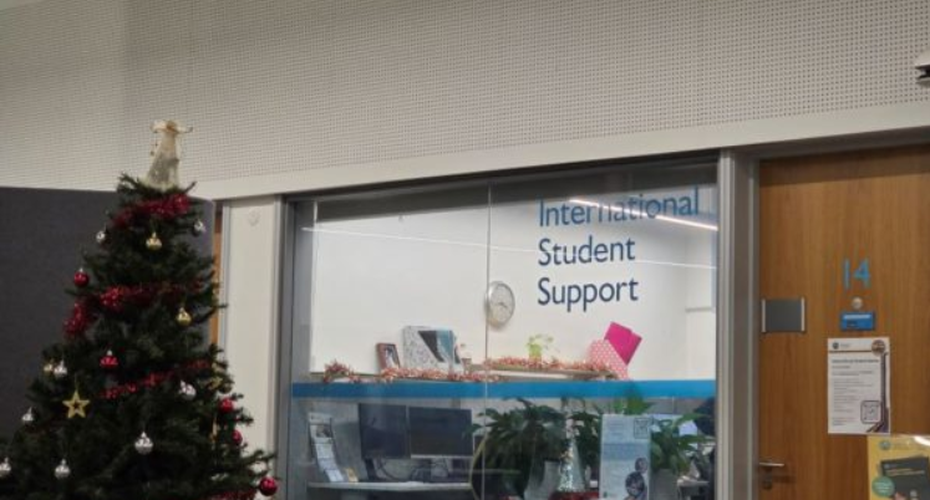
One of the most important lessons I learned is that being “strong” as an international student does not mean doing everything alone. Universities in the UK usually have a range of support services like academic help, mental health counselling, international student advisors, but it can feel intimidating to use them. Coming from a culture where asking for help can sometimes be seen as weakness, I had to consciously challenge that belief. Booking a study skills workshop or talking to a counsellor didn’t mean I wasn’t coping. It meant I was taking my wellbeing and education seriously. Each time I reached out for support, the process felt a little less scary. And each time, I realised there were many other students from the UK and abroad facing similar struggles. There is comfort in knowing you’re not the only one trying to learn how to write a literature review, manage finances, or balance homesickness with coursework.
Growing into a new version of myself
Looking back, adapting to university life in the UK as an international student wasn’t a neat, linear journey. It was messy, human, and full of contradictions. There were weeks when I felt confident and independent and others when I wanted nothing more than to go home and eat a proper home-cooked meal. Yet between those ups and downs, something important happened. I learned to think more critically and independently, live with a new kind of weather and rhythm, cook for myself and others, navigate different cultures with more sensitivity, ask for help when I needed it and most importantly hold both my Indian identity and my evolving global experiences together.
Studying in the UK hasn’t replaced where I come from, it has added another layer to who I am. I’m still rooted in South India, in its languages, food, stories, and values. But I now also carry the lessons of cold mornings, critical essays, diverse friendships, and quiet, rainy walks back from the library.
If you are an international student thinking of coming to the UK, or already here and still finding your footing, you don’t need to have it all figured out. Adaptation is not about becoming someone else. It’s about slowly expanding the space inside you to hold both where you come from and where you are now.