
Every year, the SDG Teach In, run by Students Organising for Sustainability UK (SOS-UK), brings the United Nations Sustainable Development Goals (SDGs) into teaching, learning, and wider university life.
This year’s SDG Teach In at Exeter was a big success, involving hundreds of students and staff across our campuses giving us some impressive stats!
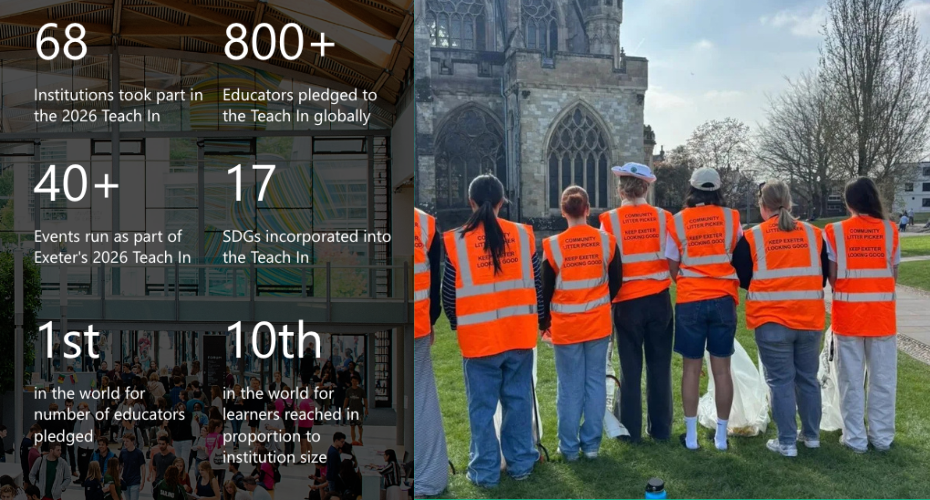
Exeter’s SDG Teach In 2026 in numbers
Not only did Exeter have over 40 events running as part of the Teach In, incorporating all 17 of the SDGs, we also had dozens of educators from all across the university pledging their teaching and events, allowing us to reach hundreds of people across our campuses.
As a result, we came 1st in the world for most educators who pledged to the Teach In, and 10th for learners reached in proportion to institution size in SOS-UK’s final leaderboard rankings!
At the University, this year’s campaign included a wide range of events and activities throughout March. Among them were many student-led initiatives that showed how sustainability can be explored in very different settings and communities.
Here, we are highlighting two inspiring examples of student-led activities that have engaged students with the SDGs this month: the Business and Finance Society (BFS)’s Exeter Future Leaders Summit, and the Athletic Union (AU)’s brand new ‘Bleed Green Sustainability League’ competition.
These initiatives took different forms and engaged different student groups, approaching sustainability in their own way, showing how student leadership can make sustainability feel like a relevant, fun and practical part of everyday university life, especially to the students across the university.
Exeter Future Leaders Summit
On 6 March, the Business and Finance Society hosted the inaugural Exeter Future Leaders Summit, a full-day conference that brought together more than 300 students and over 15 industry leaders for keynotes, panels, workshops, and networking (an impressive feat!).
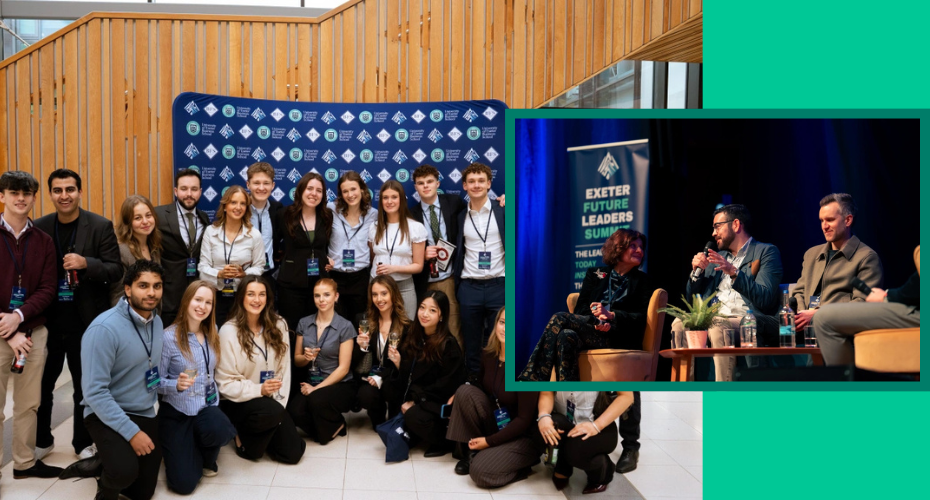
Sustainability wasn’t bolted on as an afterthought. It opened the day. The panel Shaping Tomorrow’s Sustainable World featured Harriet Lamb CBE, Kamel Hothi OBE, Greg Rahilly, and George Roffey, and took on the question of how big ideas actually translate into real action across finance, policy, and corporate culture.
The student response said it all. One of the attendees reflected:
My favourite panel was the Sustainability Panel. I got to hear from professionals including the CEO of the Green Party, which was incredible, and there was such an insightful conversation about sustainability, business culture, and even the importance of B-Corps. They had the Co-Chair of B Lab UK on the panel too.”
“ Another described “Shaping Tomorrow’s Sustainable World” as a highlight and spoke about how it made them view leadership as “making your own change in your own way.”
I think what made this work so well was the context. Students were already excited to be at the Summit. Sustainability became part of that conversation, not a separate agenda, but something woven into discussions about careers, strategy, and what leadership actually looks like.
Widening participation was also a key priority for BFS. The society successfully applied for funding from the Sustainability Projects Fund, which helped subsidise ticket costs and reduce financial barriers, enabling more students to attend and engage with the conference.
Bleed Green Sustainability League
Meanwhile, the Athletic Union launched something quite different: the Bleed Green Sustainability League, running all the way through 4th to 29th March as part of the Teach In. The concept was simple: take the competitive spirit that already runs through sport at Exeter and channel it into sustainability.
Seven sports clubs took part in the League: Women’s Rugby, Women’s Football, Climbing, Cycling, Karate, Boxing, and Cheerleading, each bringing sustainability into their own training environments and team cultures.
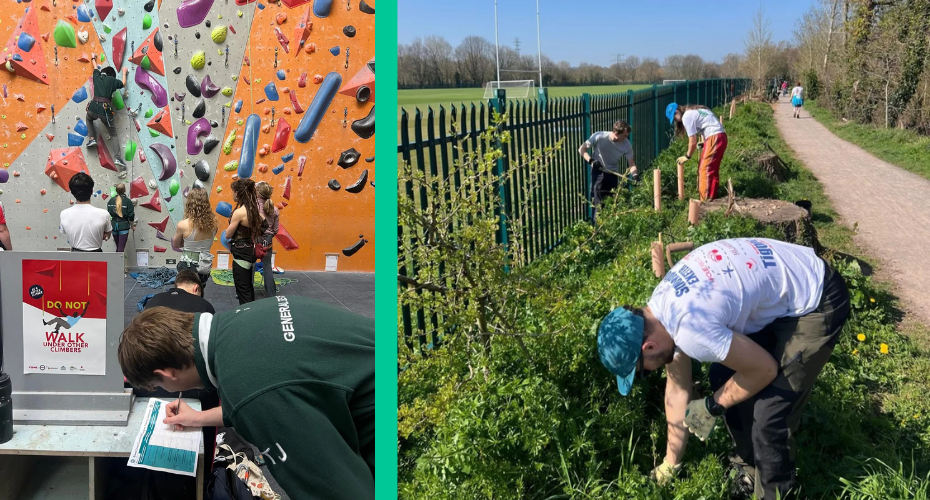
Right: 25 members of the university Climbing, Cycling, and Football Clubs helped to plant trees at Duckes Meadow
Clubs recorded sustainable actions during training sessions across the month, with points awarded through a tally system that reflected the choices students were already making. Importantly, scores were calculated as a percentage of members participating in each action, ensuring fair competition between clubs of different sizes. For example, smaller clubs such as Boxing could compete equitably with larger clubs like Rugby. Weekly leaderboards kept the momentum going, and there were bonus points up for grabs for clubs sharing photos and tagging the University’s sport and sustainability accounts. Clubs were also encouraged to appoint their own student sustainability leads and organise additional events if they wanted to go further.
What’s striking about the League is how little it asked students to change. It didn’t pull anyone out of their routines. It brought sustainability into training sessions, committee roles, and team culture. This made it easier for students to engage, as sustainability actions were integrated into activities they were already doing, such as bringing reusable water bottles, choosing active or shared travel to training, reducing waste, or reusing sports kit. By embedding these actions into familiar settings, the initiative lowered barriers to participation while still creating meaningful impact.
It’s also a reminder that sustainability initiatives can be fun. A clear structure and some friendly competition were enough to make this competition a success. The League also included a range of student-led activities beyond training sessions, such as litter picks at the Quay, charity shop socials, bike maintenance workshops, tree planting at Duckes Meadow, and plant-based team meals. These activities not only supported environmental goals but also strengthened community engagement and collaboration between clubs.
Each aspect of the competition was designed to align with specific Sustainable Development Goals. For example, actions such as reusing kit and reducing waste contributed to SDG 12 (Responsible Consumption and Production), sustainable travel choices supported SDG 11 (Sustainable Cities and Communities), and activities like litter picking and tree planting linked to SDG 15 (Life on Land). Efforts to reduce plastic use and protect waterways also connected to SDG 6 (Clean Water) and SDG 14 (Life Below Water). By linking everyday actions to global goals, the League helped students better understand the real-world relevance of the SDGs.
Sustainability and the SDGs Across Student Life
These two initiatives reflect the range of ways that sustainability can, and did, take shape during SDG Teach In. In one case, it was part of a major student conference focused on leadership and careers. In the other, it became a month long sporting competition built around everyday action. Both were student led. Both found ways to connect sustainability to communities that already existed. Both helped show that sustainability has a place across university life.
That is one of the most encouraging things about the SDG Teach In at Exeter. Sustainability does not belong to one subject area, one team, or one type of event. It can be explored through conferences, campaigns, competitions, workshops, conversations, and more. These examples are a reminder of the creativity and commitment that students across the university bring to that work, and of the many ways sustainability and the SDGs can be embedded across our diverse campuses.
Blog written by Joseph Bacon (Responsible Futures Lead Intern)