
By Katherine Ashbullby, Erin Rowe, Aaliyah Anderson
As part of the Green Seeds programme at Exeter, we recently brought together staff and students from across the University for a LEGO® Serious Play® workshop exploring pro-environmental behaviours and the beliefs that shape them. The session created a unique space where people from different disciplines, years of study, roles, and levels of seniority could come together as equals. Using LEGO models as a tool to think, reflect, and communicate, participants explored their own experiences of trying to live more sustainably and the factors that support or hinder these efforts.
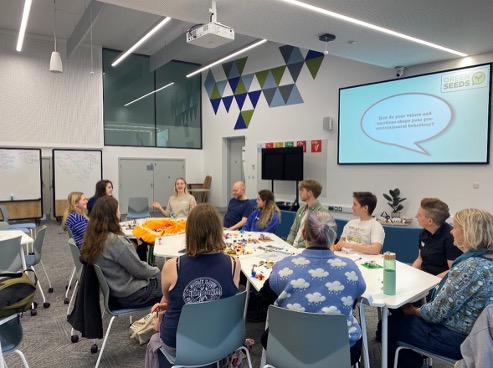
Green Seeds is a monthly informal session designed and run by student interns in the Sustainability Team, Erin and Aaliyah. It aims to create an inclusive, interdisciplinary space where students and staff can have open discussions on a range of sustainability and social justice topics and develop resilience and skills for a changing world.
In March, Sustainable education interns Erin and Aaliyah collaborated with Katherine Ashbullby, Senior Lecturer in Psychology, on a hands-on session using LEGO Serious Play ® open to students and staff from all disciplines and parts of the University. This event was run in collaboration with the Education Incubator team in their Exploration Lab, a space in Forum created to encourage innovative collaboration amongst staff and students; perfect for hosting this new, exciting Green Seeds session.
As March marked Women’s History Month, we also took the opportunity to celebrate the women whose contributions have shaped our understanding of sustainability, highlighting the work of figures such as Eunice Foote and Elinor Ostrom and using their achievements to enrich discussions and encourage reflection on how our understanding of sustainability has evolved. Foote’s pioneering discovery of the greenhouse gas effect in 1856 and Ostrom’s groundbreaking work demonstrating the power of community-led approaches to managing shared environmental resources highlighted both the historical foundations of climate action and the ongoing need for collective responsibility.
Reflecting on these contributions helped participants consider how far society has come, where progress is still needed, and why initiatives such as Green Seeds are so valuable in empowering individuals and communities to take meaningful action towards a more sustainable future. This provided a strong opening to the session as it reminded us that the individual and collective action we are taking in the workshop can contribute meaningfully to addressing climate change, while highlighting the intersectionality of gender justice and environmentalism.
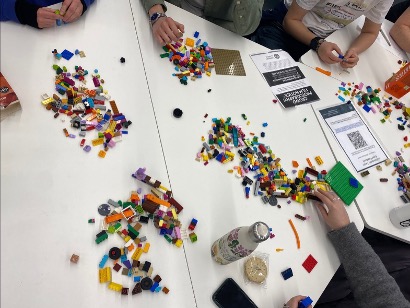
LEGO served to explore and materialise how performing pro-environmental behaviours made us feel. What stood out most was the passion and engagement in the room. Participants shared personal stories about a wide range of behaviours, from choosing more sustainable travel options to reducing meat consumption and making changes at home and at work. Alongside successes and positive stories, people spoke openly about the challenges they face, the trade-offs they navigate, feelings of guilt and the barriers that can make sustainable choices difficult.
This led to important conversations on the obstacles to performing some sustainable behaviours, and the need to focus on what we can do within our spheres of influence. Many included steps within their LEGO creations to show how they are trying to take ‘small steps’ to live more sustainably and recognise that, while these actions might not have an enormous impact on their own, they can add up to create positive change and are still worth doing.
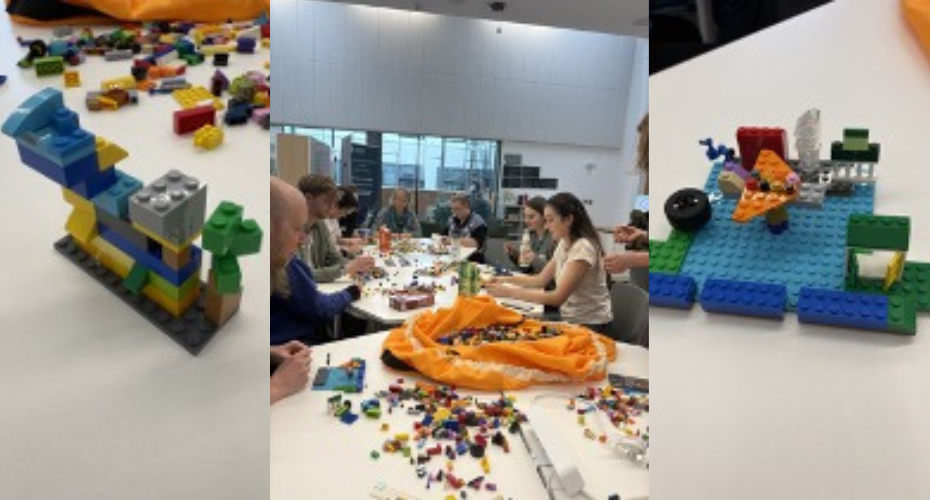
After the session itself, participants continued to reflect on their environmental behaviours and conversations continued outside of the space in which they began . For instance, one person later shared that the session ‘pushed me out of my comfort zone and made me think about new sustainable habits that I may want to implement in my life. I felt inspired by others to be more sustainable.’
Attendees also had positive reflections on the format and facilitation, with many sharing that they ‘really enjoyed the relaxed atmosphere and the opportunity for open discussion, which made it feel very engaging.’
The LEGO models helped bring these experiences to life, enabling rich conversations that might not have emerged through more traditional discussion formats. The workshop highlighted not only the diversity of experiences across our community but also the shared commitment to creating positive environmental change. It was inspiring to see participants connect with one another, learn from different perspectives, and reflect on how individual actions contribute to broader sustainability goals.