
By Megan Haslam
It’s hard to believe that just a year ago, the Repair Café at the University of Exeter was just an idea. Looking back now, after four events and a full academic year, I feel incredibly proud of what we’ve built – not just in terms of impact, but in the sense of community that has grown around it.

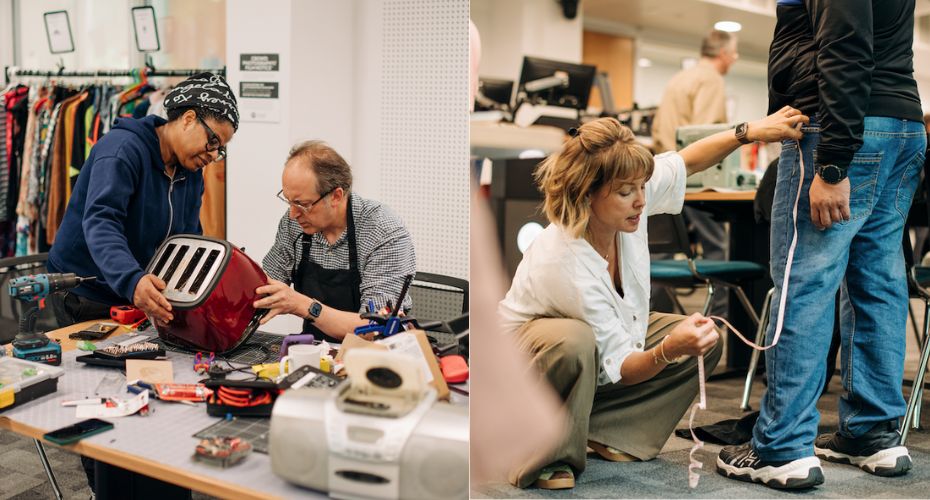
Our very first event set the tone for everything that followed. I remember walking into the space at the start of the day, not quite knowing what to expect, and then suddenly the room filled. More than 60 people arrived with items to fix, with everything from clothing to electronics, and people just coming to see what was happening. At one point, there was a queue for electronics repairs stretching right through the middle of the room. It felt like something had clicked.
What stood out most wasn’t just the number of items repaired, but the atmosphere. There was a real buzz – people chatting, learning and sharing skills. I even had a pair of pyjamas repaired myself, which felt like a small but meaningful reminder of why this work matters and the value of it.
As the year went on, each event brought its own personality. In January, despite storms and travel disruption, we welcomed 76 visitors in just four hours. Many were students, but there was also a strong mix of staff and local community members. That blend is something I’ve come to really value – people who might never otherwise meet, brought together through a shared desire to get things fixed and in use for a bit longer.

We saw a huge range of items come through the door – bags, jeans, lamps, lab clothing and even costumes from the drama department. Clothing was by far the most common category, which says a lot about both the need for repair and the opportunity we have to reduce textile waste. Thanks to our brilliant volunteers, around 81% of items at that event were successfully repaired, keeping over 135kg of material out of waste streams.
But the numbers only tell part of the story. What’s stayed with me most is the feedback from people who came along – from those who learned a new skill for the first time, to others who were simply relieved to have something fixed. One person told us we had “got them out of a hole” (pun intended I’d say!), and another mentioned how much they appreciated the time taken to explain the repair process. Those interactions are what make the Repair Café feel so meaningful.
By our third event, the momentum was undeniable. We had 66 visitors despite it being the last week of term, and demand for repairs – particularly fabric repairs – was so high that we had to turn some people away. That was both encouraging and a clear sign that we need to keep growing.
That event was also a particularly personal one for me. A member of my family joined as a volunteer repairer, which felt like everything coming full circle. My interest in making, mending and reusing has always been influenced by family, so seeing that reflected in the Repair Café was really special. One of the standout repairs that day was an 80‑year‑old wooden toy, carefully restored and returned to its owner, a small but powerful example of how repair can preserve both objects and memories.

Across the four events this year, we’ve seen around 250 attendees and prevented a total of 573.05kg of items from entering waste streams. That’s over half a tonne of material kept in use – something I find genuinely motivating when I think about the wider impact. Each repaired item represents saved resources, avoided emissions and a step towards more circular ways of living.
The Repair Café is part of a broader effort to embed circular economy principles into how we think about consumption and waste. At its core, it’s about extending the life of products, reducing reliance on single-use items and reconnecting people with the value of what they own. To read our UoE Circular Economy Strategy, click here.
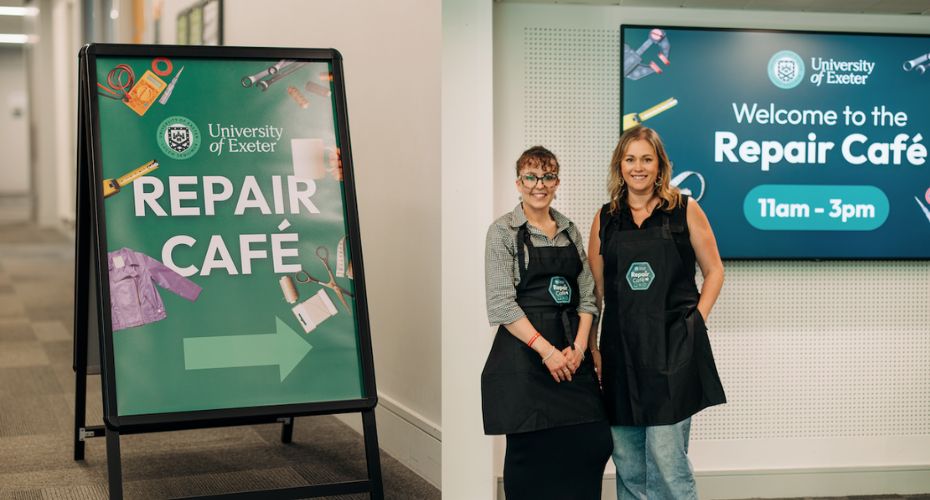
But these events are as much about connection as they are about repair. Volunteers share skills with students, conversations spark between strangers and people leave not just with fixed items but with new knowledge.
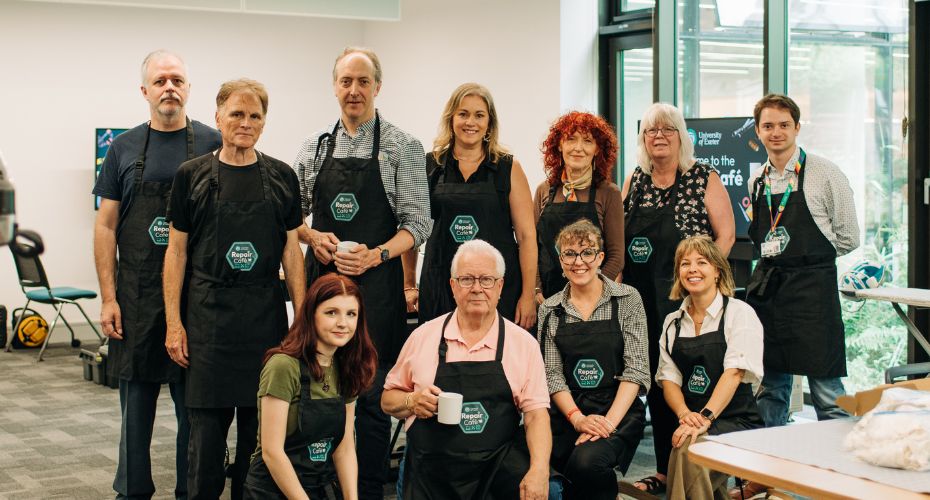
Of course, none of this would be possible without the volunteers – the people who give up their time to fix, teach and support others. Their generosity and expertise are at the heart of everything we do, and it’s inspiring to see how much they care about keeping things in use.
For me, this past year has shown that small, practical actions – like repairing a torn bag or fixing a broken lamp – can lead to much bigger changes in how we think and behave. The Repair Café has become more than just an event – it’s a space where sustainability feels tangible, collaborative and genuinely positive.
And the best part? We’re back again to do it all again next year in October!
To stay up to date with the Repair Café, follow @uoesustainability on Instagram or email repaircafe@exeter.ac.uk if you have any questions!