
Posted by Ted Feldpausch
24 February 2026Pyrogenic Carbon in the Amazon: quantifying soil carbon responses to the effect of fire.
2021/00976-4 – UKRI – NERC – Research Project – Thematic
Plinio Barbosa de Camargo (CENA/USP) – Ted R. Feldpausch
| Institution: Center for Nuclear Energy in Agriculture USP | ||
| Supervisor name: Plínio Camargo / Ted Feldpausch | Lab. Isotopic Ecology. USP SCENE | |
| Recipient: pcamargo@cena.usp.br Ref: PD Pyrocarbon Deadline for submission: 10 March 2026 | Type: Post-Doctorate Period: full time Number of months: 24 Expected start date: April, 2026 | |
| Project title: Determination of isotopic variations and quantification of soil organic carbon as a function of fire on a temporal and landscape scale in the Amazon | ||
| Research Thematic Area: This research aims to map and quantify the environmental factors that drive the spatial variation of soil organic carbon (SOC), as well as,its specific pyrogenic fraction and isotopic composition throughout the Amazon, with potential implications for the estimation of carbon emissions and changes in stocks. The research topic initially requires the consolidation of a comprehensive set of evidence on the influence of climate, soil, landscape context, fire frequency and land management on SOC dynamics at the landscape scale. There is a significant gap in understanding post-fire carbon dynamics, including changes in the form of soil carbon and the buffering and formation of soil pyrogenic carbon (CPi), including coals. The analysis of carbon isotopic composition (δ13C) can serve as a tool to identify carbon sources, track organic matter transformation processes in the soil, and evaluate changes in carbon dynamics associated with environmental disturbances such as fire. However, data is currently scarce for tropical forests. Because most global estimates of fire effects focus on vegetation, current estimates of ecosystem carbon loss may not be accurate. We are uniquely positioned to address these knowledge gaps, with an internationally leading team of soil scientists who have recently established CPi and SOC baseline data across the Amazon from intact forests in a network of permanent forest plots, facilitating studies on variations in anthropic environments. | ||
| Summary Tropical forests play an important role in global SOC storage, with Amazonian soils containing ~36 Pg C considering only the top 30 cm. Fires are increasing in the Amazon, transforming forest structure, land cover, and C storage. Assessment of fire effects has traditionally focused on aboveground CO. However, SOC can store half of total tropical forest carbon C and the impact of fire on existing SOC and the fate of new charcoal (pyrogenic C; PyrC) is unknown. Understanding the mechanisms of ecosystem transformation following forest degradation and fire requires the integrated analysis of different biogeochemical and environmental indicators. The incorporation of isotopic analyses and microclimatic data (such as soil and atmospheric temperature and humidity) can broaden the capacity to interpret the processes involved, contributing to the identification of patterns and relationships between environmental variables and soil carbon dynamics. In this project, we aim to determine how recent forest disturbance and fires modify the SOC relative to historical SOC baselines The integration of field data, carbon isotopic composition, and microclimatic records will allow for a more detailed assessment of the processes influencing carbon dynamics in fire-affected areas, to provide critical understanding of how contemporary fire regimes differ from the past and what their modern impacts are on the fire cycle. of regional and global C. | ||
| Description of activities Under the supervision of Dr Plinio Camargo and Ted Feldpausch in close collaboration with other project members working at INPE, Exeter, etc., the PD will address 3 priority demands for the current stage of the project: O1. Determination of baseline SOC and persistent SOC in intact forests. Consolidate existing field data and literature data on CPi storage and soil carbon isotopes in the Amazon. Use these baseline measurements of total SOC/CPi and its isotopic signature in intact forest plots (i.e., without recent fires) across the Amazon to quantify changes in SOC inputs over hundreds of years. O2. Factors of SOC change in HMFs (Human-Modified Forests). Quantify contemporaneous change in SOC stocks and protected and labile fractions immediately after fire and over time in HMFs that span continental-scale gradients of land use, fire severity, and climate. The PD Fellow will utilize a post-fire chronosequence spanning decades of change and experimental burn data to estimate the fractions of SOC (their persistence) and their isotopic signature formed by modern fires and their impact on soil fertility. O3. Integration of isotopic and microclimatic patterns in intact forests and HMF.Determine the response of SOC respiration to the fire regime, new C/CPi inputs and interannual climate variability, integrating these with isotopic signatures. | ||
| Requirements to fill the position: This postdoctoral position requires technical and theoretical skills in the field of Earth System Sciences, with solid experience in isotopic ecology and the manipulation, curation, and interpretation of large field databases. Fieldwork experience is essential, as is proficiency in the analysis, integration, interpretation, and consolidation of data regarding SOC, CPi, δ13C, δ15N soil respiration, greenhouse gases (GHG), and microclimatic attributes. The mastery of advanced statistical methods focused on data modeling and the ability to process large sets of complex information for pattern extraction are highly desirable for the position. The candidate must have obtained the doctorate degree less than 7 years ago, with an excellent academic record in postgraduate studies.The candidate must have proficiency in English and Portuguese. The scholarship requires total dedication to the research. To receive the scholarship, the selected candidate must present all the documentation required by FAPESP. For more details, visit:http://www.fapesp.br/270. | ||
| Financing: This PD scholarship is funded by FAPESP. The scholarship will cover a standard maintenance grant of R$12570.00 per month, plus 10% of the annual amount for research-related expenses (Technical Reserve). Workplace: This work will be carried out at CENA, Av. Centenário 303, São Dimas, CEP: 13416-000. Piracicaba, SP. | ||
| Documents/Information to be sent: The delivery deadline is March 10, 2026. Registration is done exclusively via the emails below. Include the subject “PD Project Pyro-carbon of the Amazon soil”, followed by your name, and send the documents in PDF format. Send the following documents to:pcamargo@cena.usp.br 1. Updated CV including all your publications (with a link to Lattes Curriculum, or Google Scholar, or ORCID or ResearchID); 2. A copy of the academic record of the postgraduate course; 3. A motivation letter highlighting your background and research interests (in English). After selection, we will need a research plan considering the objectives mentioned in this announcement, following FAPESP instructions, available at http://www.fapesp.br/270. Selection: Candidates will be selected by a committee of the project’s principal investigators based on their CVs (experience in the project’s research area and the number and quality of publications) and their letters of introduction and motivation. Shortlisted candidates may be invited for an online interview. The selected candidate must present the necessary documents to apply for a FAPESP scholarship within 15 days of approval. | ||
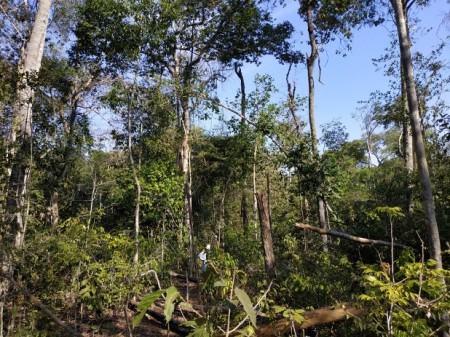
Header Image Credit: Ted Feldpausch