
Dr Suzanne Conway looks back on the immediate aftermath of a Creative Writing PhD, in conversation with Slipway editor (and fellow recent finisher) Ruth Moore.
Suzanne, before we get into the ‘aftermath’, can you tell us a little about what your PhD entailed and when you finished?
The title of my Creative and Critical Writing thesis is ‘“Tantalizing Vagueness”: Intimacy and Distance in Edward Thomas’s Poetry’ with a practice-by-research poetry collection, ‘The Things I Could Not Say’. I wrote four critical essays investigating how ‘tantalizing vagueness’ and intimacy and distance were present in Thomas’s poems. ‘Tantalizing vagueness’ is a phrase coined by Thomas’s friend, Robert Frost:
A poem is never a put up job so to speak. It begins as a lump in the throat a sense of wrong, a homesickness a lovesickness. It is never a thought to begin with. It is at its best when it is a tantalizing vagueness. It finds its thought and succeeds, or doesnt find it and comes to nothing.1
The poetry collection explored being silenced in varying ways. By studying Thomas’s poems and poetic techniques, I learned to write about difficult experiences in a controlled and skilful way. Thomas and I refine, clarify, and transform complex experiences in an act of reclamation. My viva was on 30th January 2026, and my award was finalised on 30th March 2026.
Congratulations! Practice-by-research PhDs are notoriously demanding and, like me, you have also had caring responsibilities to contend with. We’ve been speaking about the strange aftermath of completing a PhD. How have the last few months been for you?
Initially, I was in a state of relief and disbelief. I was teaching six courses simultaneously, three at the university and three private Creative Writing courses so I didn’t have time or space to process the momentous event, or to rest. Once the teaching finished, it hit me! What now? I found myself in a bewildering and unnerving place at the bottom of a massive academic ladder that I wasn’t sure I had the energy (or inclination) to climb. This is where the PGR community helped: a series of Creative Writing workshops gave me the tonic that I needed. They reminded me that my viva examiners said that my thesis contains two publishable books and I need to get them out into the world. I’ve taught for twenty-five years and it tends to dominate my life but research and writing need to be at the forefront of my focus now. Research and creativity can change the world! I do a lot of community-based teaching that incorporates my research.
Ah, that sense of being at the foot of a ‘massive academic ladder.’ This will be very familiar to our readers in the postgraduate research community. How do you think PGRs can build collaboration and connection rather than succumbing to competitiveness to get on the ladder?
We all need to be true to our own paths and have faith! Being an academic or writer brings rejection. Writing is solitary but without connection who are we? We need to foster the generous PGR community and continue the writing workshops. Most of all: be curious and kind.
This blog will be published as universities wind down teaching and exams towards the long summer. What are you hoping to read – and what would you recommend to someone who is new to poetry?
Reading for pleasure without a pen to annotate every text will be a novel (pardon the pun) experience. My dear friend, Blake Morrison, sent me his most recent books as an early birthday gift, Afterburn and On Memoir: An A-Z of Life Writing. New to Poetry? Helen Mort’s No Map Could Show Them. It has heart. Too much contemporary poetry lacks that.
1 Robert Frost, The Letters of Robert Frost, Volume 1: 1886–1921, eds. Donald Sheehy, Mark Richardson, and Robert Faggen (Harvard University Press, 2014), 410. Transcribed without corrections.
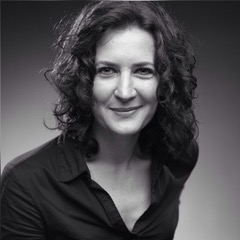
Dr Suzanne Conway is a poet, writer and teacher. She has published articles, essays, reviews, and over thirty poems in magazines and anthologies, including The Poetry Review, The Dark Horse, The North, The Result Is What You See Today: Poems About Running (Smith|Doorstop), and elsewhere. She teaches for the Poetry School and the University of Exeter.